In the high-stakes world of personal finance, we are often obsessed with net worth, market volatility, and the relentless pursuit of compounding interest. Yet, there is a perspective on wealth that remains largely ignored by Wall Street analysts and financial influencers: the view from the bedside of the dying.
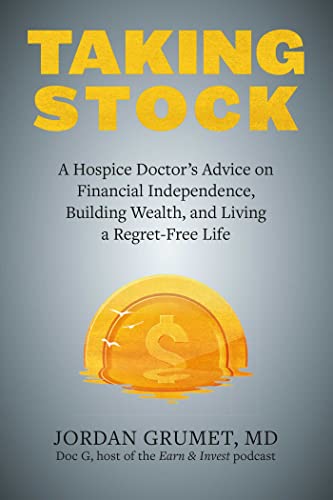
Dr. Jordan Grumet, a hospice physician and author of the groundbreaking book Taking Stock, has spent his career in the quiet, somber rooms where the math of life is finally settled. Through his work, he has discovered a profound truth: while money is a necessary tool, it is rarely the measure of a life well-lived. In his professional estimation, the most critical investments we make have nothing to do with the stock market and everything to do with the legacy we build, the people we touch, and the health of our own minds.
The Undertaker’s Lesson: Wisdom from the End of the Line
Dr. Grumet’s philosophy was shaped by an unlikely mentor: a long-term patient who worked as an undertaker. Through their philosophical dialogues, Grumet arrived at a guiding principle for his own life: When the undertaker speaks, you should really listen.
"Those of us who have made death and dying our business may seem like unlikely investment advisers," Grumet writes. "But because we have spent extensive time in close proximity to mortality, we have been given unique insight into what is really worth investing in."
This insight did not come from observing the wealthy or studying the portfolios of the ultra-successful. Instead, it was harvested from the raw, unfiltered reflections of people facing the end of their journey. What these individuals regretted, celebrated, and valued most provides a blueprint for anyone looking to optimize their life—not just their finances.
Invest in Yourself: The Power of Self-Forgiveness and Growth
If you want to build a truly robust portfolio, start with the person in the mirror. Dr. Grumet argues that personal investment is the cornerstone of all other success, and at the top of that list is self-forgiveness.
The Burden of Remorse
Remorse is a universal human experience, but it can be a devastating anchor. Grumet recalls the story of "Gerald," a patient who spent his final days grappling with the fallout of losing his job, which led to a downward spiral of alcoholism, divorce, and estrangement from his daughter. While Gerald eventually found sobriety, the physical toll on his body and the emotional distance from his child were permanent.
"It is hard to look forward when you are constantly looking back," Grumet notes. The lesson here is that self-blame, while useful for brief introspection, becomes destructive when it turns into a permanent state of mind. To invest in yourself, you must learn to forgive the past and focus on the incremental changes that shape the future.
The Compound Interest of Experience
Just as monetary assets grow through compounding, so do life experiences. Grumet emphasizes that skills and knowledge grow exponentially, not linearly. By slowing down and focusing on small, one-percent improvements in your health, relationships, or career, you create a trajectory that is far more sustainable than chasing "big audacious goals" that lead to burnout.
The Architecture of Knowledge: Why Education is Your Emergency Fund
In an unpredictable world, knowledge is the only asset that cannot be liquidated or stolen. Grumet posits that education is the ultimate insurance policy.
"Knowledge is the emergency fund in which you shield your happiness," he says. When financial resources are exhausted or market conditions shift, the ability to pivot, learn, and solve problems remains. This isn’t restricted to formal degrees; it encompasses everything from reading books to engaging in difficult debates.
The greatest barrier to this investment is the fear of being "uninformed." Many people avoid learning about finance because they believe it is too complex. Grumet challenges this, noting that a few hours of reading each month can lead to total financial competence. By refusing to learn, we limit our own agency.
Investing in Others: The Ultimate Legacy Metric
When a patient is nearing the end of their life, the hospital room tells a story. Some rooms are empty and silent, while others are filled with the remnants of a life deeply invested in others: photographs, letters, cards, and a steady stream of friends.
"The one measure of a person—rich or poor, happy or sad—is in the people whom they leave behind," Grumet observes. Investing in people yields the highest compound interest of all: a lifetime of love and a legacy that persists long after the individual is gone.
For those looking to define their purpose, the path forward is often found in community. Grumet’s own transition into writing and podcasting in the personal finance space was motivated by a desire to find a "tribe" that understood his values. These connections provided the courage to redefine his identity and purpose beyond his medical career.
Investing in the Next Generation: A Ripple Effect
Our impact on the world is perhaps best measured by the children we leave behind. Investing in children—not just financially, but through time, love, and the modeling of virtue—is an investment that pays dividends for generations.
"Investing in your children will produce a lifetime of dividends," Grumet asserts. "Like a ripple in a vast ocean, your effect will be carried with them through the generations." By teaching children the value of money, the importance of kindness, and the strength of character, we ensure that our influence survives our own mortality.
Physical and Mental Health: The Foundation of All Wealth
Financial planning is an exercise in forethought and decision-making. However, if your mind is clouded by anxiety or your body is failing, you cannot make the high-level decisions required to build long-term security.
Grumet advocates for a holistic approach:
- Mental Health: Utilize meditation, exercise, and professional counseling. Do not view therapy as a last resort, but as a proactive maintenance tool for the mind.
- Physical Health: "Perfect is the enemy of good enough." You do not need to be a marathon runner. Thirty minutes of walking a day can be enough to sustain the physical framework necessary for a high-quality life.
The Role of the Market: Necessary but Not Sufficient
While the vast majority of Grumet’s wisdom is non-monetary, he does not suggest ignoring the stock market. Financial independence provides the freedom to pursue the other investments discussed. The goal is to "get the money right" so that you can stop worrying about it and focus on what truly matters.
His advice on the market is clear and standard:
- Minimize investment fees.
- Maximize diversification.
- Maintain a long-term perspective.
- Stay the course regardless of market volatility.
Implications: A Call to Action
The final takeaway from Taking Stock is a call to urgency. We often treat our lives as if they are infinite, delaying our investments in relationships, health, and self-improvement until we have "enough" money.
The reality, according to those at the end of their lives, is that the clock is always ticking. The "non-monetary investment inventory" is the most important audit you will ever perform. By dividing your time and energy into categories like family, health, education, and community, you can determine if your current lifestyle aligns with your true purpose.
The Non-Monetary Investment Inventory
To get started, Grumet suggests a simple, quiet exercise. Take a piece of paper, create three columns, and list your top ten non-monetary assets. If you were to lose everything in your bank account tomorrow, what would remain? If your list is short, you have work to do. If your list is long, you are already wealthy in the ways that matter most.
As Dr. Grumet concludes, "Building a life of meaning, purpose, and connections takes time and compounding. And it’s all so very, very worth it. Be as prepared for life as you would be for death."
In the final analysis, the most successful investor is not the one with the highest balance in their retirement account, but the one who leaves behind a world better than they found it, surrounded by people who are better for having known them.