We live in a culture obsessed with the "Game of Life." The phrase is ubiquitous, etched into our collective consciousness by pop culture, corporate performance reviews, and the enduring popularity of Milton Bradley’s iconic board game. First released in 1860, the game remains a staple in American households, teaching generations that the objective of existence is to accumulate wealth, marry, raise children, and reach the finish line with the most assets.
However, as we translate this board-game logic into our daily lives, we have begun to view our existence not as a journey to be experienced, but as a high-stakes competition to be won. This shift represents a fundamental misunderstanding of the human condition. When life is reduced to a game, the things that truly matter—meaning, connection, and self-actualization—are sacrificed at the altar of measurable, yet ultimately trivial, success.
The Anatomy of the Game: Defining Success in a Vacuum
To understand why this mindset is so pervasive, we must look at how society defines "winning." In the real world, the rules are never written down, yet they are strictly enforced by social signaling. The scorecard typically includes:
- Financial Accumulation: Net worth, income levels, and investment portfolios.
- Professional Status: Job titles, prestige, and career trajectory.
- Social Capital: The "success" of one’s children, the exclusivity of one’s neighborhood, and the brand value of one’s social circle.
- Aesthetic Achievement: Physical fitness, youthfulness, and material displays of wealth.
These metrics are seductive because they are quantifiable. They provide a binary, easy-to-read scoreboard. Yet, by prioritizing these indicators, we fall into a trap: we treat life as a zero-sum game. In a traditional game, for one person to win, another must lose. By adopting this framework, we turn our peers, neighbors, and even our friends into rivals.
A Historical Perspective: From Parlor Games to Life Metrics
The origins of this competitive obsession can be traced back to the mid-19th century. In 1860, Milton Bradley launched The Checkered Game of Life. It was a time of rapid industrialization and shifting social mobility. The game was designed to teach morality, but it inadvertently popularized the idea that life could be broken down into discrete moves, rewards, and punishments.
Throughout the 20th century, this metaphor evolved. The 1960s commercials for the game emphasized a booming middle-class dream, while the 1980s and 90s versions began to focus more heavily on professional status and financial optimization.
As the game evolved, so did our societal expectations. The "Game of Life" transitioned from a piece of cardboard on a table to an internal, invisible scoreboard. We stopped playing The Game of Life for amusement and started playing it for survival, believing that if we didn’t "win" by traditional standards, we were effectively failing at existence.
The False Economy of Competition
The core issue with viewing life as a game is that it creates a false economy. Games are inherently artificial; they are governed by external rules that players have no role in creating. Most importantly, games have no intrinsic value. It does not fundamentally improve the world if one person hits a ball over a fence more often than another.
When we apply this to life, we make a grave error. The most profound aspects of the human experience—ethics, intimacy, creative fulfillment, and purpose—are entirely subjective.
The Problem of Incommensurability
Consider the "meaningful relationship." How does one quantify the value of a deep friendship? Is a person who has ten acquaintances "winning" more than a person who has one lifelong, soul-deep companion? Because there is no objective metric for these things, those who view life as a game often devalue them. They ignore the intangible because they cannot easily place it on a leaderboard.
This leads to the "subordination of the meaningful." When we focus on what can be measured—a bigger house, a more expensive car—we are choosing to focus on the petty. We are effectively choosing the trivial over the essential, simply because the trivial is easier to count.
The Corrosion of Human Connection
Perhaps the most damaging implication of the "game" mentality is its impact on our relationships. Genuine human connection requires a sense of mutual vulnerability and a desire for the other person’s success. It requires us to be "on the same team."
However, if you perceive your life as a competition, you cannot truly celebrate the success of others. When a friend gets a promotion, a "gamer" doesn’t see a victory for a person they love; they see a move in the game that puts their own standing at risk. This creates a state of perpetual, low-level envy.
Viewing others as competitors transforms friends into obstacles. This is the antithesis of a meaningful life. It creates an environment where we are partially rooting for those around us, but only up to the point where their success doesn’t eclipse our own. This creates a brittle, superficial form of socialization that prevents true, unconditional intimacy.
Challenging the Rules: The Autonomy of the Individual
The most empowering realization one can have is that you are not forced to play someone else’s game. When you internalize the societal criteria for success—wealth, prestige, status—you surrender your autonomy. You are chasing goals you did not formulate, striving for a "win" that is defined by people who do not know you, care about you, or understand your specific values.
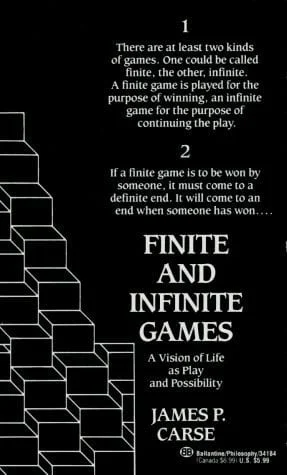
As James Carse articulated in his seminal work, Finite and Infinite Games, a "finite" game is played for the purpose of winning, while an "infinite" game is played for the purpose of continuing the play. Life, when lived correctly, is an infinite game. The objective is not to reach a finish line with the most points, but to grow, learn, and expand the horizons of possibility for yourself and those around you.
When you play by your own rules, you reclaim your life. You decide what constitutes a "good life." For some, this might be raising a family in a quiet town with moderate means. For others, it might be dedicating a life to artistic pursuits or scientific discovery. These are not competing goals; they are simply different expressions of the human experience.
The Reality of Failure
If you insist on playing the game of life by conventional rules, you must prepare to lose. Mathematically, it is impossible for everyone to be in the top one percent. The "game" is designed with a hierarchy that guarantees the vast majority of people will fall short of the arbitrary standards of the elite.
When we treat life as a game, we view every setback as a "loss." A career pivot becomes a failure. A financial loss becomes a defeat. A child who follows a different path becomes an indicator of poor "performance."
This is a dangerous way to live because it makes life a terrifying ordeal. It is haunted by the specter of public defeat. If your self-worth is tied to your rank on the leaderboard, you are never truly secure. You are always one bad quarter, one market crash, or one social misstep away from feeling like you have lost the game entirely.
Final Reflections: Choosing Meaning Over Metrics
Comparing ourselves to others is a game that cannot be won. If you perceive yourself as inferior, you succumb to insecurity and despair. If you perceive yourself as superior, you succumb to arrogance and ego. Neither state provides the foundation for a life well-lived.
We must recognize that games are meant to be a diversion, not a template for our existence. It is perfectly healthy to enjoy competition—to train for a marathon, to play chess, or to strive for excellence in your career. These are wonderful ways to test our limits. But we must have the wisdom to set the game down when it is over.
When you walk away from the table, look at your family, your friends, your community, and your personal code of ethics. Recognize that these elements of your life are far too precious to be reduced to a scorecard. By refusing to treat your life as a competition, you liberate yourself from the tyranny of the leaderboard and open the door to a deeper, more authentic way of being.
Life is not a game to be won. It is a reality to be inhabited. When we stop trying to win, we finally begin to live.