
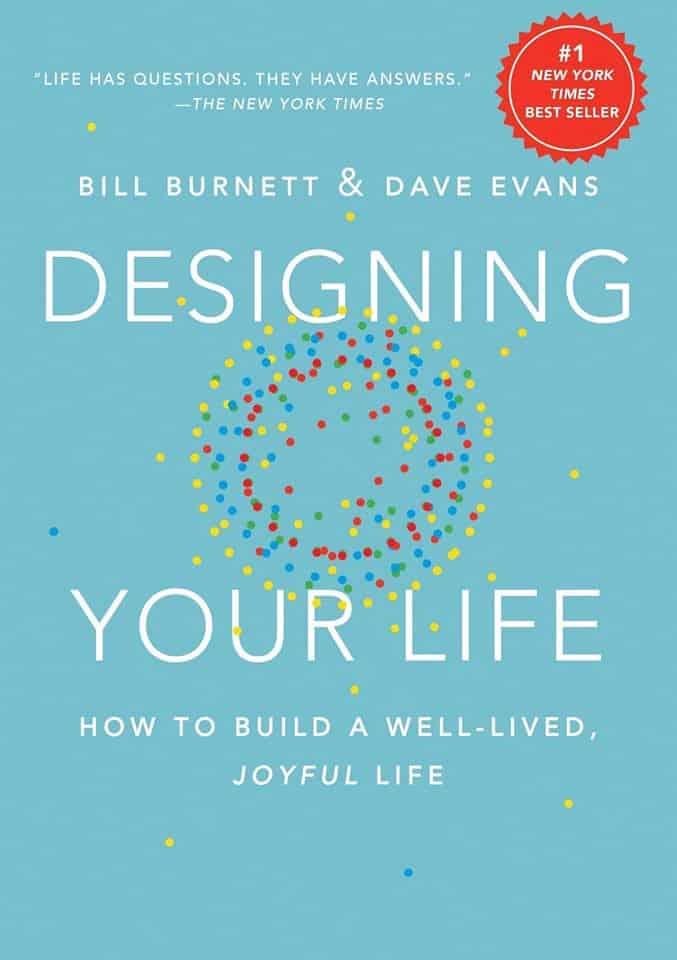
In the world of personal finance, the focus is often laser-tuned to the mechanics of wealth: interest rates, index funds, and the optimization of net worth. However, a growing movement suggests that financial stability is merely a foundation, not the structure itself. Recently, the discourse surrounding intentional living has been galvanized by the work of Stanford design professors Bill Burnett and Dave Evans, authors of the seminal book Designing Your Life. By applying the iterative, empathetic principles of design thinking to personal development, they offer a blueprint for individuals seeking to define what it truly means to "grow up."
For many, the transition from professional success to personal fulfillment is fraught with ambiguity. By reframing life as a design project—a series of prototypes rather than a fixed destination—readers are finding new ways to navigate the "forks in the road" of their careers and personal relationships.
The Genesis of a Collaborative Experiment
The decision to treat life as a design challenge is not one best made in isolation. Recognizing that deep reflection requires external perspective, a small, informal cohort has emerged to work through the exercises presented in Burnett and Evans’ framework. This group, including the author and two long-term associates—Kim and a college classmate named Craig—has committed to a months-long exploration of these principles.
This collaborative approach is not merely for accountability; it is a recognition that the "design" of one’s life is often informed by the social capital we build and the mirrors we hold up to one another. By documenting their journey, the participants hope to provide a template for others, while carefully respecting the intellectual property of the authors by offering a synthesis of the concepts rather than a verbatim reproduction of the exercises.
Phase One: Assessing the Current State
The first pillar of the design process is the principle of "starting where you are." Much like a financial audit, where one must understand their current debt-to-income ratio and savings rate before mapping a path to retirement, life design begins with a brutally honest self-assessment.
Burnett and Evans identify four core metrics for this snapshot: health, love, play, and work. This assessment is not intended to be a critique, but rather a "geolocator" for the soul. It provides the necessary data to determine one’s current coordinates on the map of existence. By assigning numerical values and descriptive summaries to these four pillars, an individual can identify which areas are thriving and which are in a state of stagnation. This snapshot is not actionable in the immediate term; rather, it is a prerequisite for the more complex task of building a personal compass.
Constructing the Internal Compass: Workview and Lifeview
If the self-assessment is the map, the next stage—building a compass—is the development of a navigational tool. This involves the creation of two fundamental documents: the "Workview" and the "Lifeview."
The Philosophy of Work
The Workview serves as a statement of purpose regarding one’s professional existence. It transcends the basic necessity of earning a paycheck and delves into the "why" behind the labor. In a recent dialogue, the contrast and convergence between the author and Craig’s views highlighted the complexity of modern career satisfaction.
Craig’s perspective reflects a yearning for "right livelihood"—a Buddhist concept emphasizing work that causes no harm and fosters natural systems. He prioritizes tangible results and environmental restoration, noting that in an era of abstract digital labor, the ability to produce something physical is inherently grounding.
In contrast, the author’s Workview centers on the concept of ikigai, a Japanese term referring to one’s "reason for being." The goal here is the intersection of passion, purpose, and economic viability. By positioning a digital platform as a resource for financial and personal mastery, the aim is to create a "win-win" scenario that benefits both the creator and the reader. Both participants arrived at the same conclusion: professional success is empty if it does not contribute to the broader welfare of society.

The Lifeview: Defining Existence
The Lifeview is an even deeper reflection, addressing the meaning of life, the nature of morality, and one’s place in the cosmos. Through their respective essays, Craig and the author explored the interplay of individual agency and the indifference of the universe.
Craig argues that in a vast, uncaring cosmos, the only rational responses are laughter and the cultivation of kindness. He posits that we are participants in a natural cycle, and that our lives are defined by how we treat our neighbors.
The author echoes this sentiment, framing morality as a practical application of behavior rather than a theological mandate. By emphasizing "rational self-centeredness"—ensuring one’s own foundation is secure before attempting to support others—the author argues that true impact grows from the center outward. Both individuals identified a shared concern: the erosion of social capital in the United States and the potential for digital isolation to stifle the very connections that define a life well-lived.
Implications: The Legacy of Shared Values
The striking similarity in the worldviews of these participants is not coincidental. Both were shaped by their time at Willamette University, an institution whose motto, non nobis solum nati sumus ("not unto ourselves alone are we born"), serves as an intellectual North Star. This suggests that the environment we choose—the universities we attend, the communities we join, and the literature we consume—acts as a catalyst for our eventual life philosophy.
The implications for the broader public are clear: life design is not a solitary act of self-improvement. It is a communal practice of defining values and aligning actions with those values. When an individual takes the time to articulate their Lifeview, they are effectively building a filter through which all future decisions—career changes, geographical moves, or relationship milestones—must pass.

Looking Ahead: The "Good Time Journal"
As this experiment enters its next phase, the participants are moving from the philosophical to the empirical. The upcoming focus will be the "Good Time Journal," a diagnostic tool designed to track activities and measure their energy-inducing versus energy-draining effects.
By logging daily tasks and assessing the level of "engagement" and "flow" provided by each, the participants aim to map their actual behavior against their stated values. This process of mind-mapping and data collection represents the transition from theory to practice. It is the realization that a well-designed life is not a static achievement, but a continuous cycle of iteration, reflection, and adjustment.
For those watching from the sidelines, the lesson is simple: you do not need to wait for a mid-life crisis to evaluate your trajectory. By adopting the tools of the designer—empathy, prototyping, and rigorous self-assessment—you can reclaim the agency to shape your life into something that is not only profitable but profoundly meaningful. The journey is not about reaching an end state, but about the quality of the life designed along the way.