In the quiet, clinical corridors of hospice care, the chatter of the outside world—the frantic fluctuations of the S&P 500, the latest tech trends, and the pursuit of status—fades into insignificance. Jordan Grumet, a physician who has spent his career guiding patients through their final transitions, has observed a recurring phenomenon: at the end of life, the ledger that truly matters is not the one audited by accountants.
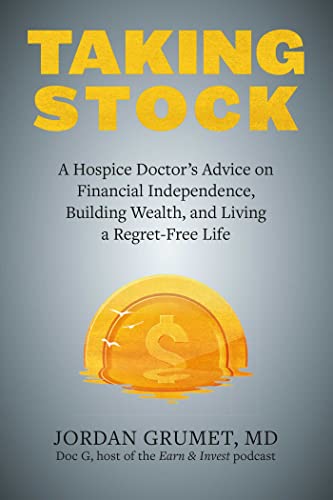
Grumet’s book, Taking Stock, offers a sobering but liberating thesis. Having spent years in the company of those facing their own mortality, he argues that our traditional definition of "investing" is woefully incomplete. While financial security is a necessary foundation, it is merely the scaffolding for a life well-lived. To truly thrive, one must diversify their portfolio into assets that cannot be traded on the stock exchange: self-forgiveness, education, human connection, and physical longevity.
The Philosophy of the Final Exit
Grumet’s realization did not happen in a vacuum. It was shaped by long conversations with a patient who worked as an undertaker. In their dialogue, a core truth emerged: those who spend their lives around death possess a unique vantage point on the living. When the undertaker speaks, the world should listen.
The primary lesson learned from the bedside of the dying is that most regrets are not financial. Patients rarely lament a missed opportunity to buy a specific stock or a lack of luxury goods. Instead, they mourn the things they did not do, the relationships they failed to nurture, and the internal battles they refused to resolve. This insight serves as the bedrock for Grumet’s investment philosophy: we must prepare for life with the same rigor we apply to our portfolios.
Investing in the Self: The Power of Forgiveness
Perhaps the most overlooked investment in personal finance is the psychological capital we hold. Grumet identifies self-forgiveness as the cornerstone of a sustainable life.
Consider the case of "Gerald," a patient Grumet treated for cirrhosis. Years before his illness, Gerald had lost his job, leading to a downward spiral of alcoholism, a failed marriage, and long-term estrangement from his daughter, Sandy. While Gerald eventually found sobriety, the physical damage to his body and the emotional damage to his relationship with his daughter were permanent.
Grumet notes that the human capacity for self-blame is infinite, yet it serves as a massive drain on our potential. We hold onto past mistakes as if they are assets, when in reality, they are liabilities that prevent us from moving forward. True self-investment requires the courage to acknowledge our failures, learn from them, and release the burden of remorse. By slowing down and embracing incremental progress—the "tortoise" approach—we can achieve the long-term compounding of our own personal growth.
Knowledge as the Ultimate Emergency Fund
In a rapidly shifting economy, education remains the only asset that cannot be devalued by inflation or market crashes. Grumet posits that knowledge is the ultimate emergency fund. When financial resources are depleted, the skills, experiences, and wisdom we have cultivated become our last line of defense.
"Knowledge is the emergency fund in which you shield your happiness," Grumet writes. This education doesn’t necessarily come from expensive institutions. It comes from an insatiable curiosity: reading, engaging in rigorous debate, and stepping outside of one’s comfort zone. The refusal to learn is a dangerous complacency. Even in the final stages of life, Grumet observes that those who remain inquisitive—who continue to read and engage with the world—maintain a higher quality of life. They die as they lived: full of questions and engaged in the act of becoming.
The Architecture of Human Connection
If one were to measure success by the quality of a person’s legacy, the metric would be simple: look at the people left behind. Grumet describes an immediate, visceral difference when entering the room of a patient who has invested in human relationships. These rooms are filled with photos, letters, and the noise of friends and family. They are, in every sense, wealthy.
This is the "compound interest" of human relationships. By pouring time and affection into others, we create a network of support that persists long after we are gone. For many, this requires a radical pivot in identity. Grumet admits that it took him years to find his "people" through the medium of writing and podcasting. This discovery allowed him to redefine his purpose, proving that it is never too late to shift one’s capital toward meaningful connections.
The Generational Dividend: Investing in Children
The most enduring legacy any individual can leave is the impact they have on the next generation. Investing in children—not just through financial support, but through the transmission of values, humility, and kindness—is a profound act of long-term stewardship.
Grumet speaks of his own father, whose legacy continues to shape his career decades after his death. This is the ripple effect. When we act as a virtuous example for our children, we are effectively planting seeds that will grow long after our own time on earth has concluded. Teaching children the realities of finance—what money can and cannot achieve—is a critical component of this investment. It is about equipping them with the wisdom to navigate their own paths with grace.
The Physical and Mental Foundation
A portfolio is only as strong as the person managing it. Grumet emphasizes that mental and physical health are not optional—they are the framework upon which all other success is built.
The modern obsession with "optimization" often leads to burnout. True wellness requires the discipline to slow down: meditation, exercise, and the professional support of therapists. The goal is not to achieve athletic perfection, but to maintain the engine that drives your life. Grumet suggests that if a fitness routine is loathsome, it will not last. The key is to find sustainable habits—even a thirty-minute walk—that allow for physical and mental clarity. Anything that clouds the mind, such as substance abuse, should be scrutinized as a threat to one’s overall wealth.
Integrating the Financial Basics
While Grumet’s focus is on the non-monetary, he is pragmatic. Taking Stock does not ignore the necessity of financial literacy. The basics of the market—investing early, diversification, and controlling costs—are the "table stakes" for the game of life.
However, these financial steps are merely the enablers. They provide the freedom to pursue the deeper investments discussed above. Financial independence is not the end goal; it is the starting line. It provides the space to focus on what truly matters, ensuring that when the time comes to look back, the ledger is balanced with purpose.
Implications for a Life Well-Lived
The overarching implication of Grumet’s work is that we are all currently in the process of building our final legacy. We are not just saving for retirement; we are saving for the person we will be at the end of our lives.
The challenge is to step away from the noise and conduct a non-monetary investment inventory. This involves setting aside time to evaluate our assets in three key areas:
- Self-Development: What am I learning, and how am I forgiving myself?
- Relationships: Who are the people I am pouring my time and love into?
- Legacy: What values and examples am I passing down to the next generation?
By reconciling these lists with our bank balances, we can achieve a state of true financial independence. It is a call to action to stop treating life as a rehearsal and start treating it as the primary asset. As Grumet concludes, the goal is to be as prepared for life as one would be for death. The investment is demanding, the work is continuous, and the dividends—measured in peace, connection, and a life lived without regret—are immeasurable.
The final takeaway is clear: do not wait for a diagnosis or a crisis to start taking stock. Begin the audit today. The compounding effect of a meaningful life is the greatest return on investment anyone can ever realize.