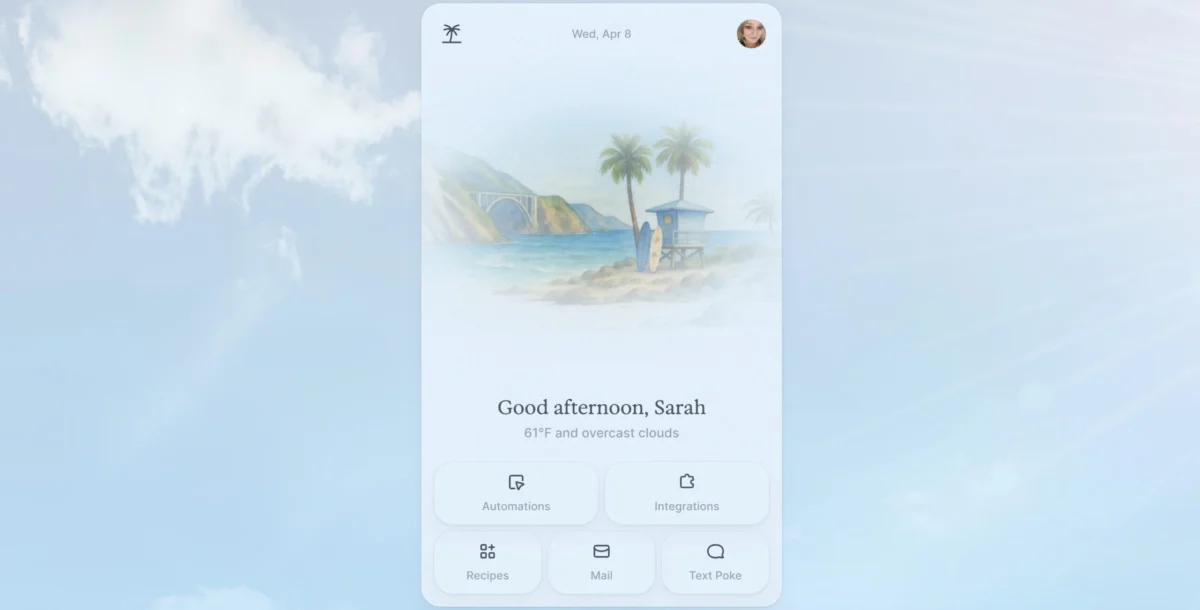
In a significant consolidation within the competitive artificial intelligence sector, Cognition—the trailblazing startup behind the world’s first AI software engineer, Devin—has officially acquired The Interaction Company of California. The startup, best known for its conversational AI assistant "Poke," was purchased for a sum described by stakeholders as being in the "low nine figures."
This strategic acquisition marks a pivotal shift in the AI industry, moving away from purely functional, tool-based automation toward a future defined by personality-driven, collaborative AI agents. By integrating Poke’s signature conversational fluidity with Cognition’s robust coding infrastructure, the companies aim to transform how humans interact with machine intelligence.
A New Era of Conversational Computing
Since its inception in March 2026, Poke has carved out a unique niche in the crowded AI assistant market. Rather than operating as a sterile, command-line-style utility, Poke was designed to function as a digital companion. Users interact with the agent via ubiquitous messaging platforms—including iMessage, Telegram, SMS, and, in select regions, WhatsApp—engaging in a back-and-forth flow that mirrors a conversation with a friend.
Poke’s distinct appeal lies in its "personality-first" architecture. It is capable of deploying slang, humor, and nuanced social cues, making it feel less like an algorithmic processor and more like a colleague. While competitors focused on raw computing power, Poke focused on the user experience of the interaction itself, proving that in the age of generative AI, the "how" of a conversation is just as critical as the "what."
Chronology of a High-Stakes Deal
The acquisition follows a rapid rise for both companies. The path to this merger can be traced through several key milestones:
- March 2026: The Interaction Company launches Poke, quickly gaining traction with hundreds of thousands of users who utilize the agent for travel planning, health tracking, financial management, and scheduling.
- Early 2026: Cognition founders Scott Wu and Walden Yan act as early angel investors in The Interaction Company, signaling a long-term belief in the team’s vision for agent-based interaction.
- June 2026: Poke achieves a landmark industry milestone, becoming the first AI agent officially approved to operate on Apple’s "Messages for Business" platform, legitimizing it as a professional-grade tool.
- Late 2026: Following a period where users exchanged over 100 million messages, the operational costs of maintaining Poke’s high-frequency conversational model lead to a search for greater infrastructure stability, culminating in the acquisition talks.
- April 2027: The acquisition is finalized, marking a transition for the Poke team into the Cognition ecosystem.
The Economics of Personality: Data and Challenges
The decision to acquire The Interaction Company was not merely a move to bring talent in-house; it was a response to the inherent difficulty of scaling conversational AI. While Poke’s engagement metrics were stellar—boasting 100 million messages over a three-month window—the company faced the harsh reality of "inference costs."
As co-founder Marvin von Hagen candidly admitted in an interview with TechCrunch, while the product reached massive scale, the expense of running such a high-touch, low-latency AI agent made profitability a significant challenge. By joining forces with Cognition, Poke gains access to the massive computational infrastructure and proprietary models required to sustain its growth.
This move highlights a broader trend in the AI startup ecosystem: the realization that building a "cool" product is only half the battle. Without the infrastructure to support millions of concurrent, high-context conversations, even the most beloved assistants struggle to transition from experimental curiosities into sustainable, enterprise-grade utilities.
Official Responses and Strategic Synergies
The leadership teams of both Cognition and The Interaction Company have expressed optimism about the synergy between their respective products.
In a statement posted to the company’s blog, Cognition co-founder Scott Wu emphasized the human element. "The Interaction team has built an agent that people love: it’s proactive, it knows you, and it’s fun to talk to," Wu wrote. "That’s exactly how working with Devin should feel, and now we get to build it together."

Marvin von Hagen echoed this sentiment, arguing that the future of work is not about replacing humans with silent machines, but about augmenting teams with entities that possess both technical proficiency and social intelligence.
"You probably prefer it if you have co-workers that have personality, rather than if you have co-workers that are just robots," von Hagen said. "When you have co-workers that are also software engineers, they can also make a joke. And you’ll find it funny and enjoyable."
The companies have assured users that there will be no immediate disruption to the Poke service through the end of the year. Poke will continue to operate on the Apple Messages for Business platform, ensuring continuity for its existing user base.
Implications: The "Persistent Co-Worker"
The most profound implications of this deal lie in the long-term integration of Poke’s personality into Devin’s coding capabilities. Plans are already in motion to experiment with Cognition’s latest software engineering model, SWE-1.7, to enhance Poke’s reliability.
Industry analysts suggest that the integration could lead to three major shifts in AI development:
1. From Transactional to Persistent Interaction
Currently, most coding assistants operate on a "session-based" model—you ask, they act, the session ends. The integration of Poke’s architecture into Devin aims to foster "persistent co-workers." This would allow the AI to remember the context of a project over weeks or months, maintaining a cohesive persona and a shared history of the user’s preferences, style, and ongoing tasks.
2. Orchestration as a Core Feature
One of the primary limitations of current coding agents is their siloed nature. They are excellent at executing a single task, such as a pull request, but struggle to manage a complex, multi-layered development workflow. Von Hagen envisions a future where Poke acts as an "orchestrator," managing multiple Devin sessions, prioritizing tasks, and ensuring that complex engineering objectives are met without constant manual hand-holding.
3. The Humanization of the Interface
The acquisition cements the belief that the "user interface" of the future is natural language. By making Devin feel more like a colleague, Cognition aims to reduce the "cognitive load" on software engineers. If an AI agent can explain a complex bug fix with the same casual tone and personality as a trusted mentor, it becomes more than a tool—it becomes a force multiplier for human productivity.
Looking Ahead
As the industry watches to see how the integration unfolds, the broader message is clear: the race to build the "ultimate AI assistant" has entered a new phase. We are no longer merely testing how well an AI can generate code or answer a query; we are testing how well it can coexist within the social and professional fabric of human teams.
By acquiring The Interaction Company, Cognition is betting that the winning AI of the next decade will be the one that is not only the most competent, but the one you actually enjoy working with. Whether this "personality-driven" approach will translate into long-term commercial success remains to be seen, but for now, the marriage of Poke’s wit and Devin’s intellect suggests a future where our digital tools finally start feeling a little more human.