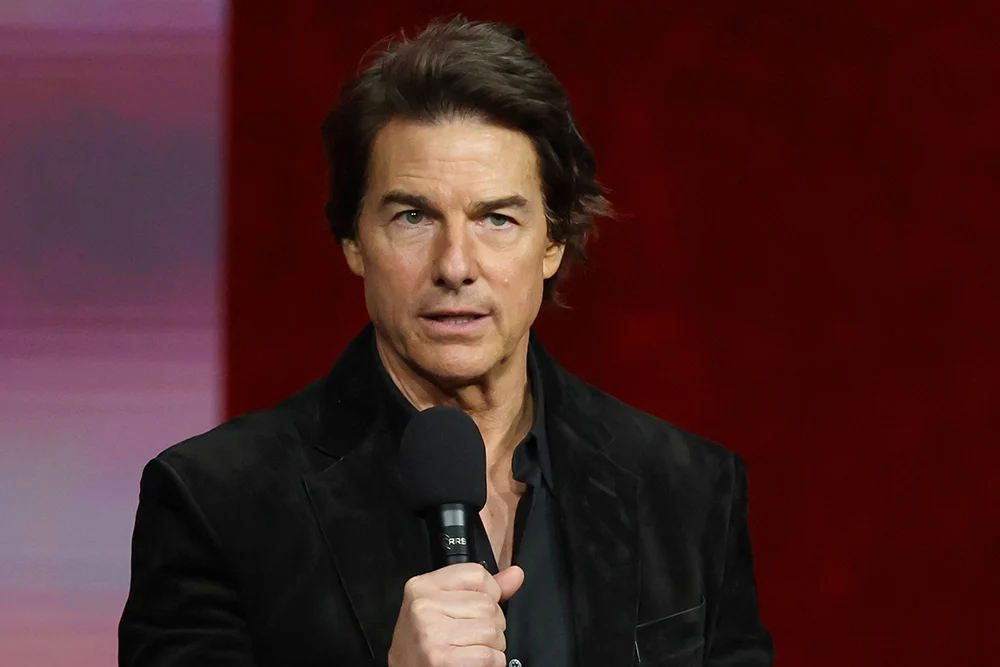
In an era defined by rapid technological disruption and the encroaching shadow of artificial intelligence, Hollywood’s most dedicated architect of the blockbuster, Tom Cruise, remains an unshakeable optimist. Speaking at an intimate BAFTA "Life in Pictures" event in London this week, the legendary actor and producer addressed the existential anxiety currently gripping the film industry. While AI continues to evolve at a breakneck pace, threatening to automate everything from screenwriting to visual effects, Cruise offered a steadfast rebuttal: audiences will always gravitate toward the "real."
For a man whose four-decade career has been defined by pushing the boundaries of what is physically possible on screen, Cruise’s perspective carries significant weight. His message was clear—while the tools of the trade may change, the fundamental human desire for connection and authentic craftsmanship is immutable.
A Legacy of Innovation and Evolution
The BAFTA conversation served as a retrospective of a career that has spanned generations. From the high-octane exhilaration of Top Gun to the nuanced character studies of Jerry Maguire and Magnolia, Cruise has consistently occupied the intersection of artistic prestige and mass-market appeal.
However, it is his work on the Mission: Impossible franchise that best illustrates his approach to technology. Throughout the series, Cruise has utilized cutting-edge production methods to achieve practical stunts that defy gravity and logic. Yet, even as he embraces the latest in camera tech and VFX, he views these tools as extensions of the performer, not replacements for them.
This tension between the mechanical and the human is the thematic centerpiece of the upcoming Mission: Impossible – The Final Reckoning (2025). In a meta-commentary on the current climate, the film positions AI as the primary antagonist. By confronting the technology on screen, Cruise and his collaborators are engaging in a dialogue about the industry’s future—a future where the "villain" is not just a plot device, but a reflection of the industry’s deepest modern-day fear.
The Theatrical Experience: A Different Art Form
During the Q&A, moderated by Edith Bowman, Cruise addressed the delicate balance between the rise of streaming platforms and the sanctity of the cinema. While he noted that he holds no animosity toward home viewing, he made a distinction that defines his professional philosophy: the theater is a unique space.
"I have nothing against streaming or anything like that," Cruise noted, emphasizing that the communal act of sitting in a darkened room with strangers is a fundamentally different experience. "It’s a different art form."
This belief is not just sentimental; it is rooted in his commitment to the theatrical model. He pointed to the historic summer box office of 2026—a period that shattered all-time records, generating $4.76 billion between May and Labor Day—as empirical evidence that audiences are not retreating from the big screen. To Cruise, these figures aren’t just data points; they are a mandate. They represent a collective hunger for human storytelling that can only be satisfied by the scale and gravity of a theatrical release.
Data and Trends: The Resilience of the Box Office
The industry’s recent performance supports Cruise’s optimism. Despite the doomsday predictions surrounding the rise of generative AI and the convenience of streaming, the box office has shown remarkable resilience.
The record-breaking summer of 2026 serves as a bellwether for the industry. While skeptics argued that audiences had become "content-agnostic," the surge in ticket sales proved that high-quality, human-centric narratives still hold the power to bring people together. Industry analysts suggest that this trend is driven by a "post-digital fatigue." As consumers spend more of their lives behind screens—interacting with algorithms and synthetic media—the experience of a film that was clearly crafted by human hands, featuring real stunt work and tangible sets, becomes a premium commodity.
Cruise’s advocacy for the theatrical experience aligns with this shift. He argues that the industry’s survival depends on its ability to offer something that cannot be replicated by a home algorithm: an event.
Facing the Future: The AI Paradigm
When pressed by Bowman on the specific implications of AI, Cruise did not retreat into denial. He acknowledged that the technology is inevitable and that its integration into the creative process is already underway. "You know, it is coming and it’s going to happen," he admitted.
However, his response to this inevitability was one of resilience: "Creatives must keep creating."
Cruise’s stance is that AI should be viewed as a tool rather than a replacement. The "human" element—the intuition, the emotional depth, and the physical risk—are qualities that AI can simulate but never authentically possess. By prioritizing stories that feel "real," the industry can safeguard its value proposition. He emphasized that even if a machine can generate a sequence, the audience’s awareness that a human performed a stunt, or that a writer channeled a lived experience, is where the true value lies.
A New Transformation: The "Digger" Tease
If anyone understands the value of the human touch, it is Tom Cruise. To underscore his point, the actor discussed his upcoming role in Digger, directed by Alejandro G. Iñárritu. The film represents a radical departure for Cruise, who portrays a wealthy, aging oil tycoon.
The physical transformation required for the role—which involved a complex fat suit and prosthetics—is a testament to his dedication to the "real." Cruise revealed that the makeup process took six hours to apply daily, a grueling commitment that stands in stark contrast to the ease of digital de-aging or CGI-enhanced characters.
"I’ve never read a movie like this," Cruise said of the script. "It’s the most original film and one of the most moving films I’ve ever seen."
By choosing a project that demands such intense physical and emotional labor, Cruise is putting his money where his mouth is. He is eschewing the shortcuts that modern technology offers in favor of a raw, transformative performance. Digger, which hits theaters on October 2, 2026, is poised to be a cornerstone of this argument—a project that relies on the singular brilliance of its lead actor rather than the polish of digital manipulation.
Implications for the Industry
The implications of Cruise’s stance are far-reaching. As studios weigh the cost-benefit analysis of AI integration, they must consider the "Cruise Doctrine": that audience loyalty is earned through the perception of authenticity.
If the industry leans too heavily into AI, it risks alienating the very audience that has fueled its historic success. If, however, it follows the path of high-concept, high-craft storytelling, it can survive the transition into the digital age.
Cruise’s leadership in this space is crucial. By continuing to produce films that celebrate human achievement—whether it’s the daredevilry of Mission: Impossible or the transformative character work in Digger—he provides a roadmap for his peers. He reminds us that while the landscape of film is changing, the core of the art form remains constant.
As we look toward the future, the words of the actor ring true: "There is nothing like human." In an age of synthetic perfection, the imperfections, the risks, and the raw humanity of a Tom Cruise performance may well be the industry’s most valuable asset. The "Final Reckoning" may be approaching, but if Cruise is the leading man, the human story is far from over.