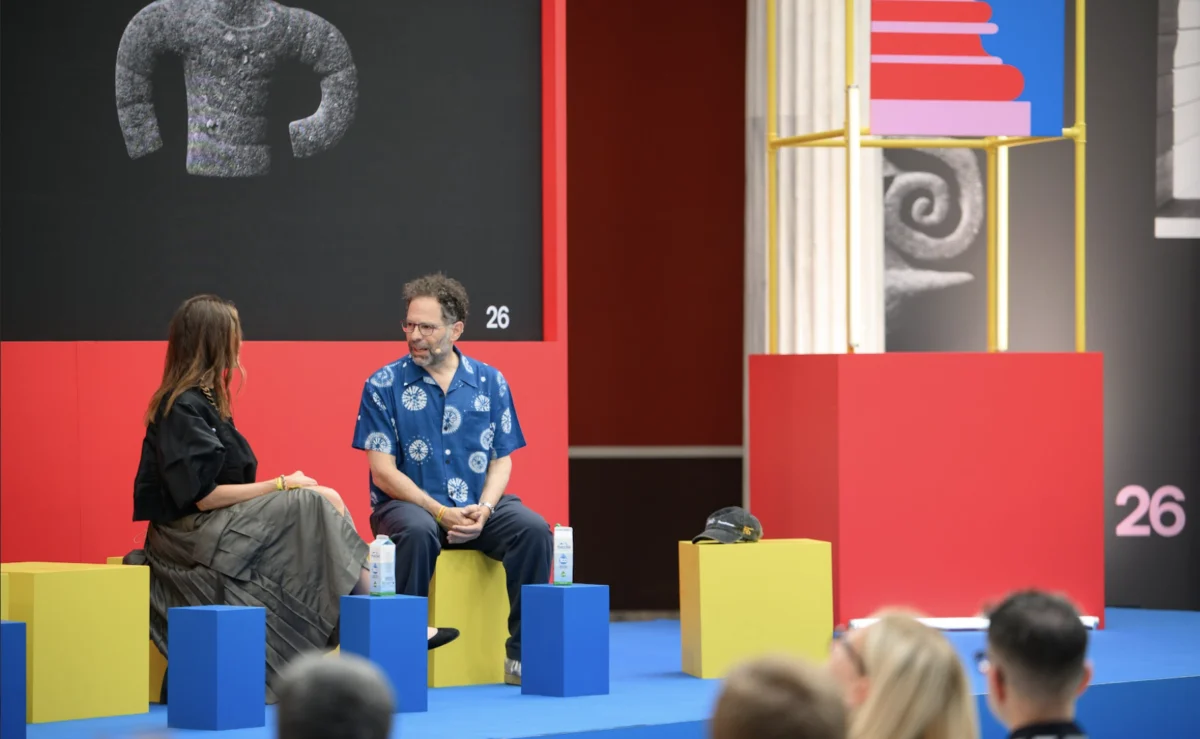
In the late spring of 2026, amidst the sun-drenched backdrop of a burgeoning tech festival in Athens, Neil Rimer—the co-founder of Index Ventures and a titan of venture capital—articulated a sentiment that has since rippled through the upper echelons of global finance. Speaking on the staggering wealth accumulation driven by the artificial intelligence boom, Rimer offered a stark, binary prediction: “I have a strong sense that there will be some sort of a redistribution. It’ll either be voluntary or it’ll be involuntary, but it’ll happen, and I hope it’s voluntary.”
Coming from a career investor who has helped shape the landscape of modern technology, the statement was startling. Rimer, who stepped back from the daily rigors of deal-making in 2021, has spent decades navigating the corridors of power in Silicon Valley. His firm, Index Ventures, has been a central player in the tech explosion, managing roughly $15 billion in capital and overseeing massive exits, including the recent IPO of Figma and the multi-billion-dollar acquisition of cybersecurity firm Wiz. When a man of Rimer’s stature warns of “involuntary” redistribution, it is not mere populism; it is a calculated reading of the historical barometer.
The Chronology of a Philanthropic Retreat
To understand the urgency of Rimer’s warning, one must look at the declining trajectory of traditional philanthropy. For years, the “Giving Pledge”—the initiative championed by Warren Buffett and Bill Gates to encourage the world’s wealthiest individuals to commit half of their fortunes to charity—served as the gold standard of voluntary redistribution.
However, the pledge has lost its luster. After an initial surge of interest, participation has cratered. In its first five years, 113 families signed on. That number dwindled to 72, then 43, and by 2024, a mere four families joined the fold. As wealth in the tech sector has reached unprecedented heights, the inclination to distribute it has seemingly plummeted. The philosophy of the modern billionaire has shifted, best encapsulated by Elon Musk, who has famously remarked that his business enterprises are his form of philanthropy.
The decline is not limited to the billionaire class. Data from the Stanford Social Innovation Review indicates that the number of Americans participating in charitable giving has fallen for five consecutive years. While total dollar amounts reached a record $592.5 billion in 2024—driven by the hyper-wealthy—the broader base of donors is shrinking. The proportion of affluent households engaging in philanthropy has dropped from 90% in 2017 to roughly 81% today.
Supporting Data: A New Gilded Age
The concentration of wealth in the AI era is not merely a matter of perception; it is a mathematical reality. Following the SpaceX IPO, Elon Musk became the world’s first trillionaire. Forbes identified 45 new billionaires in 2026 alone, whose combined net worth sits at $2.9 trillion.
While some argue that this is simply the natural byproduct of innovation, economists are sounding alarms. The share of U.S. wealth held by the top 1% hit 31.7% in late 2025—a record high since the Federal Reserve began tracking the metric in 1989.
Economist Gabriel Zucman has provided a more granular, and perhaps more haunting, comparison. At the peak of the Gilded Age in 1910, the four largest fortunes in America accounted for 4% of U.S. GDP. Today, the 19 wealthiest households command 14% of the nation’s economic output. The sheer scale of capital concentrated in these few hands, combined with the pending IPOs of giants like OpenAI and Anthropic, suggests that the San Francisco Bay Area is on the verge of a liquidity event that could see a small group of individuals control enough capital to purchase a third of all real estate in the metro region.
Official Responses and Political Maneuvering
The looming threat of legislative intervention is the “involuntary” path Rimer cautioned against. In California, voters are facing a ballot measure that would impose a 5% one-time wealth tax on billionaires. The response from the tech elite has been immediate and defensive: a flight of capital. Prominent figures, including Google’s Sergey Brin and Larry Page, have relocated their primary residences to Florida, a state without a personal income tax, in a bid to insulate their assets from California’s reach.
Companies are also engaging in preemptive political engineering. OpenAI, currently eyeing a 2027 IPO, has reportedly explored handing the federal government a 5% equity stake. CEO Sam Altman has pitched this as a way to share the upside of AI with the public, but skeptics view it as a sophisticated form of “political cover.” In the eyes of many venture capitalists, any government involvement in a company’s cap table is a non-starter. As Sequoia Capital’s Roelof Botha famously quipped, “Some of the most dangerous words in the world are: ‘I’m from the government, and I’m here to help.’”
Implications: The Hard Way vs. The Easy Way
Rimer’s historical perspective is informed by the late 19th and early 20th centuries. He draws a direct line between the current moment and the era of Andrew Carnegie. In 1889, Carnegie published The Gospel of Wealth, arguing that the wealthy had a moral obligation to act as trustees of their fortunes for the public good. It was the intellectual foundation of modern philanthropy.
Yet, history shows that philanthropy alone is rarely enough to dampen the fires of economic inequality. When voluntary efforts failed to satisfy the public’s sense of justice in the 1930s, the political system reacted with the “soak-the-rich” taxes of the New Deal, raising top marginal income tax rates to 79%. It was a blunt, forceful instrument of redistribution that emerged only after the political pressure became too great for the status quo to contain.
For Rimer, the concern is deeper than just money; it is about the soul of the industry. He recalls his time at Stanford in the 1980s, when Apple’s founders were viewed as heroes, building tools that improved the human condition. Today, he observes a disturbing shift: his own children speak of major tech firms with the same skepticism once reserved for tobacco companies or defense contractors.
The Verdict on Responsibility
Critics point out that Rimer himself is an investor in companies like Anthropic, making him a primary beneficiary of the very wealth surge he is analyzing. However, Rimer argues that his position allows him to see the inevitability of the coming shift more clearly than those currently caught in the frenzy of valuation.
The implication for Silicon Valley is clear: the current model of “growth at all costs” with minimal social reinvestment is reaching its terminal velocity. If the industry does not find a way to reconcile its immense prosperity with the broader needs of the society that sustains it, the choice will be taken out of their hands.
As Rimer posits, there is an “easy way” and a “hard way” to manage the redistribution of AI’s massive dividends. The easy way involves a return to the spirit of the Gospel of Wealth, where leaders voluntarily fund the public infrastructure of the future. The hard way is the inevitable legislative crackdown—taxation, regulation, and state intervention—that history has shown follows whenever the gap between the elite and the populace becomes too wide to ignore. For the tech titans of today, the window to choose is closing. History, as Rimer suggests, is already beginning to make the choice for them.