Main Facts of the Interceptions
In two separate but equally significant enforcement actions, federal and state border protection agencies in the United States successfully intercepted massive shipments of prohibited agricultural products, endangered wildlife, and illegally harvested seafood. These operations underscore the ongoing, high-stakes battle to protect the nation’s agricultural infrastructure, public health, and native ecosystems from the introduction of destructive pests, foreign animal diseases, and illegal commercial exploitation.
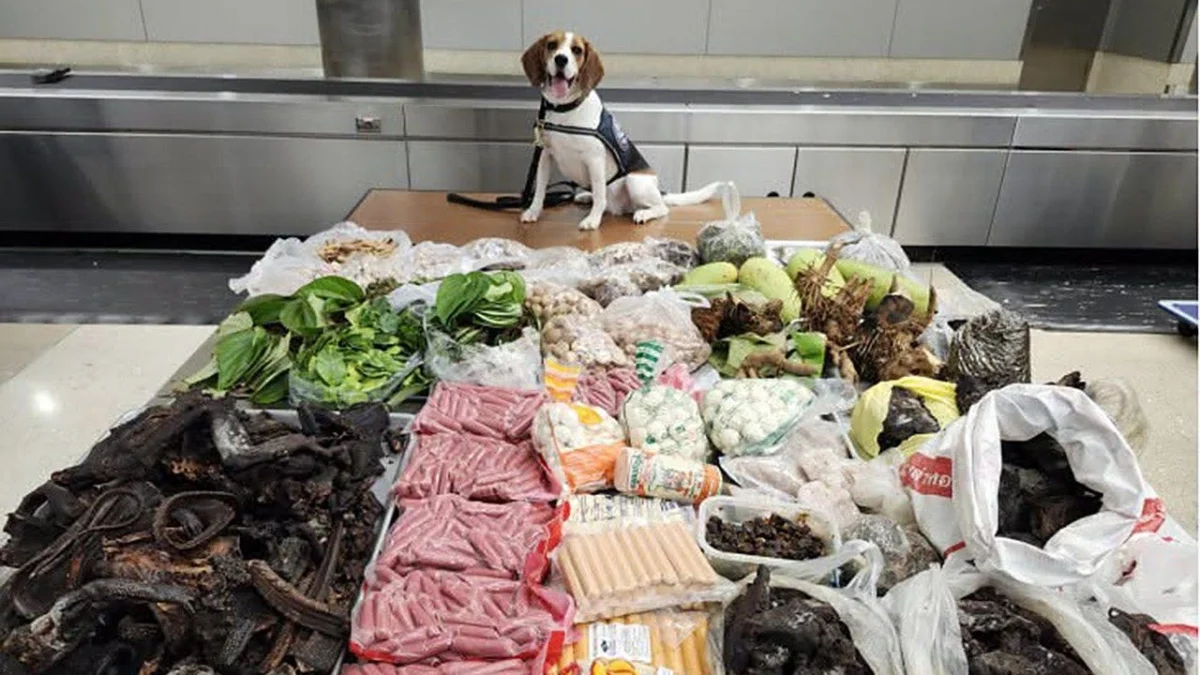
The first incident occurred during a routine international baggage inspection, where a highly trained Customs and Border Protection (CBP) agriculture detector dog alerted handlers to a suspicious suitcase arriving from Thailand. Upon opening the luggage, CBP agriculture specialists discovered nearly 100 pounds of prohibited items, including raw meat, restricted plant species, and a specimen of a Bengal monitor lizard, a protected reptile. The animal was immediately transferred to the custody of the U.S. Fish and Wildlife Service (USFWS) for further investigation.
+-----------------------------------------------------------------+
|               THAILAND LUGGAGE SEIZURE SUMMARY                  |
+---------------------------------+-------------------------------+
| Prohibited Item Category        | Weight / Details              |
+---------------------------------+-------------------------------+
| Raw & Unspecified Meat          | 50 lbs (approx. 22.7 kg)      |
| Plants & Produce                | 33 lbs (approx. 15.0 kg)      |
| (Mangoes, garlic, bamboo, etc.) |                               |
| Bengal Monitor Lizard           | 16 lbs (approx. 7.3 kg)       |
+---------------------------------+-------------------------------+
| Total Weight Seized             | 99 lbs (approx. 45.0 kg)      |
+---------------------------------+-------------------------------+
The second enforcement action took place at the San Ysidro Port of Entry along the United States–Mexico border. Officers with the California Department of Fish and Wildlife (CDFW), collaborating with the National Oceanic and Atmospheric Administration (NOAA), inspected a vehicle crossing into California from Mexico. The search yielded a haul of approximately 436 fish—including rockfish, lingcod, sheephead, and yellowtail—which were being imported illegally for commercial sale without the required licensing or conservation permits.
Chronology of the Interceptions
The Luggage Inspection: K9 Maisy’s Alert on Thailand Flight Baggage
The international incident began in the baggage claim area of a major U.S. international airport, where passengers and luggage from a recent flight originating in Thailand were undergoing standard customs clearance. CBP agriculture detector dog Maisy, a canine specialist trained to identify organic materials, scents of fruit, soil, and animal products, was actively screening baggage.
- The Alert: During her sweep of the luggage carousel and arrival carts, K9 Maisy exhibited a positive alert on a large, heavy suitcase, signaling to her handler that the bag contained agricultural commodities.
- The Inspection: CBP officers isolated the luggage and escorted the passenger to an agriculture inspection station. Upon opening the suitcase, agriculture specialists unzipped a dense, highly unusual cargo.
- The Inventory: The suitcase did not contain typical travel items. Instead, officers cataloged:
- 50 pounds of raw and unprocessed meats.
- 33 pounds of fresh produce and plant materials, including mangoes, fresh garlic cloves, bamboo shoots, and live banana plants.
- Approximately 16 pounds of a Bengal monitor lizard (Varanus bengalensis).
- The Transfer: CBP officers immediately contacted the U.S. Fish and Wildlife Service. Special agents from the USFWS arrived at the scene to take custody of the monitor lizard, initiating a federal wildlife trafficking investigation.
       [Flight Arrives from Thailand]
                     │
                     ▼
       [K9 Maisy Screens Baggage] ──(Positive Alert)──► [Baggage Isolated]
                                                               │
                                                               ▼
       [USFWS Custody & Investigation] ◄── [16 lbs Lizard] ◄── [Luggage Opened]
                                           [50 lbs Meat]
                                           [33 lbs Plants]
The San Ysidro Border Checkpoint: Uncovering the Smuggled Seafood
Days later, at the busy San Ysidro Port of Entry on the southern border of California, state and federal wildlife officers were conducting targeted inspections of vehicles entering the United States from Mexico.
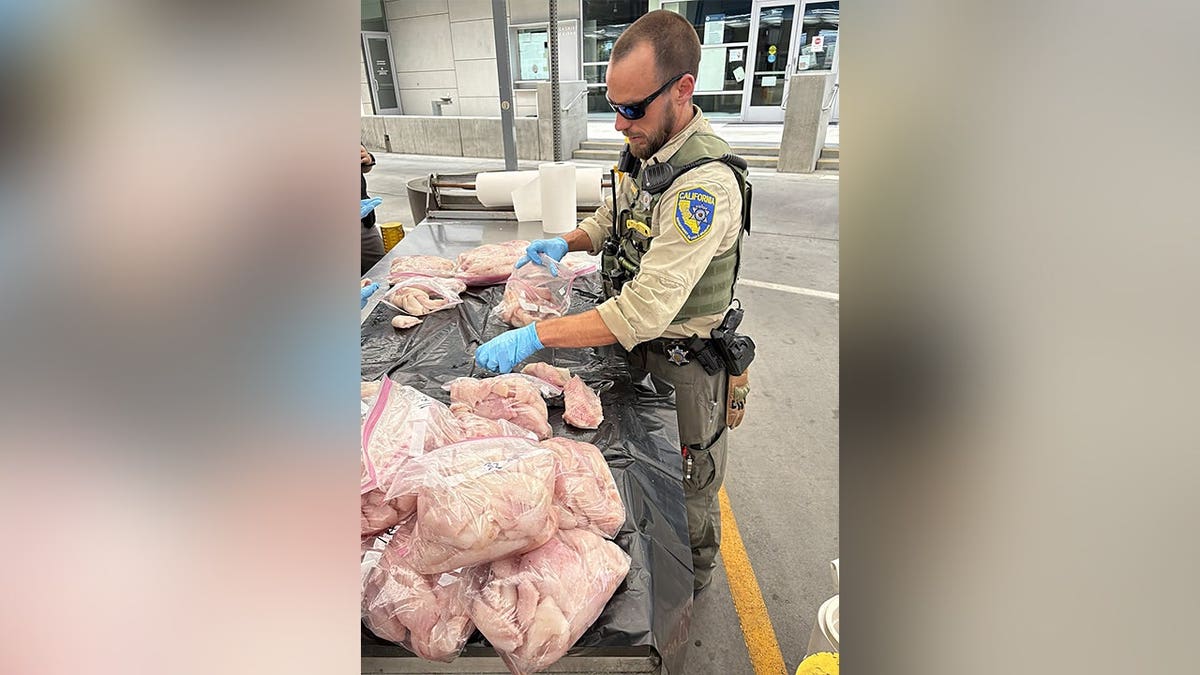
- The Stop: CDFW officers, working alongside NOAA federal agents, selected a vehicle carrying three occupants for a secondary inspection.
- The Discovery: Upon searching the vehicle, officers discovered several large coolers packed with fresh fish fillets and whole fish. The total count reached 436 individual fish, representing highly regulated species such as rockfish, lingcod, California sheephead, and yellowtail.
- The Interrogation: When questioned, the three individuals in the vehicle failed to produce valid Mexican sportfishing or commercial fishing licenses, nor did they possess the required U.S. import documentation or commercial seafood permits.
- The Seizure: Officers determined that the fish had been unlawfully harvested in Mexican waters and were destined for illicit commercial markets in Southern California. The entire catch was seized as evidence, and the vehicle’s occupants were detained for processing.
Supporting Data: The Biological and Economic Threats of Illegal Imports
To understand the severity of these infractions, it is necessary to examine the ecological and economic threats that smuggled biological materials pose to the United States.
Agricultural Risks: Pests, Viruses, and Pathogens
Unregulated agricultural imports are among the primary vectors for invasive pests and diseases that can devastate domestic farming. The items seized from the Thailand flight carry specific, high-risk biological threats:
- Raw Meat and African Swine Fever (ASF): Unapproved raw pork and beef imports from regions affected by African Swine Fever or Foot-and-Mouth Disease (FMD) are strictly prohibited. ASF is a highly contagious and lethal viral disease affecting domestic and wild pigs. An outbreak in the U.S. could halt billions of dollars in agricultural exports and devastate the domestic pork industry.
- Mangoes and Fruit Flies: Fresh mangoes from Southeast Asia are notorious hosts for the Oriental fruit fly (Bactrocera dorsalis). If established in the U.S., this pest would threaten billions of dollars in fruit crops, particularly in California, Florida, and Texas, requiring quarantine measures and aggressive chemical treatments.
- Bamboo and Banana Plants: Live banana plants can carry the Banana Bunchy Top Virus (BBTV) or destructive nematodes. BBTV is a devastating viral disease that stunts plant growth, deforms leaves, and renders banana plants completely unproductive. Bamboo can harbor wood-boring beetles and fungal pathogens that threaten native forestry.
Wildlife Trafficking and the Bengal Monitor Lizard
The Bengal monitor lizard (Varanus bengalensis) is a large varanid lizard native to Southern Asia.
- Conservation Status: This species is protected under the Convention on International Trade in Endangered Species of Wild Fauna and Flora (CITES) under Appendix I or Appendix II, depending on the specific subspecies and region. Appendix I lists species threatened with extinction, prohibiting international commercial trade entirely.
- The Black Market: Monitor lizards are highly sought after in the illegal wildlife trade for their skins (used in leather goods), their meat, traditional medicine practices, and the exotic pet trade.
- Invasive Potential: If imported alive, exotic reptiles pose a severe threat of becoming invasive species. Florida’s ongoing struggle with invasive Burmese pythons and Nile monitor lizards illustrates the ecological damage that can occur when non-native reptiles establish breeding populations in fragile ecosystems.
Marine Exploitation and Illegal, Unreported, and Unregulated (IUU) Fishing
The seizure of 436 fish at the San Ysidro Port of Entry highlights the ongoing battle against Illegal, Unreported, and Unregulated (IUU) fishing, which threatens marine conservation and local economies.
- Overfishing of Vulnerable Species: Species like rockfish and lingcod are slow-growing, late-maturing fish that are highly vulnerable to overfishing. Strict catch limits and seasonal closures are enforced in both U.S. and Mexican waters to ensure population sustainability.
- Economic Under-cutting: Smuggled seafood bypasses safety inspections, tariffs, and legitimate supply chains. This undercuts law-abiding commercial fishers who pay licensing fees, adhere to strict quotas, and undergo rigorous health and safety inspections.
- Public Health Hazards: Unregulated seafood transported in passenger vehicles often lacks proper refrigeration, creating a significant risk of scombroid poisoning, bacterial contamination (such as Salmonella or Vibrio), and parasites.
Official Responses and Regulatory Frameworks
Following these seizures, representatives from the involved agencies emphasized the critical nature of interagency cooperation in protecting the nation’s borders from biological threats.
Customs and Border Protection (CBP)
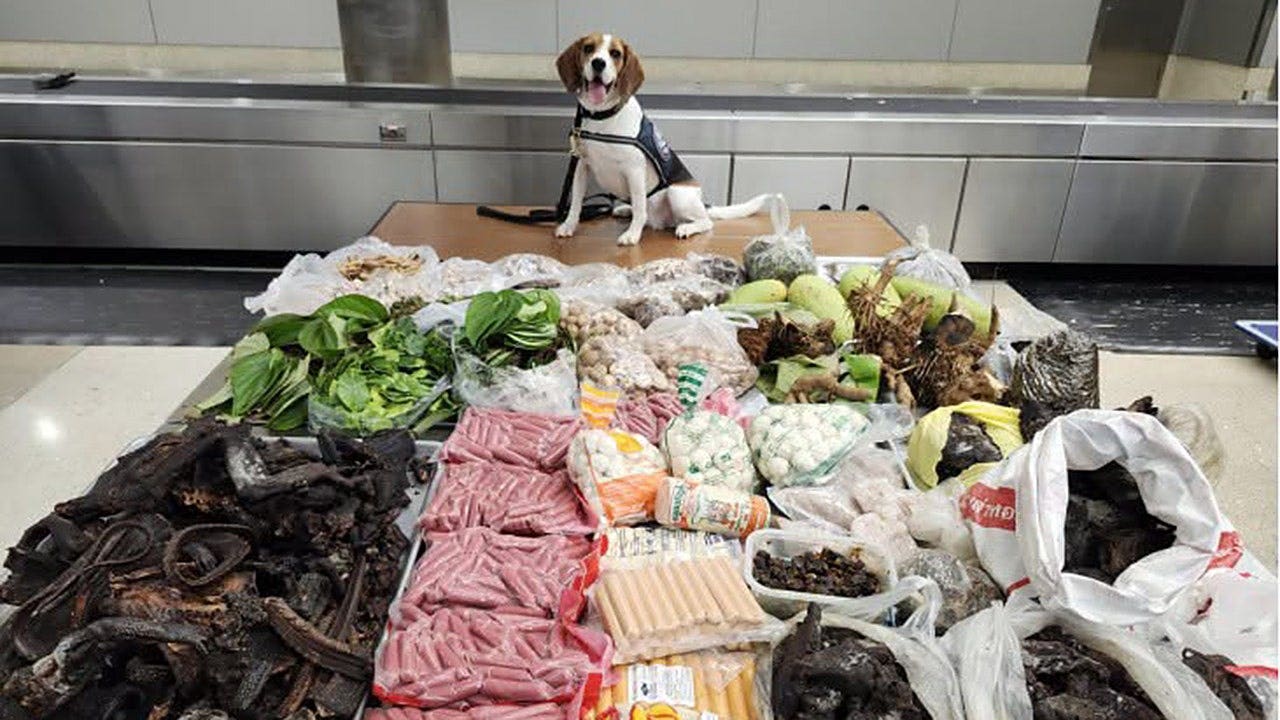
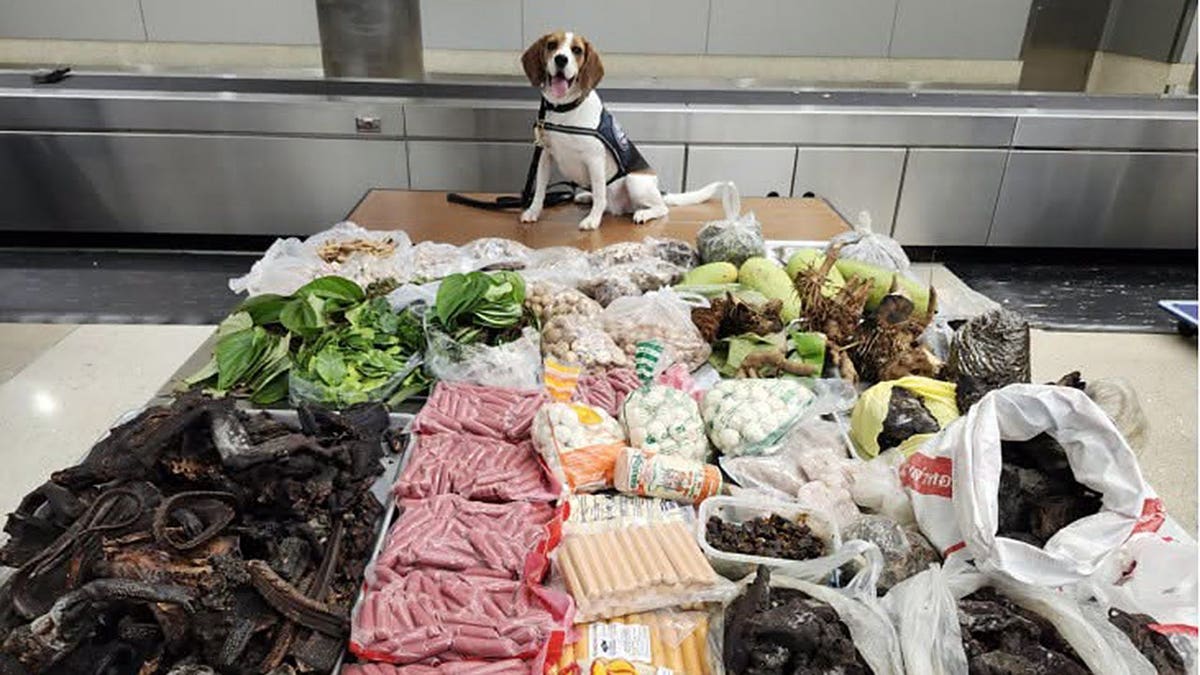
In a lighthearted but firm social media post, CBP shared an image of K9 Maisy sitting proudly next to the massive spread of confiscated items.
"If you discovered all this in a suitcase, wouldn’t you be this happy?" the agency wrote.
Behind the humor lies a serious mandate. CBP agriculture specialists are the front line of defense, inspecting millions of passengers, commercial shipments, and international mail parcels daily. On a typical day, CBP agriculture specialists across the country intercept thousands of prohibited plant materials, meat products, and destructive insect pests.
California Department of Fish and Wildlife (CDFW)
The CDFW confirmed that formal charges are being pursued against the three individuals stopped at the San Ysidro border crossing. The agency stated that the catch was seized as evidence under state and federal conservation laws.
The suspects face charges related to:
- The unlawful take of fish in Mexican waters.
- Fishing without valid licenses.
- The illegal importation of commercial quantities of fish into the United States.
Under the federal Lacey Act, it is a federal crime to import, export, transport, sell, receive, acquire, or purchase any fish, wildlife, or plants taken, possessed, transported, or sold in violation of any law, treaty, or regulation of the United States, any state, or any foreign law.
Broader Implications for Biosecurity and Border Policy
These two seizures illustrate that border security extends far beyond the interception of narcotics, weapons, and unauthorized migration. Biosecurity—the protection of a nation’s environment, economy, and population from harmful biological entities—is increasingly recognized as a core component of national security.
                  ┌─────────────────────────────┐
                  │  U.S. BORDER BIOSECURITY    │
                  └──────────────┬──────────────┘
                                 │
         ┌───────────────────────┼───────────────────────┐
         ▼                       ▼                       ▼
┌─────────────────┐     ┌─────────────────┐     ┌─────────────────┐
│ ECONOMIC SHIELD │     │ECOLOGICAL SHIELD│     │  PUBLIC HEALTH  │
│                 │     │                 │     │                 │
│Prevents billions│     │Blocks invasive  │     │Prevents zoonotic│
│in agricultural  │     │species and      │     │pathogens, ASF,  │
│crop damage and  │     │protects native  │     │and unsanitary   │
│livestock losses.│     │wildlife.        │     │food imports.    │
└─────────────────┘     └─────────────────┘     └─────────────────┘
The Role of Specialized Canine Units
The success of the Thailand baggage interception highlights the indispensable role of the CBP Agriculture Canine program. Often referred to as the "Beagle Brigade" (though utilizing various breeds, including Labradors and mixed breeds), these dogs undergo intensive training at the USDA National Detector Dog Training Center in Newnan, Georgia. Their keen sense of smell allows them to scan luggage lines rapidly, identifying organic compounds hidden deep within vacuum-sealed packages, plastic wraps, and hard-sided suitcases far more quickly than manual human inspections or standard X-ray machines.
The Interagency Web of Defense
No single agency can police the vast influx of passengers and goods entering the United States. The successful resolution of these cases relied on a complex, collaborative web of local, state, and federal entities:
- CBP acts as the initial physical barrier at international airports and land ports of entry.
- USDA establishes the agricultural import guidelines and manages canine training programs.
- USFWS enforces international wildlife treaties, such as CITES, and prosecutes wildlife traffickers.
- CDFW and other state-level agencies manage localized ecological enforcement and patrol borders in coordination with federal partners.
- NOAA Fisheries oversees marine resource conservation, tracking illegal seafood trade routes.
As global travel and trade continue to expand, the sophistication of smuggling networks—whether trafficking in exotic pets, illegal seafood, or prohibited agricultural delicacies—requires an equally sophisticated, highly integrated enforcement response. The alertness of a single detector dog in an airport arrivals terminal or a targeted vehicle stop at a busy land border can be the difference between maintaining ecological stability and facing a multi-million-dollar biological crisis.