By Global News Desk
Updated: July 20, 2026 – 08:14 GMT
The Middle East is teetering on the precipice of a full-scale regional conflict following a dramatic escalation in hostilities between the Islamic Republic of Iran and the United States. In a coordinated series of operations early Monday morning, Iran’s Islamic Revolutionary Guard Corps (IRGC) launched a direct assault against United States military infrastructure stationed in Kuwait. Simultaneously, reports of explosions and the activation of air defense systems in Manama, Bahrain, have signaled that the theater of operations is rapidly expanding.
The Strike: A Calculated Escalation
The IRGC issued a formal statement via the state-run Islamic Republic News Agency (IRNA) on Monday, confirming that it had successfully targeted key US military installations within Kuwaiti borders. Among the claimed targets was a critical early-warning radar facility, which Tehran asserts was "completely destroyed" during the initial wave of the offensive.
For security analysts, this represents a significant departure from the "shadow war" tactics historically employed by Iranian-backed proxies. By striking sovereign Kuwaiti territory—a key strategic partner of the United States—Iran has effectively bypassed the "plausible deniability" strategy it has maintained for years. The strike on the radar system, specifically, appears to be a tactical maneuver designed to blind US surveillance capabilities, potentially paving the way for larger, follow-on strikes.
Chronology of the Crisis: July 18–20, 2026
The current hostilities did not occur in a vacuum. The roots of the present crisis can be traced back to a series of skirmishes in the preceding 48 hours.
- July 18: Tensions spiked when reports emerged of a skirmish in international waters, resulting in the deaths of several Iranian personnel. Iranian state media described the incident as an unprovoked "act of aggression" by US naval forces.
- July 19 (Morning): Retaliatory rhetoric began to emanate from Tehran, with high-ranking IRGC officials promising a "harsh and decisive response."
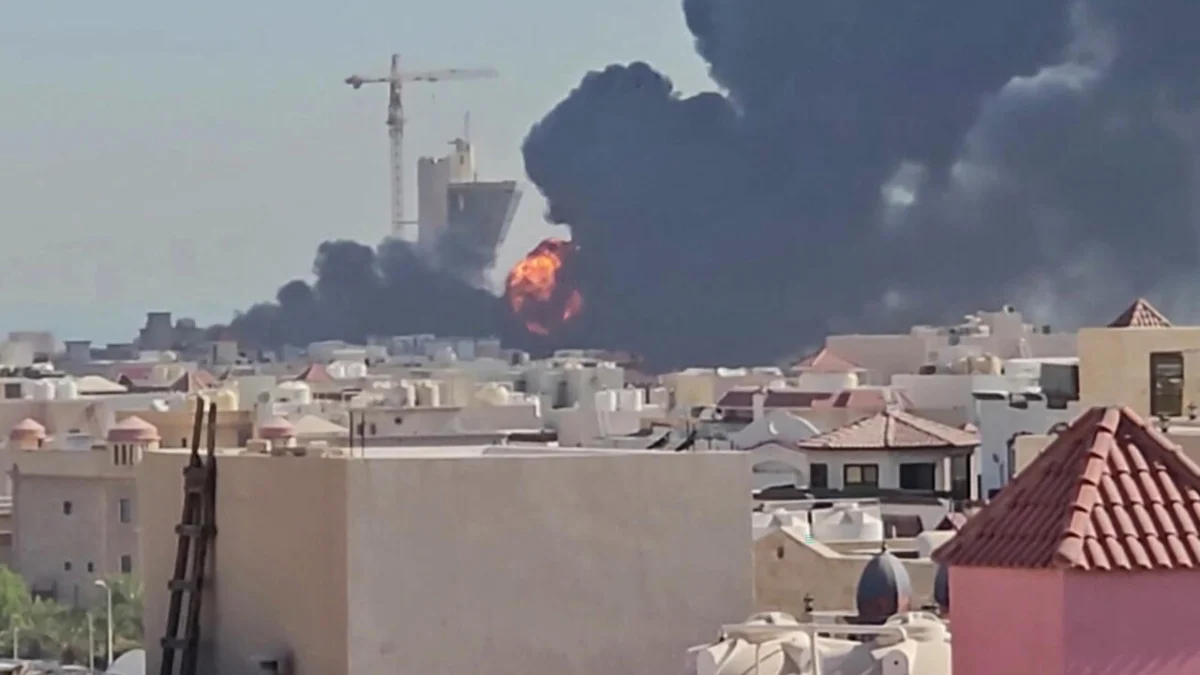
- July 19 (Evening): Social media platforms were flooded with User Generated Content (UGC) showing plumes of thick black smoke and intense fireballs rising over the town of Mangaf, south of Kuwait City.
- July 20 (Early Hours): Air raid sirens were triggered across Manama, Bahrain. Local residents reported a series of loud, concussive explosions that rocked the capital, indicating that the conflict had spread to the headquarters of the US Fifth Fleet.
Supporting Data: Assessing the Military Footprint
The strike on Kuwait and the disturbances in Bahrain threaten the stability of the Gulf Cooperation Council (GCC) states, which host some of the most vital US military assets in the world.
Kuwait: The Strategic Hub
Kuwait serves as the primary logistical hub for US ground forces in the region. With thousands of American troops stationed at Camp Arifjan and Ali Al Salem Air Base, the facility is essential for power projection in the Northern Gulf. The reported destruction of a radar system—if verified—suggests a high level of Iranian intelligence regarding US signal-intelligence (SIGINT) infrastructure.
Bahrain: The Naval Nexus
Manama is the home of the US Fifth Fleet and the Naval Support Activity (NSA) Bahrain. The activation of sirens and reports of explosions suggest that the Iranian assault may have targeted maritime security assets or the sophisticated Patriot missile defense systems protecting the harbor.
Official Responses and Diplomatic Fallout
Tehran: "The Right to Defend"
The Iranian government has framed the attacks as a legitimate exercise of the right to self-defense. In a televised address, an IRGC spokesperson stated, "The era of impunity for US intervention in our region is over. Any aggression will be met with a response that targets the very heart of American military hegemony in the Gulf."

Washington: A Vow of Retribution
The White House has remained in constant contact with the Pentagon and regional allies. In a brief statement issued early Monday, the US Department of Defense confirmed that it was "assessing the damage" to its facilities in Kuwait. "The United States reserves the right to respond at a time and place of our choosing," the statement read. "We are committed to the security of our partners and will not allow these brazen attacks to go unanswered."
Regional Reactions
The GCC has convened an emergency session to address the violation of Kuwaiti sovereignty. Leaders in Riyadh and Abu Dhabi have expressed "grave concern" regarding the instability, though they are currently walking a precarious line between supporting their US security guarantees and fearing the economic fallout of a regional war that could close the Strait of Hormuz—the world’s most important oil chokepoint.
Implications for Global Security and Markets
The Energy Market Shock
The immediate impact of the strike has been felt in global commodity markets. Brent Crude futures spiked by nearly 12% in early Asian trading on Monday. If the conflict escalates further, analysts predict a sustained surge in energy prices that could trigger global inflationary pressures, potentially reversing the slow economic recovery seen in the first half of 2026.
The Geopolitical Reconfiguration
The involvement of Bahrain and Kuwait suggests that the conflict is no longer confined to the periphery. The US is now faced with a difficult strategic choice:
- Containment: Attempting to limit the conflict through targeted sanctions and defensive maneuvering, which may be perceived as weakness by Tehran.
- Escalation: Launching counter-strikes on Iranian soil, which carries the significant risk of triggering a wider war involving Iranian proxies in Lebanon, Iraq, and Yemen.
Humanitarian and Civilian Risks
The footage from Mangaf, showing smoke billowing near civilian centers, highlights the extreme danger to non-combatants. As air defense systems become active across the region, the risk of "friendly fire" or civilian casualties from intercepted debris rises significantly. International humanitarian organizations are already calling for an immediate de-escalation, warning that the current trajectory could lead to a humanitarian crisis unprecedented in the modern history of the Gulf.
Looking Ahead
As the world watches the Middle East, the coming 24 hours will be critical. Intelligence analysts are monitoring Iranian troop movements for signs of a second wave, while US naval assets in the region are reportedly shifting to a high-readiness posture.
The events of July 20, 2026, mark a turning point. The "shadow war" is dead, replaced by a kinetic, direct confrontation that has effectively rewritten the security architecture of the Persian Gulf. Whether this remains a contained exchange or spirals into a wider regional conflagration will depend on the restraint—or lack thereof—shown by both Washington and Tehran in the dark hours that lie ahead.
For continuous updates on this developing story, please follow our liveblog, which will provide real-time reporting on military movements, market shifts, and diplomatic cables as they become available.