By Global Affairs Desk
The humanitarian situation in Venezuela has reached a catastrophic inflection point following the dual seismic events of June 24, which decimated regional infrastructure and claimed thousands of lives. As the nation struggles to stabilize, a coalition of United Nations experts has issued an urgent, high-level appeal to the Venezuelan government: dismantle the restrictive legal frameworks currently paralyzing non-governmental organizations (NGOs) and humanitarian aid groups.
The UN’s intervention underscores a growing global concern that domestic political obstructionism is directly impeding the survival and recovery of thousands of vulnerable citizens. With essential services collapsed and food security in a state of rapid decline, the international community is warning that without immediate regulatory reform, the seismic tragedy will spiral into a long-term humanitarian disaster.
The Seismic Catastrophe: A Chronology of the Disaster
The crisis began on the morning of June 24, when the Venezuelan landscape was violently altered by two back-to-back earthquakes.
- 08:42 AM (Local Time): The first seismic shock, registering a magnitude of 7.2, struck near the northern coastal regions, causing immediate structural failure in older urban centers.
- 11:15 AM (Local Time): A secondary, more powerful tremor of 7.5 magnitude hit the same fault lines, obliterating weakened buildings and triggering landslides that isolated rural communities from emergency responders.
- June 25–26: Initial rescue operations were hampered by a lack of heavy equipment and poor communication infrastructure. The Red Cross and local volunteer groups began arriving on the scene, only to be met with bureaucratic delays at state checkpoints.
- July 3: UN human rights experts officially broke their silence, issuing a formal statement decrying the "administrative silence" of the Venezuelan government that has prevented aid organizations from operating at full capacity.
According to the latest figures from the International Federation of Red Cross and Red Crescent Societies (IFRC), the death toll has climbed to 3,500, with more than 12,000 individuals suffering from injuries ranging from crush syndrome to severe trauma. The destruction of local hospitals and the disruption of the power grid have created a secondary crisis in medical care, where basic life-saving procedures are now being performed in makeshift field tents.
The Regulatory Barrier: Law as a Weapon Against Relief
At the heart of the current standoff is the Law on the Oversight, Regularisation, Operation, and Financing of Non-governmental Organisations and Non-Profit Social Organisations. This legislation, which was criticized by human rights advocates long before the earthquakes, has become the primary mechanism through which the Venezuelan state limits external aid.
The "Administrative Silence" Trap
The law mandates that all NGOs must register with the Autonomous Service of Registries and Notaries. However, the UN report highlights a deliberate systemic failure: the government simply refuses to process these registrations. By maintaining "administrative silence," the state effectively leaves organizations in a legal limbo, stripping them of their official status.
Without this status, NGOs cannot open bank accounts, sign contracts for aid delivery, or legally receive international funds. Consequently, even if a relief organization has the resources to provide water, food, or medicine, the legal framework renders their operations "illegal," exposing their staff to potential arrest or the seizure of their assets.
Financial Oversight as Strangulation
Furthermore, the UN has noted that banking regulations have been weaponized to track and throttle the flow of funds to NGOs. Banks are currently required to subject these organizations to "excessive oversight," a practice that often results in the freezing of accounts during the most critical phases of disaster response. This bureaucratic bottleneck serves to centralize aid distribution under state control, which experts argue is both insufficient and prone to political favoritism.
Supporting Data: An Economy in Freefall
Venezuela was already battling a prolonged socio-economic crisis characterized by hyperinflation and a systematic erosion of public services prior to the June 24 earthquakes. The UN Refugee Agency (UNHCR) and UK-based aid analysts have characterized the current situation as an "escalation of an existing tragedy."
Key data points regarding the post-earthquake landscape include:
- Critical Infrastructure: Over 40% of public water systems in affected regions are non-functional, leading to a high risk of water-borne disease outbreaks.
- Food Insecurity: The destruction of distribution centers and transport routes has resulted in a 60% decrease in the availability of basic food items in affected provinces.
- Displacement: Estimates suggest that over 50,000 people are currently homeless, living in temporary shelters that lack sanitation and heating, increasing the vulnerability of children and the elderly.
The International Disaster Response Law (IDRL) serves as the global benchmark for how sovereign states should behave during such calamities. It posits that governments have a primary responsibility to facilitate, not obstruct, international assistance. By refusing to adapt its legal approach to the exigencies of the earthquake, the Venezuelan authorities are effectively ignoring these international standards, creating a man-made barrier on top of a natural disaster.
Official Responses and the UN Mandate
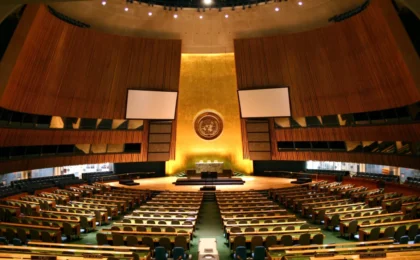
The UN experts have been unequivocal in their messaging. Their statement emphasizes that civil society is not a political adversary but an "indispensable partner" in reconstruction.
"Venezuelan authorities must put an end to these restrictions and, instead, promote measures that facilitate the work of civil society as an indispensable part of the reconstruction effort," the UN delegation stated. They specifically called for the inclusion of women and traditionally marginalized groups in the planning and execution of recovery programs.
The UN has also demanded a "human rights-based approach" that is centered on the victims. This means that aid must be delivered based on need, rather than political affiliation or loyalty to the state. The international community, led by various UN agencies, is currently pushing for a "humanitarian corridor" or a temporary suspension of the restrictive NGO law to allow for an unhindered influx of supplies and personnel.
Implications: The High Cost of Obstructionism
The long-term implications for Venezuela are grave. If the current regulatory barriers remain, the following consequences are anticipated by regional observers:
- Increased Mortality Rates: Preventable deaths will likely rise as medical supplies remain blocked in customs or banking limbo.
- Erosion of International Trust: If aid continues to be obstructed, international donor nations may pivot their resources toward other global crises, leaving Venezuela to face a prolonged economic depression without external financial support.
- Social Instability: The lack of a coordinated, transparent, and efficient relief effort is likely to trigger civil unrest, further destabilizing a nation already reeling from political tension.
- Institutional Decay: By refusing to allow NGOs to function, the state is effectively destroying the very institutions—civil society organizations—that would be necessary for the long-term reconstruction and democratic health of the country.
A Call for Immediate Action
As the emergency phase of the disaster begins to transition into the recovery and reconstruction phase, the urgency of the UN’s request cannot be overstated. The world is watching to see if the Venezuelan government will prioritize the survival of its citizens over the maintenance of restrictive bureaucratic control.
The international community, through the lens of the International Disaster Response Law, remains ready to assist, but that assistance is contingent upon the removal of the legal shackles currently binding the hands of those who are most capable of providing it. Without a fundamental shift in policy, the death toll from the June 24 earthquakes will continue to rise—not from the tremors themselves, but from the systemic failure to allow help to reach those who need it most.