By Editorial Staff
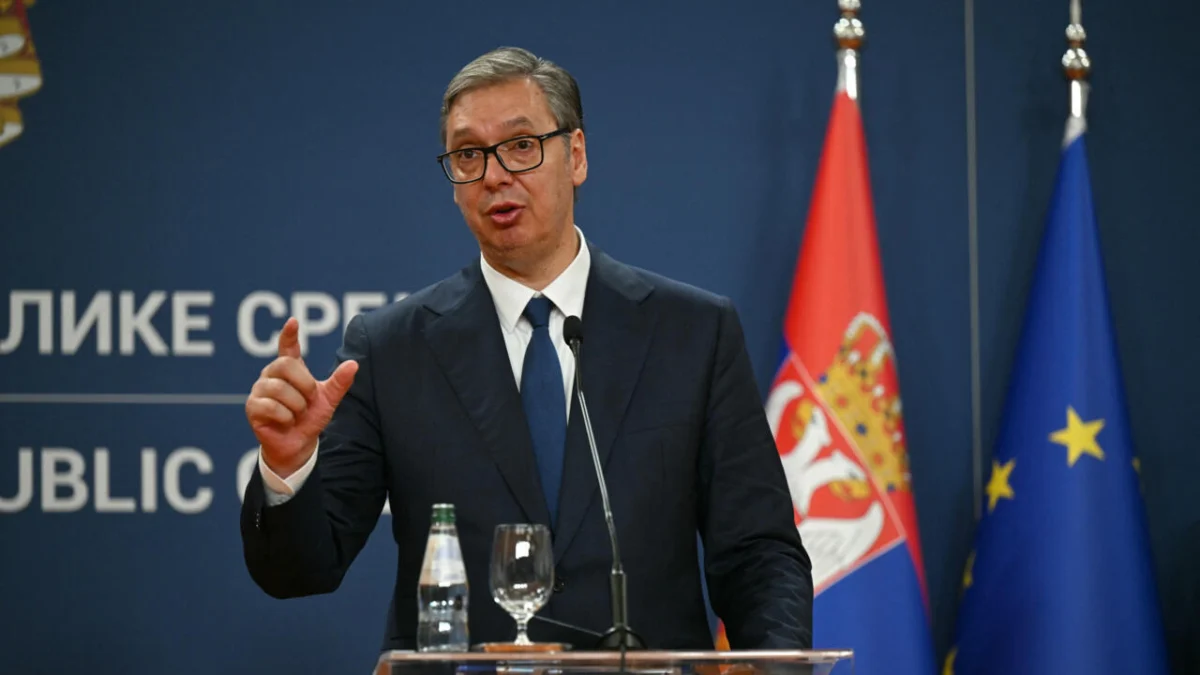
In a move that marks a seismic shift in the Balkan political landscape, Serbian President Aleksandar Vucic announced on Wednesday the dissolution of the National Assembly, effectively triggering snap parliamentary elections scheduled for October 25. The decision, which comes nearly two years ahead of the constitutionally mandated deadline of December 2027, represents a desperate attempt by the long-serving leader to consolidate his authority in the face of a sustained and galvanized opposition movement.
The announcement, delivered in a somber yet defiant televised address, serves as a watershed moment for a nation that has been gripped by deep-seated political instability since the tragic events of November 2024. For President Vucic, 56, the move is a strategic gamble designed to quell the rising tide of public indignation that has tested his decade-long dominance over the Serbian state.
The Catalyst: A Nation in Mourning and Rage
The current political volatility is rooted in a single, devastating event that shattered the national consciousness: the collapse of the railway station canopy in Novi Sad in November 2024. The structural failure, which claimed the lives of 16 people, was not merely viewed as a tragic accident by the Serbian public. Instead, it became the visceral embodiment of systemic rot, widespread corruption, and the erosion of public safety standards under the current administration.
In the aftermath of the tragedy, the country witnessed an explosion of grief that rapidly transformed into a sophisticated, multi-faceted anti-government protest movement. What began as localized vigils in Novi Sad quickly expanded into massive demonstrations in Belgrade, drawing the largest crowds the capital had seen since the ousting of Slobodan Milosevic in 2000. These protesters, led largely by student activists and bolstered by civil society groups, demanded more than just accountability for the collapse—they demanded a fundamental restructuring of a government they accuse of prioritizing patronage over public welfare.
Chronology: From Tragedy to Political Crisis
To understand the gravity of the October 25 elections, one must look at the timeline of events that brought the Serbian state to this precipice:
- November 2024: The Novi Sad railway station collapse occurs, killing 16 people. The disaster sparks immediate national outrage, with allegations surfacing that renovations were conducted by state-linked firms without proper oversight.
- December 2024 – March 2025: Anti-graft protests intensify, spreading from the site of the tragedy to the national capital. The demonstrations become a weekly fixture, characterized by university blockades and student-led activism.
- May 2025: The protest movement formally coalesces, moving beyond general demands for justice to specific calls for snap parliamentary elections. The students announce the formation of an electoral list to challenge the Serbian Progressive Party (SNS).
- August 2025: The pressure mounts on President Vucic. Despite his rhetoric, the government begins to lose its grip on the narrative as international observers express concern over the lack of transparency in the investigations regarding the Novi Sad disaster.
- September 2026: The death and subsequent state-sanctioned funeral of convicted war criminal Ratko Mladic triggers a fresh diplomatic crisis. The public honoring of a genocide perpetrator alienates European partners, further isolating the Vucic administration on the international stage.
- October 2025: President Vucic formally dissolves the parliament, setting the stage for the October 25 snap election.
The Battle for the Ballot: Political Implications
The upcoming election is widely seen as the most significant challenge to the Serbian Progressive Party (SNS) since its rise to power in 2012. President Vucic, who has masterfully navigated the complexities of Serbian governance as either Prime Minister or President for over a decade, is now signaling a tactical retreat—or perhaps a pivot—by announcing his intention to step down from the presidency to campaign as the party’s candidate for Prime Minister.
The Opposition’s Strategy
The opposition, forged in the fires of the student-led blockades, is no longer a collection of disparate voices. It has evolved into a disciplined coalition that has successfully tapped into the economic frustrations of the middle class and the moral outrage of the youth. By fielding their own electoral list, they are forcing a binary choice upon the electorate: a continuation of the current nationalist, populist status quo, or a push for institutional reform and closer integration with the European Union.
Vucic’s Narrative of "Foreign Interference"
In his address on Wednesday, President Vucic did not shy away from his established rhetoric. He characterized the protest movement not as a grassroots phenomenon, but as a result of "foreign interference" and "significant involvement by foreign powers." By framing the opposition as agents of external destabilization, Vucic is attempting to trigger a nationalist reflex among his core voter base. He explicitly cited "unrest, disorder, and clashes" as evidence of a "divided society," framing himself as the only figure capable of maintaining order.
Supporting Data: The Erosion of Trust
The political crisis is supported by a growing body of data indicating a decline in institutional trust. According to recent surveys, public confidence in the judicial system and the government’s infrastructure management has reached an all-time low.
The economic fallout from the protests has also been significant. Persistent civil unrest has created an atmosphere of uncertainty, leading to a cooling in foreign direct investment (FDI). Furthermore, the government’s handling of the Mladic funeral—which saw thousands gather in Belgrade to honor a man convicted of genocide by a UN court—has created a diplomatic rift with the European Union. Brussels has signaled that such actions are incompatible with Serbia’s aspirations for EU membership, placing Vucic in a difficult position as he attempts to balance his right-wing domestic support with the requirements of regional integration.
Official Responses and International Reaction
The international community has been watching the situation with increasing apprehension. While the EU has encouraged the democratic process, it has also issued stern warnings regarding the democratic backsliding in Belgrade.
- The Government Position: The SNS argues that the elections are a necessary step to "clear the air." They maintain that the mandate of the current government was being hampered by the "obstructionist tactics" of the protest movement, and that a fresh vote will clarify the will of the people.
- The Protest Movement’s Stance: Student organizers have declared the election announcement a "victory for the streets." However, they remain cautious, warning that the electoral process must be monitored by international observers to ensure that the vote is free from the intimidation and media manipulation that have historically plagued Serbian elections.
The Path Forward: Stability or Volatility?
As the October 25 election date approaches, Serbia faces an uncertain future. The move to call an early election is a double-edged sword for Vucic. If he secures a decisive victory, he may succeed in neutralizing the protests and resetting his administration. However, if the election results in a fractured parliament or a narrow victory, it could embolden the opposition and usher in a period of prolonged political paralysis.
The situation in Serbia is a poignant reminder of the fragility of democratic institutions in the Balkans. The legacy of the Novi Sad tragedy will continue to serve as a rallying cry, and the central question of the election will not just be about who governs, but how they govern. Will the Serbian people choose the path of nationalist consolidation, or will they opt for a new, reform-minded direction that seeks to address the deep-seated grievances that have been ignored for far too long?
The eyes of the world remain fixed on Belgrade. As the campaign period begins, the rhetoric is expected to harden, and the struggle for the future of the Serbian state will enter its most critical phase. Whether through the ballot box or the ongoing pressure of the streets, the outcome of this election will inevitably redefine Serbia’s role in the region and its relationship with the democratic values of the 21st century.
For now, the country remains at a crossroads—a nation defined by its past, yet desperate to write a new chapter in its turbulent history. The October 25 vote will be the ultimate test of that ambition.