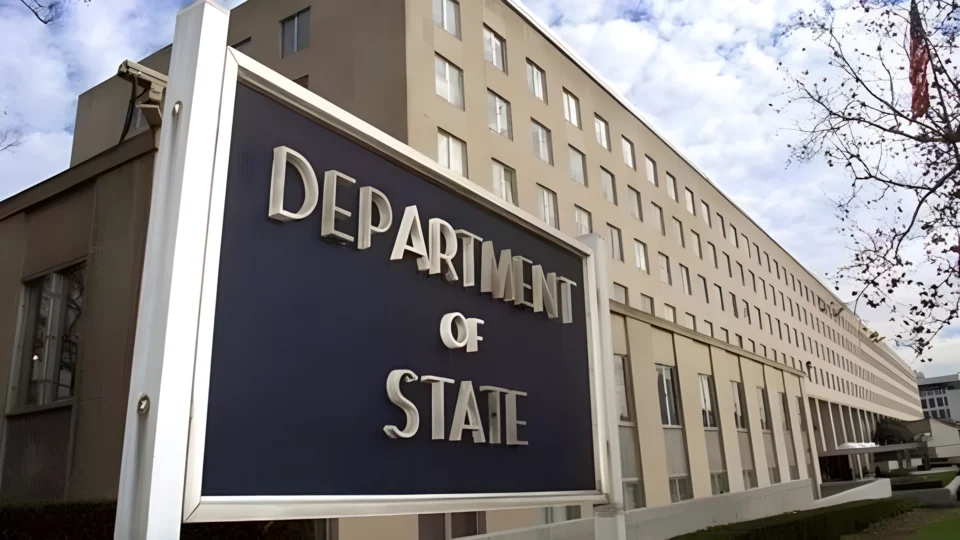
WASHINGTON D.C. — In a significant shift in U.S. immigration and national security policy, Secretary of State Marco Rubio announced on Thursday a rigorous new visa restriction framework designed to bar foreign nationals affiliated with organizations designated as “far-left terrorist” groups. The policy marks a milestone in the administration’s ongoing initiative to categorize and neutralize what it describes as sophisticated, ideologically driven transnational networks intent on destabilizing democratic processes.
The directive, which took immediate effect, leverages Section 212(a)(3)(C) of the Immigration and Nationality Act (INA). This legal provision grants the Secretary of State broad discretionary authority to deny entry to any foreign national whose presence in the United States could, in the Secretary’s reasonable belief, have “potentially serious adverse foreign policy consequences” for the United States.
The Core Policy: Defining the New Frontier of Exclusion
The new policy is not merely a travel ban but a strategic tool for intelligence and security enforcement. According to the State Department’s official release, the restriction targets foreign individuals who have engaged in, materially supported, or provided operational assistance to entities classified as “far-left terrorist” organizations.
The definition provided by the State Department encompasses a wide array of activities, extending beyond direct combat. It specifically flags individuals involved in “economic sabotage,” the orchestration of violent crime, and the provision of logistical or financial aid to networks that utilize violence as a political tool.
Secretary Rubio’s public address emphasized the evolution of these groups, characterizing them as modern, technologically adept, and highly organized. “We are no longer looking at fringe actors operating in isolation,” Rubio stated. “We are confronting sophisticated, organized networks that utilize bombings, assassinations, and systemic intimidation to silence speech, suppress political opposition, and force policy shifts through fear rather than discourse.”
Chronology: The Path to Executive Action
To understand the current policy, one must look at the administrative groundwork laid over the past 18 months.
- September 2025: President of the United States signs National Security Presidential Memorandum-7 (NSPM-7), formally directing federal agencies to prioritize the investigation and disruption of domestic and transnational networks involved in organized political violence.
- November 2025 – March 2026: The Department of Justice and the Department of Homeland Security collaborate on a multi-agency intelligence review, mapping the intersection of domestic radicalization and international funding streams.
- May 2026: Internal reports from the State Department highlight a surge in “foreign operational support” for groups linked to political unrest within U.S. borders.
- July 2026: Secretary of State Marco Rubio formally invokes Section 212(a)(3)(C) of the INA, finalizing the policy that allows for the immediate revocation of visas and denial of entry for identified affiliates of these specific ideological groups.
Supporting Data and Security Analysis
The State Department’s decision is underpinned by intelligence assessments suggesting that extremist groups have increasingly sought to internationalize their operations. Analysts suggest that by operating across borders, these groups aim to evade local law enforcement by moving capital and personnel through porous regulatory environments.
The Mechanism of Disruption
The policy targets three distinct tiers of involvement:
- Direct Combatants: Individuals documented participating in acts of violence, such as explosive attacks or targeted physical harm against political figures.
- Facilitators: Individuals providing technical expertise, including cybersecurity services for sabotage, encrypted communication platforms, or logistical support for crossing borders.
- Financial Enablers: Those who manage or move funds intended to support the operations of these organizations, often under the guise of charitable or academic activity.
Government officials pointed to a rise in "economic sabotage"—specifically cyber-attacks on infrastructure—as a primary concern that necessitated this specific immigration measure. By cutting off access to the U.S. for those supporting these networks, the administration aims to degrade the operational capacity of these groups before they can escalate their activities on U.S. soil.
Official Responses and Political Reaction
The announcement has triggered a polarized response across the political spectrum.
Administrative Defense
Proponents within the administration argue that this is a necessary exercise of sovereign power. A spokesperson for the State Department stated, “The United States has a fundamental obligation to protect its citizens and its democratic institutions from those who seek to tear them down. This policy is a targeted, surgical approach to a specific security threat.”
Domestic Criticism
Critics, including several civil liberties organizations, have expressed concern over the ambiguity of the term “far-left terrorist.” Advocacy groups have raised alarms that the broad language could be weaponized to suppress political dissent or bar activists who are not engaged in violence but merely hold radical political views.
“The danger here is the potential for executive overreach,” said a representative for a leading civil rights organization. “When you combine broad visa authority with a vague, politically charged definition of terrorism, you create a system that invites abuse. We need clear, judicial guardrails to ensure that political expression—even radical dissent—is not conflated with genuine acts of terror.”
Implications: The Future of U.S. Immigration and Foreign Policy
The long-term implications of this policy are twofold: domestic security and international diplomatic relations.
1. Strengthening Internal Security
By utilizing Section 212(a)(3)(C), the administration is signaling that the U.S. will no longer be a safe harbor for those seeking to import political violence. The policy creates a feedback loop with federal law enforcement, where intelligence gathered at the border can lead to broader criminal investigations into domestic cells of these organizations.
2. Geopolitical Tensions
The move also sets a precedent for how the U.S. views its international obligations. If the U.S. begins denying entry to individuals based on their affiliation with groups that other nations may not define as “terrorist,” it could lead to diplomatic friction. Several European and Latin American counterparts have reportedly asked for clarification on whether this policy will affect collaborative research, academic exchanges, or international NGOs.
Secretary Rubio’s team has countered these concerns by stating that the policy is evidence-based and focused strictly on “those who cross the line from speech into violence.”
3. The Judicial Outlook
Legal scholars expect the policy to face immediate challenges in federal court. Challenges will likely center on the due process rights of visa applicants and the definition of “material support” for a terrorist organization, particularly if the definition is seen as infringing upon protected First Amendment activities. The courts will be forced to balance the President’s broad authority over immigration and national security against the potential for administrative censorship.
Conclusion: A New Era of Border Security
The implementation of this policy marks a decisive moment in the current administration’s tenure. By formally identifying “far-left terrorism” as a primary national security threat and utilizing the full weight of the Immigration and Nationality Act to combat it, Marco Rubio has signaled a robust, proactive approach to protecting the American interior.
Whether this policy succeeds in its goal of dismantling these networks remains to be seen. Its efficacy will likely be measured by the intelligence community’s ability to correctly identify genuine threats while avoiding the politicization of border enforcement. For now, the administration stands firm, asserting that the safety of the republic and the stability of its democratic processes outweigh the risks of diplomatic or civil criticism.
As the State Department begins to process the first waves of visa reviews under this new framework, the eyes of the international community will remain fixed on Washington. The balance between freedom of movement, freedom of expression, and the ironclad requirement of national security will continue to define the contours of this debate for years to come.