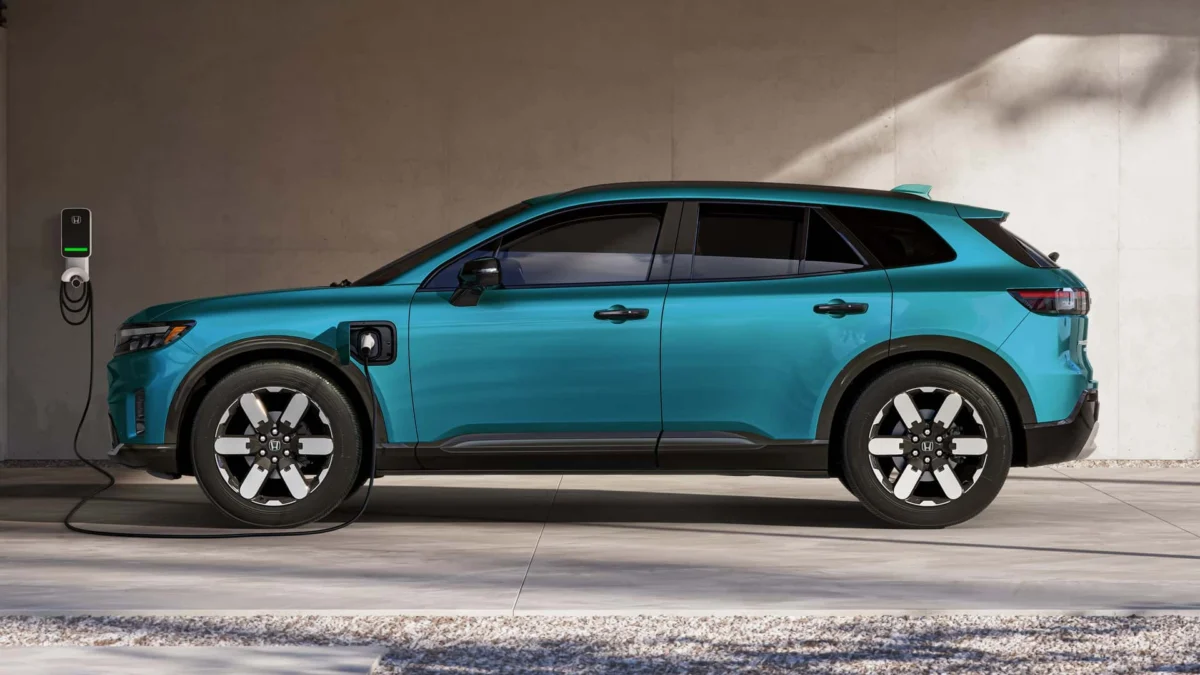
In a move that marks a significant recalibration of the global automotive landscape, Honda Motor Company has officially confirmed the discontinuation of the Prologue, its primary entry into the North American electric vehicle (EV) market. The decision, finalized following an eighteen-month analysis of shifting consumer sentiment and market volatility, effectively leaves the Japanese automotive giant without a single battery-electric vehicle (BEV) in its current U.S. retail lineup.
The sunsetting of the Prologue, which is scheduled to conclude production by the end of the 2026 model year, serves as a sobering indicator of the cooling enthusiasm for pure electrics among mainstream American buyers. As Honda shifts its massive capital resources away from full electrification and back toward hybrid-electric technology, the industry is left to grapple with the reality that the "all-in" EV transition may be far more complex—and slower—than many manufacturers anticipated just three years ago.
The Chronology of a Shifted Strategy
The trajectory of the Honda Prologue was always unique, characterized by its reliance on a collaborative partnership with General Motors. Utilizing GM’s Ultium platform, the Prologue was designed as a "bridge" vehicle intended to introduce Honda’s loyal customer base to the electric ecosystem while the company developed its own proprietary EV architecture.
However, the market reality proved far more turbulent than the initial product roadmap suggested:
- Early 2023: Honda introduces the Prologue to high acclaim, positioning it as a spacious, tech-forward SUV that bridges the gap between the CR-V and the Passport.
- Late 2024: Acura, Honda’s luxury division, discontinues the ZDX—the premium, GM-platform-based sibling to the Prologue—citing weak demand and a changing luxury demographic.
- March 2025: Acura officially abandons plans for the electric RSX crossover, signaling a broader retreat from the previously aggressive electric product cadence.
- Late 2025: Honda shelves its "0 Series" projects, including the 0 SUV and 0 Sedan. These concepts, once touted as the future of Honda’s design language, are pulled from the pipeline to prioritize internal combustion and hybrid efficiency.
- Current Day: Honda confirms the Prologue’s end-of-life status, stating that while sales will continue through 2027 based on current inventory, no successor is currently planned for the U.S. market.
The Economic and Market Data Behind the Decision
Honda’s decision is rooted in a cold, analytical assessment of the U.S. market. The expiration of federal tax credits, coupled with the "sticker shock" associated with high-end electric pricing, has created a significant hurdle for automakers.
Data from the past 18 months shows that while interest in electrification remains present, the conversion rate from "interested" to "buyer" has plummeted for non-luxury brands. Consumers are increasingly wary of range anxiety and the persistent disparity in charging infrastructure. Conversely, Honda’s hybrid models—specifically the CR-V Hybrid and Accord Hybrid—have seen consistent, high-volume demand.
To capitalize on this, Honda has announced a staggering investment of ¥4.4 trillion (approximately $28 billion USD). This capital is not being funneled into pure-electric platforms but is instead earmarked for a new, next-generation hybrid powertrain system. Honda claims this new technology will deliver a 10% increase in fuel efficiency compared to its current hybrid systems, which were only introduced in 2023. The company aims to launch 15 models utilizing this powertrain by March 2030, clearly identifying the hybrid as the "sweet spot" for the average American consumer who wants to lower their carbon footprint without the operational friction of a BEV.
Official Responses and Corporate Stance
In a formal statement provided to Motor1, Honda articulated its commitment to current owners, ensuring that the discontinuation of the model does not translate into a discontinuation of support.
"Honda confirmed production of the Prologue will end at the completion of the 2026 model year," the statement read. "Sales will continue through 2027 based on expected inventory. Prologue customers will continue to receive full support through our dealer network, including service, parts, and warranty coverage."

This reassurance is vital, as the secondary market value of "orphaned" vehicles—models that have been discontinued shortly after launch—often suffers. By emphasizing the robustness of its dealer network, Honda is attempting to maintain brand loyalty and protect the resale value for existing Prologue owners, who may feel the sting of being early adopters of a short-lived experiment.
The Broader Implications for the Automotive Industry
The death of the Honda Prologue is not merely a single-model failure; it is a bellwether for the entire industry. Honda, known historically as an engineering-first company that values reliability and incremental innovation, is now acting as a stabilizer in a market that has been forced to move too fast.
The Hybrid Renaissance
For years, the industry narrative was "EVs or Bust." Toyota and Honda, the two Japanese titans, were often criticized for their perceived lack of urgency regarding full electrification. Today, that patience appears vindicated. By keeping the internal combustion engine relevant through hybrid optimization, these companies are maintaining profitability while the infrastructure for EVs struggles to keep pace with government mandates.
The Failure of Collaborative Platforms
The reliance on GM’s Ultium platform for the Prologue and the ZDX underscores the difficulty of cross-company engineering. While sharing platforms can reduce R&D costs, it also limits a brand’s ability to "Honda-fy" the experience. Customers expecting the characteristic handling, interior ergonomics, and software interface of a Honda often found the Prologue to be a GM vehicle in a Honda suit, which potentially dampened its appeal to the brand’s most loyal enthusiasts.
The Infrastructure Gap
The fundamental issue remains the charging network. As long as public charging remains unreliable or inaccessible for urban dwellers without garages, the hybrid—which requires zero behavioral change from the consumer—will continue to win the market share war. Honda’s pivot is a pragmatic admission that the transition to a full-electric future requires a consumer base that is ready to change how they live, not just what they drive.
What’s Next for Honda?
With the Prologue out of the picture, Honda finds itself in a unique position: a massive, global automaker without an electric footprint in the world’s largest automotive market. While this may seem like a setback, the company views it as a strategic reset.
By concentrating on the 15 new hybrid models slated for the next five years, Honda is effectively "buying time." They are betting that the hybrid market will remain the engine of profitability for the remainder of the decade. Furthermore, the massive $28 billion investment suggests that Honda is not abandoning the electric dream entirely; rather, it is waiting for the market, the technology, and the charging infrastructure to mature to a point where an electric Honda makes sense for the mass market, rather than just the early adopter.
For the American consumer, the message is clear: the future of driving for the next decade will be cleaner and more efficient, but it will be powered by a blend of electricity and gasoline. Honda has decided that this "middle ground" is the only sustainable path forward, and they are putting their entire weight behind that belief. As the industry watches, the question remains: will other manufacturers follow suit, or will they continue to push against the market’s clear preference for the hybrid? For now, the "Prologue" of the EV era at Honda has come to a close, but the company’s story is far from over.