TEHRAN/WASHINGTON – The simmering tensions in the Persian Gulf reached a critical breaking point overnight as United States military forces launched a series of precision strikes against key transportation and logistical hubs in southern Iran. The coordinated assault, which targeted an airport, a major railway station in the port city of Bandar Abbas, and critical bridge infrastructure near the Strait of Hormuz, marks a significant expansion of the ongoing geopolitical standoff.
State media outlets in Iran confirmed the strikes early Friday morning, characterizing the action as an "unprovoked act of aggression" against sovereign infrastructure. The strikes have effectively paralyzed transit routes in the Golestan and Hormozgan provinces, casting a long shadow over the future of maritime security and energy transit in the world’s most vital oil artery.
Main Facts: A Coordinated Strategic Blow
The U.S. operation, initiated late Thursday and concluding in the early hours of Friday, July 17, 2026, appears to have been meticulously planned to disrupt Iranian logistics. According to initial reports from the ground and corroborated by satellite intelligence, the strikes focused on three distinct geographical nodes:
- Bandar Abbas: The primary logistics hub for the Iranian Navy and a critical commercial port. The targeting of the local railway station is a calculated move to cripple the supply chain that moves heavy equipment and fuel from the interior of the country to the southern coast.
- Infrastructure near Aq Qala: Beyond the coastal strikes, the U.S. targeted railway bridges in the Golestan province. Analysts suggest this is aimed at isolating northern logistical supply lines, preventing the rapid deployment of mobile missile batteries toward the southern maritime front.
- Regional Airfields: The strikes on airport facilities in the vicinity of Bandar Abbas have reportedly grounded regional air traffic, effectively creating an aerial "no-go" zone for the Iranian military in the immediate vicinity of the Strait of Hormuz.
The U.S. Department of Defense has remained largely tight-lipped regarding the specific munitions used, though the precision nature of the damage—captured in images circulating via social media—points to the use of standoff cruise missiles launched from naval assets stationed in the Gulf of Oman.
Chronology of Escalation: From Rhetoric to Kinetic Action
The path to this night of fire was paved by weeks of deteriorating diplomatic communication and a series of "gray zone" provocations in the Strait of Hormuz.
- June 20, 2026: Iran announces new, more restrictive protocols for foreign tankers passing through the Strait of Hormuz, citing "national security concerns."
- July 2, 2026: A U.S. patrol vessel experiences a "dangerous close encounter" with Iranian fast-attack craft, leading to a heated exchange of diplomatic notes.
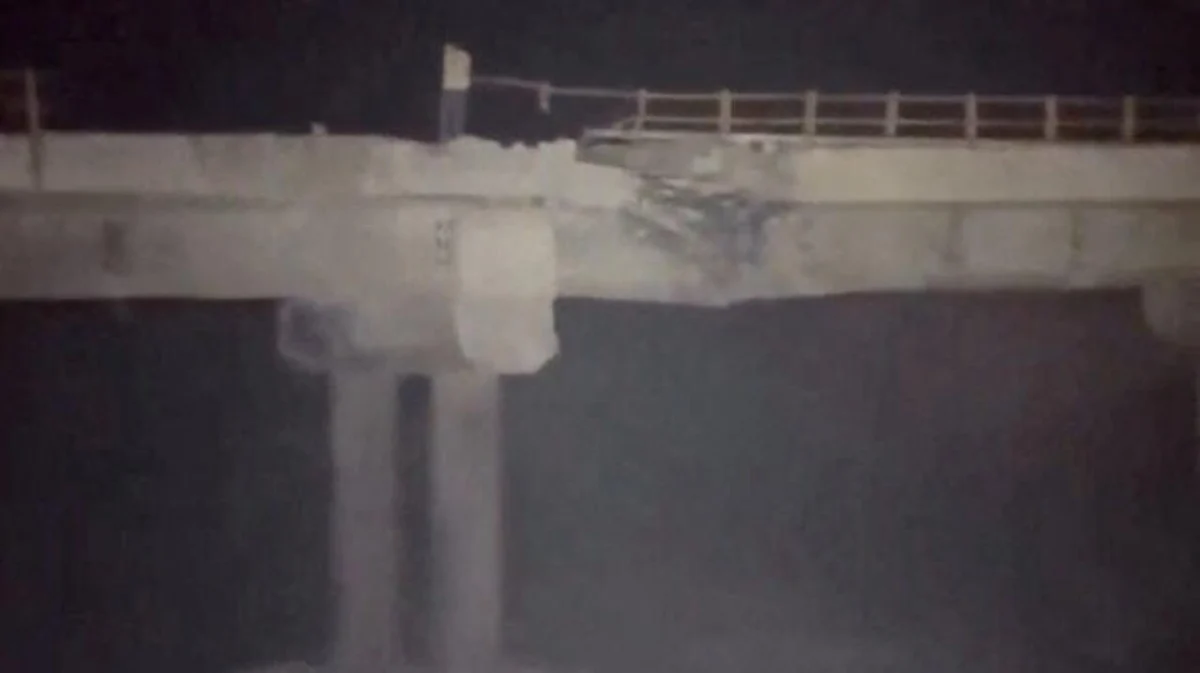
- July 9, 2026: Initial localized skirmishes are reported near the Aq Qala region. The photograph released of the damaged bridge serves as a visual marker for when the conflict shifted from maritime posturing to inland infrastructure targeting.
- July 16, 2026 (23:56 UTC): Reports begin surfacing of explosions near Bandar Abbas. Regional air defense sirens are triggered, and civilian flights are diverted or grounded.
- July 17, 2026 (02:08 UTC): Official confirmation arrives via Iranian state media. The conflict enters a new, volatile phase as the world braces for a potential retaliatory cycle.
Supporting Data: The Strategic Importance of the Strait
The Strait of Hormuz is not merely a geographic chokepoint; it is the jugular vein of the global energy market. Through this narrow passage, roughly 20% of the world’s total oil consumption flows daily.
- The Bandar Abbas Factor: As Iran’s largest port, Bandar Abbas serves as the nerve center for the Islamic Revolutionary Guard Corps Navy (IRGCN). By targeting its rail connectivity, the U.S. is attempting to decouple the IRGCN’s maritime assets from their inland supply chains.
- Economic Impact: Brent crude futures spiked by nearly 8% in pre-market trading following the news. Global shipping insurance premiums for the region are expected to skyrocket, potentially leading to a temporary halt in tanker traffic, which would exacerbate existing supply chain instabilities in Europe and East Asia.
- Infrastructure Degradation: The destruction of bridges near Aq Qala is particularly significant. These structures represent the backbone of Iran’s internal ground transport. Replacing or repairing these facilities under active conflict conditions is virtually impossible, ensuring that the logistical impact will be felt for weeks, if not months.
Official Responses: A Divided International Community
The international reaction has been swift and polarized, reflecting the deep geopolitical divides regarding the current Middle East crisis.
Washington’s Stance:
The White House has defended the strikes as "necessary and proportionate" measures taken to defend freedom of navigation and to deter further Iranian threats to international shipping. A spokesperson for the National Security Council emphasized that the U.S. does not seek a full-scale war but will not tolerate actions that jeopardize the stability of global energy markets.

Tehran’s Stance:
The Iranian Foreign Ministry issued a scathing rebuke, describing the U.S. actions as a "blatant violation of international law." High-ranking officials have promised a "crushing response," though they have yet to specify the nature of that response. "The American regime will pay for these strikes," read an official statement released via state media, signaling that Iran may look to utilize its asymmetric warfare capabilities—such as drone swarms or sea mines—in the coming days.
International Reaction:
- The European Union: Expressed "grave concern" and called for an immediate cessation of hostilities, urging both parties to return to the negotiating table.
- China and Russia: Both nations have called for restraint, with Moscow specifically condemning the strikes as a destabilizing act that threatens to ignite a regional conflagration.
Implications: A Region on the Brink
The immediate aftermath of these strikes leaves the Middle East in a precarious state of uncertainty. There are three primary risks that observers are currently monitoring:
1. The "Retaliation Cycle"
The most immediate fear is that Iran will seek to "even the score" by targeting U.S. military bases in the region or by striking commercial assets belonging to U.S. allies. The doctrine of "proportionality" is often lost in the heat of such escalations, and a single miscalculation could lead to an unintended widening of the conflict.
2. The Energy Security Crisis
If the Strait of Hormuz remains effectively paralyzed, the global economy faces a severe supply shock. The timing is particularly poor, as many nations are already struggling with high inflation and energy costs. A sustained disruption would force energy-importing nations to tap into strategic petroleum reserves, potentially leading to a long-term shift in global energy policy.
3. The Shift in Asymmetric Warfare
The U.S. decision to strike infrastructure rather than just military hardware represents a shift in tactics. It suggests that the U.S. is no longer merely trying to counter specific threats but is attempting to degrade the capability of the Iranian state to sustain a prolonged conflict. This "strategic degradation" approach is high-risk, as it leaves little room for a face-saving exit for the Iranian leadership.
Conclusion
As the sun rises over the Strait of Hormuz, the charred remains of the railway bridge near Aq Qala stand as a grim monument to the fragility of peace in the region. The strikes on July 17, 2026, have moved the needle from diplomatic maneuvering to direct military confrontation. While the world watches and waits for the next move, the reality remains that the logistical and economic consequences of these strikes will be felt far beyond the borders of Iran. The coming hours and days will be critical, as the international community attempts to de-escalate a situation that is spiraling rapidly toward an unpredictable and dangerous future.