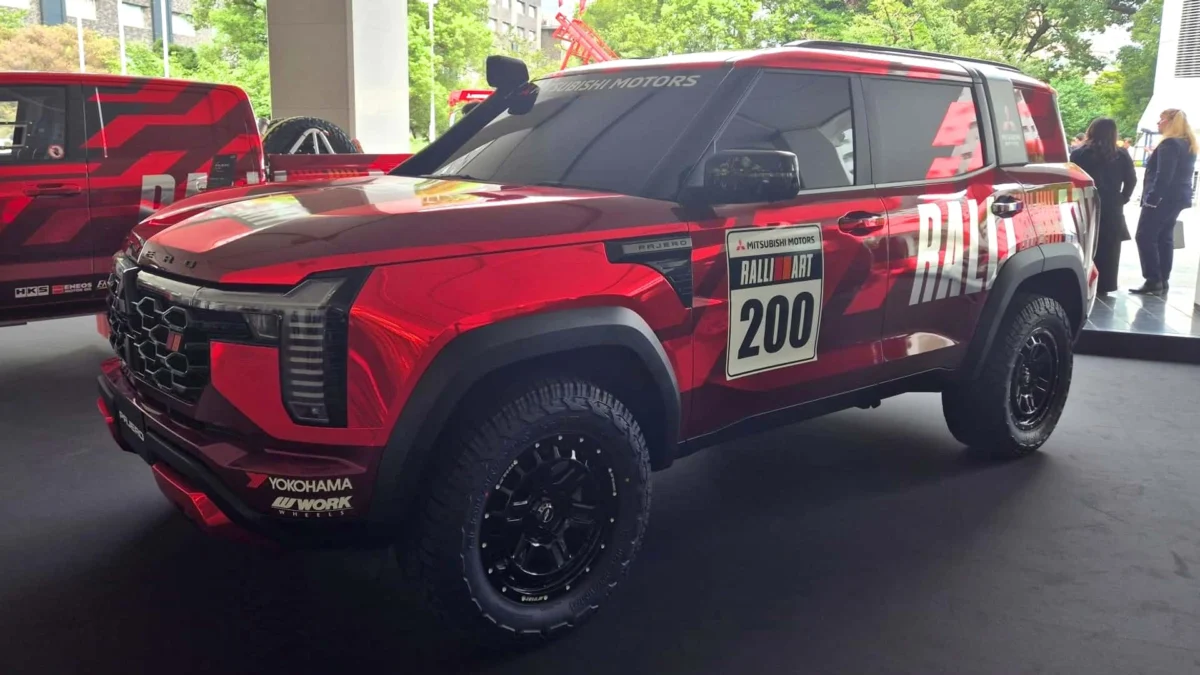
The stage was set with deliberate precision: a vibrant, Ralliart-red Mitsubishi Pajero Rally Concept bathed in spotlights, positioned intentionally alongside a menacing Triton ASXR rally truck. For the thousands of automotive enthusiasts and Dakar Rally veterans in attendance, the message seemed clear. It felt like the definitive announcement of a legendary nameplate’s return to the world’s most grueling off-road competition. Yet, in a masterclass of managing expectations, Mitsubishi executives were quick to dampen the fires of speculation, pivoting from a triumphant comeback narrative to a cautious discussion of market research and accessory potential.
The Return of an Icon: The 2027 Mitsubishi Pajero
Before diving into the implications of the Rally Concept, it is essential to understand the platform upon which it sits. On September 2, 2026, Mitsubishi officially unveiled the fully redesigned Pajero, marking the return of a nameplate that had been dormant in many markets for years.
The new Pajero represents a return to the vehicle’s roots as a rugged, body-on-frame SUV. Rather than transitioning to a unibody crossover, Mitsubishi has opted for a robust ladder-frame architecture sourced directly from the capable Triton pickup truck. This choice signals a clear intent: the Pajero is designed to be a flagship cross-country vehicle, capable of navigating treacherous terrain that would leave lesser SUVs stranded.
Under the hood, the initial iteration of the Pajero is powered by a 2.4-liter turbodiesel engine. Producing 201 horsepower and 354 pound-feet of torque, the engine is paired with a sophisticated eight-speed automatic transmission and Mitsubishi’s signature Super Select 4WD II system. This powertrain setup is designed for longevity and low-end torque, prioritizing off-road crawlability and towing capacity over high-speed track performance.
The launch strategy is global in scope. Mitsubishi plans a phased rollout beginning in Thailand, followed by Japan and Australia within the 2026 fiscal year. By the end of fiscal 2027, the company aims to have the new Pajero available in approximately 100 countries, reinforcing the brand’s commitment to re-establishing itself as a dominant player in the global SUV segment.
The Rally Concept: A Styling Exercise or a Promise?
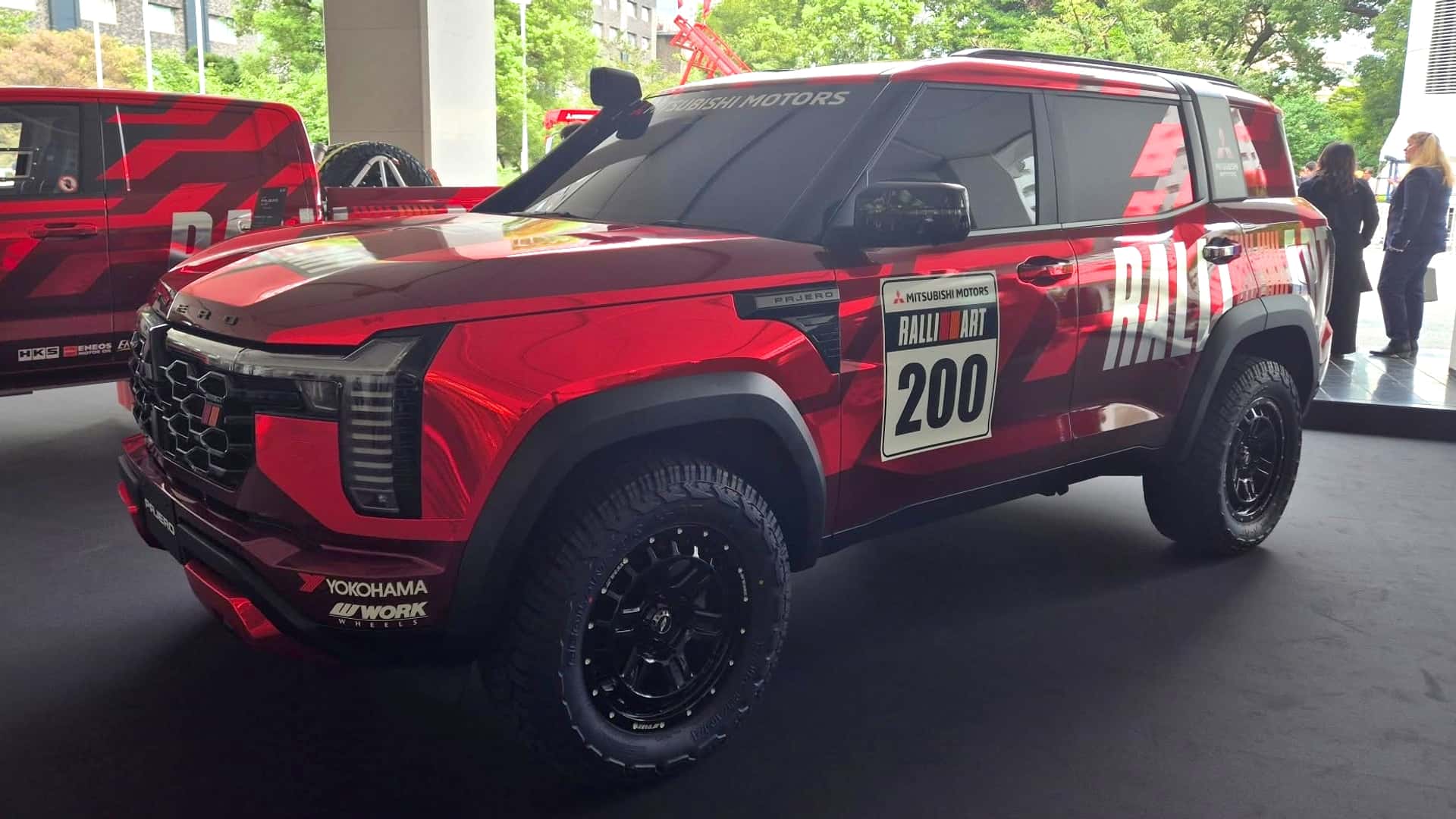
The Rally Concept, which caused such a stir, is not a radical engineering prototype. It is a stylistic homage to the storied history of the Pajero, specifically its unprecedented run of 12 outright victories in the Dakar Rally. By adorning the production-based SUV with Ralliart’s iconic bright red livery, high-clearance fender extensions, a custom C-pillar cover, rugged red skid plates, and a functional snorkel, Mitsubishi successfully bridged the gap between its heritage and its future.
However, beneath the aesthetic flourishes, the concept is largely a "parts-bin" exercise. Every component added to the concept is a bolt-on accessory designed to fit the standard production body. While this might disappoint those hoping for a stripped-out, high-performance Dakar racer, it reveals a more pragmatic strategy: Mitsubishi is testing the appetite for an "adventure-ready" factory trim level.
Official Responses: Managing the Ralliart Narrative
The ambiguity surrounding the concept was addressed directly by Kunitoshi Itagaki, Mitsubishi’s chief product specialist. In a blunt assessment that cut through the marketing noise, Itagaki confirmed that there is currently no production plan for a dedicated "Pajero Ralliart" model.
"We have no specific project or Ralliart model to announce at this time," Itagaki noted, though he was quick to soften the blow by acknowledging that the Ralliart heritage "is really important for us."
This stance was echoed by Mitsubishi president Keisuke Kishiura, who framed the conversation around the brand’s legacy. By focusing on the 12 Dakar wins, Kishiura reminded the public of the Pajero’s pedigree without needing to commit the company to the immense financial and logistical burden of a modern-day factory racing program. For now, the Ralliart brand remains a powerful marketing tool—a way to evoke emotion and nostalgia without requiring the immediate development of new, high-cost performance hardware.
The Business of Bolt-Ons: Gauging Consumer Demand
The strategy behind the Rally Concept is rooted in market analysis. By displaying these parts on a show car, Mitsubishi is essentially conducting a global focus group. Regional reports have indicated that the company is actively considering offering these components—the snorkel, the skid plates, the fender flares—as official, dealer-installed accessories.
This approach offers several advantages for the automaker:
- Low Risk: It allows the company to capitalize on the Ralliart brand equity without needing to re-engineer the vehicle’s chassis or powertrain.
- Revenue Streams: Dealer-installed accessories are high-margin items that allow customers to personalize their vehicles while maintaining the integrity of the manufacturer’s warranty.
- Market Feedback: By monitoring the demand for these specific parts, Mitsubishi can gather data on which markets are most interested in off-road customization. If, for instance, Australia and the Middle East show high demand for the "Rally look," Mitsubishi could easily pivot to a factory-special edition later in the production cycle.
Looking Ahead: The Future of the Pajero Lineup
While the current launch focuses solely on the 2.4-liter turbodiesel, the automotive industry is watching closely for what comes next. A hybrid variant is widely considered an inevitability, particularly given the tightening emissions regulations in Europe and parts of Asia. Integrating an electric motor into the existing ladder-frame architecture could provide the torque-filling and efficiency gains necessary to keep the Pajero relevant for another decade.
Furthermore, there is the lingering question of the "smaller" models teased by the company. Mitsubishi has hinted at a broader Pajero family, which could include a shorter-wheelbase model or a more compact crossover variant. Should these models materialize, they would likely be the perfect candidates for a more comprehensive Ralliart performance package, should the company decide to move beyond simple aesthetic kits.
Implications for the Brand and the Market
The "Pajero Rally Concept" is a masterclass in modern automotive marketing. It serves as a bridge, keeping the brand connected to its glory days while the company navigates the practical, high-stakes realities of a global product launch.
For the consumer, the implications are twofold. On one hand, the lack of a high-performance Ralliart variant may feel like a missed opportunity to challenge the likes of the Toyota Land Cruiser GR Sport or the Ford Bronco Raptor. The current 201-hp diesel engine is capable, but it is not a "performance" engine in the modern sense of the word.
On the other hand, the move toward official accessory support is a win for the off-road community. Enthusiasts often look for factory-backed parts that are guaranteed to fit, function, and meet safety standards. If Mitsubishi delivers a robust catalog of Ralliart-branded off-road gear, it will solidify the Pajero’s status as a platform for adventure, even without the racing pedigree of the early 2000s.
Ultimately, the Pajero’s comeback is a strategic play to reclaim a segment that Mitsubishi once defined. By keeping the Ralliart dream alive through concepts and accessories, the company is maintaining the "cool factor" that is vital for a brand’s long-term health. Whether that eventually evolves into a dedicated racing program or a high-performance production vehicle remains to be seen. For now, Mitsubishi is content to let the Pajero prove its worth as a reliable, capable, and increasingly customizable SUV on the global stage.
The ghost of Dakar may not be back on the rally circuit just yet, but its presence is being felt in every showroom that will soon display the new Pajero. And for a brand looking to reassert its identity, that might be exactly the start it needs.