In a seismic shift for international relations, U.S. Secretary of State Marco Rubio announced on Monday that the United States is launching a formal, aggressive diplomatic campaign to dismantle the International Criminal Court (ICC). In a provocative op-ed published by The Wall Street Journal, Rubio articulated a "sovereignty-first" foreign policy, pledging to take the Hague-based tribunal apart "brick by brick" to insulate American service members and officials from its jurisdiction.
This move marks an unprecedented escalation in the long-strained relationship between Washington and the ICC. While the United States has historically maintained a posture of non-membership, the current administration’s stated goal of outright destruction represents a departure from the pragmatism that governed the approach of previous administrations, both Republican and Democratic.
The Strategic Objective: Sovereignty vs. Globalism
Secretary Rubio’s announcement frames the ICC as an existential threat to American sovereignty. By positioning the court as an instrument of "globalist overreach," the administration is signaling to its base and its allies that the era of U.S. cooperation with international judicial bodies has effectively concluded.
The core of the administration’s grievance lies in the potential for the ICC to assert jurisdiction over U.S. personnel—specifically those involved in military operations in Afghanistan and, potentially, future geopolitical interventions. Rubio emphasized that the U.S. would leverage every tool at its disposal—diplomatic, economic, and political—to ensure that no American service member is ever subject to the authority of a foreign court.
Methods of Pressure
While the ICC is a treaty-based organization governed by the Rome Statute—meaning the U.S. lacks the legal standing to dissolve it unilaterally—the administration is betting on the efficacy of coercive diplomacy. According to reports from the State Department, the "dismantling" strategy will likely involve:
- Targeted Sanctions: Expanding existing sanctions against court officials, investigators, and organizations that facilitate ICC operations.
- Visa Restrictions: Revoking visas and imposing travel bans on ICC personnel, effectively isolating them from the international community.
- Leveraging Security Assistance: Conditioning U.S. security aid to allied nations on their willingness to renounce the ICC’s jurisdiction over American citizens.
- Diplomatic Coercion: Pressuring member states to withdraw from the Rome Statute, thereby starving the court of its legitimacy and financial resources.
A Historical Chronology of a Fractured Relationship
The tension between Washington and The Hague is not new, but the current escalation is unprecedented. Understanding this friction requires looking at the trajectory of U.S. policy over the last three decades.
- 2000: President Bill Clinton signs the Rome Statute, the treaty that established the ICC, but notably declines to submit the document to the Senate for ratification, citing concerns over the court’s unchecked authority.
- 2002: The ICC is officially established. In response, the U.S. Congress passes the "American Service-Members’ Protection Act," colloquially known as the "Hague Invasion Act," which authorizes the President to use "all means necessary"—including military force—to free any American detained by the court.
- 2005: The George W. Bush administration allows the UN Security Council to refer the situation in Darfur to the ICC, signaling a shift toward selective cooperation.
- 2011–2012: The Obama administration supports the Security Council’s referral of Libya to the court and expands the "War Crimes Rewards Program" to include ICC fugitives, marking a period of alignment between U.S. interests and the court’s prosecutorial goals.
- 2020: The ICC authorizes an investigation into alleged war crimes in Afghanistan, including those potentially involving U.S. forces. This becomes the primary catalyst for the current administration’s hostility.
- 2023: The Biden administration reportedly shares intelligence with the ICC regarding Russian conduct in Ukraine, showing a continued, if uneasy, reliance on the court for specific international objectives.
- 2026: Secretary of State Marco Rubio announces the comprehensive campaign to dismantle the institution entirely.
Supporting Data and Institutional Realities
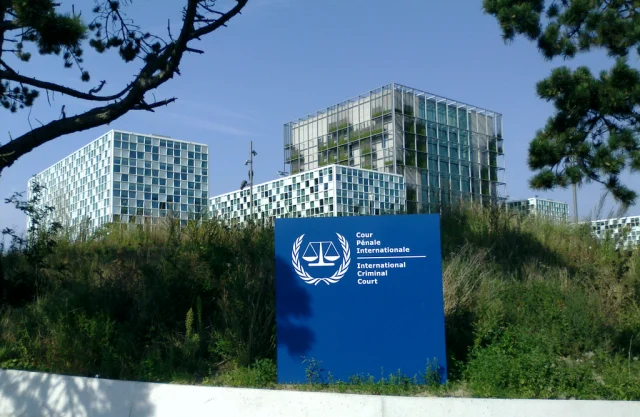
The ICC, headquartered in The Hague, currently boasts 125 states parties. These include nearly every major U.S. treaty ally in Europe, as well as the United Kingdom, Japan, South Korea, and Australia. The sheer breadth of the ICC’s support network presents a significant hurdle for the U.S. diplomatic campaign.
The Afghanistan Factor
The primary friction point, the Afghanistan investigation, has been a source of diplomatic paralysis for years. However, institutional data shows that the court’s actual pursuit of U.S. personnel has been minimal. Since 2021, ICC prosecutors have largely deprioritized the "U.S. role" in Afghanistan, focusing instead on the actions of the Taliban and the former Afghan government. Despite this, the mere existence of the investigation has served as the legal pretext for the current administration’s aggressive posture.
The "Dismantling" Paradox
Legal experts argue that the U.S. goal is structurally impossible to achieve through legal means. As a treaty-based body, the ICC can only be dissolved by the consensus of its member states. By threatening allies who remain members of the court, the U.S. risks creating a secondary rift in its own diplomatic network, potentially alienating key partners in Europe and the Indo-Pacific who view the ICC as a cornerstone of the international rules-based order.
Official Responses and Judicial Pushback
The international community has reacted with caution, and in some corners, alarm. While an official ICC spokesperson declined to comment on the record regarding the specifics of the U.S. announcement, the judiciary has not remained silent.
Last month, three ICC judges initiated legal proceedings against officials from the current U.S. administration. They argue that the sanctions imposed by Washington—which include asset freezes and travel restrictions—are unlawful and constitute an illegal interference with the administration of international justice. This judicial confrontation highlights the deepening divide between the U.S. executive branch and the international legal establishment.
Observers in the human rights community have characterized the U.S. move as a "dangerous regression." Organizations like Human Rights Watch have long argued that the U.S. attempts to shield its personnel from scrutiny undermine the very principles of accountability that the United States claims to champion in other parts of the world.
Global Implications: A New Era of Isolationism?
The U.S. campaign to dismantle the ICC will have profound implications for global governance.
1. The Erosion of the Rules-Based Order
If the United States—a nation that played a pivotal role in the creation of post-WWII international institutions—actively seeks to destroy a global court, it may signal the end of the post-1945 consensus. Smaller nations may interpret this as a sign that international law is only applicable when it does not interfere with the interests of the Great Powers.
2. Diplomatic Strain with Allies
The administration’s promise to target countries that rely on U.S. security assistance could create a "loyalty test" for NATO members and other allies. If countries like the UK, Germany, or Japan are forced to choose between their commitment to the Rome Statute and their security partnership with Washington, the resulting friction could weaken the Western security architecture.
3. Impact on War Crimes Accountability
If the ICC is effectively incapacitated, the ability of the international community to prosecute atrocities in conflict zones will be severely diminished. While the U.S. has often argued that it can handle its own accountability, critics point out that this is not a solution for victims of war crimes in nations that lack functional domestic judicial systems.
4. A Precedent for Future Administrations
By framing the dismantling of an international institution as a valid diplomatic goal, the current administration is establishing a precedent that future leaders may apply to other bodies, such as the United Nations, the World Health Organization, or the World Trade Organization.
As the situation unfolds, the international community is bracing for a period of extreme diplomatic volatility. Whether the U.S. can successfully pressure 125 nations to abandon their commitments remains to be seen, but one thing is certain: the era of "cooperative skepticism" toward the ICC has ended, replaced by an era of overt, systematic confrontation.