Introduction: A State of Indefinite Limbo
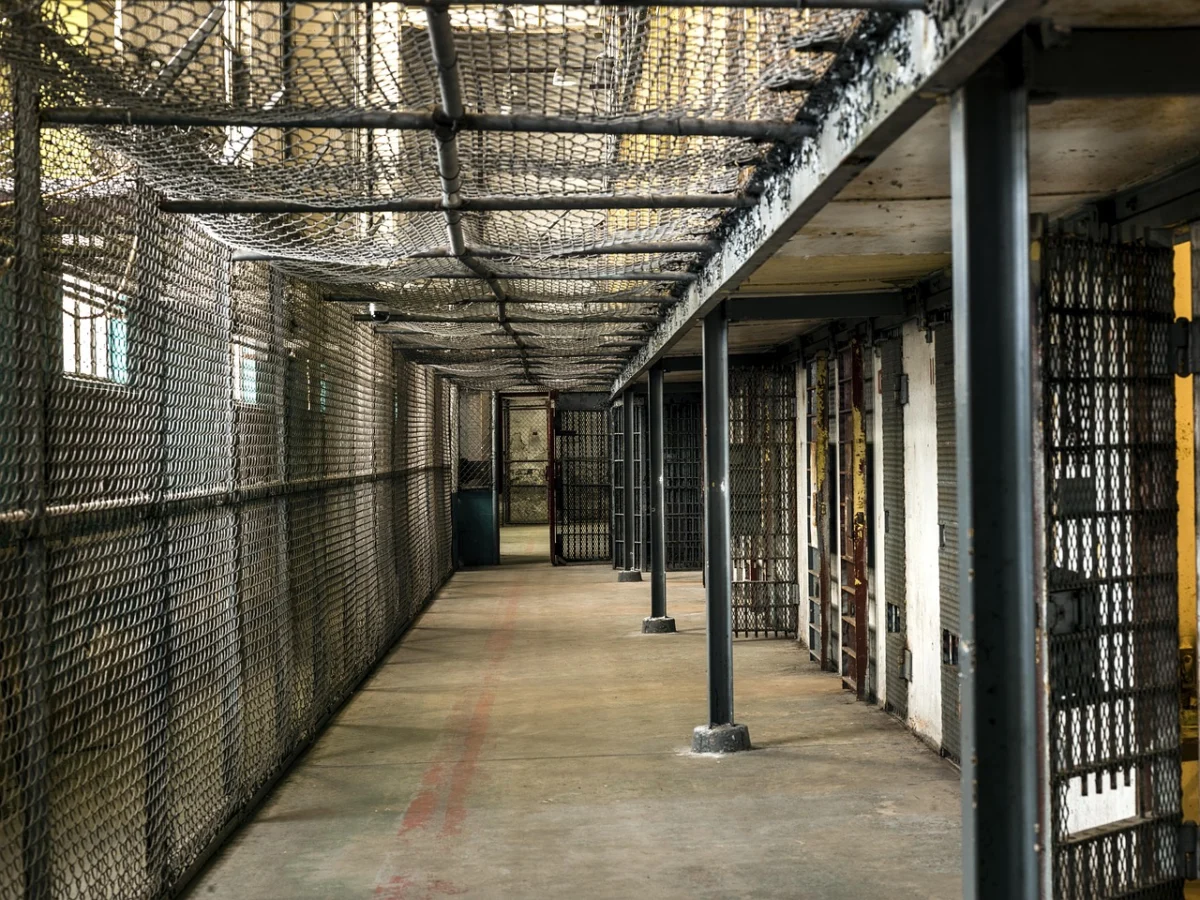
In a scathing assessment released this week, a panel of United Nations human rights experts has issued an urgent directive to the United Kingdom government: end the "psychological torture" of the Imprisonment for Public Protection (IPP) system. Despite the formal abolition of these sentences over a decade ago, approximately 2,400 individuals remain trapped in a legal purgatory, many serving years—or even decades—beyond their original minimum prison terms. The UN’s intervention highlights a systemic failure that continues to fuel a crisis of self-harm, mental health decline, and institutionalized despair within the British penal system.
The experts have demanded that the UK government move beyond incremental administrative tweaks and initiate a comprehensive resentencing program. They argue that the current reliance on parole reviews is insufficient, as these mechanisms cannot challenge the inherent injustice of the original, open-ended sentences.
The Chronology of a Legal Anomaly
The Genesis: The Criminal Justice Act 2003
The IPP sentence was introduced under Sections 225 and 226 of the Criminal Justice Act 2003. Conceived during a period of intense political pressure to appear "tough on crime," the sentence was designed for offenders deemed dangerous, even if their specific crimes did not merit a life sentence. In practice, the policy led to a massive overreach, with individuals convicted of relatively minor offenses receiving indefinite sentences that required them to prove their "safety" to the Parole Board before release—a hurdle that often proved impossible due to a lack of adequate rehabilitation resources.
2012: The Half-Measure of Abolition
By 2012, the catastrophic failure of the IPP system became undeniable. The Legal Aid, Sentencing and Punishment of Offenders Act 2012 officially abolished the sentence. However, in a move that critics describe as one of the greatest legislative failures in modern British history, the government chose not to make the abolition retrospective. This decision left thousands of individuals already serving IPP sentences in a state of indefinite detention, creating a "two-tier" justice system where the date of one’s sentencing determined whether they were subject to an abolished, arbitrary regime or a fixed-term sentence.
The Present Day: The "Long Tail" of Injustice
As of mid-2026, the legacy of this decision persists. While the raw number of those held under IPP status has seen a gradual decline, the human cost for those remaining has intensified. The UN experts note that the cumulative effect of being trapped in a cycle of release, recall, and uncertainty has led to a mental health catastrophe, with suicide rates among the IPP population significantly higher than the general prison demographic.
Supporting Data: By the Numbers
The scale of the IPP crisis is quantified by grim statistics that illustrate the disconnect between justice and bureaucratic management:
- The Remaining Population: As of March 31, 2026, there are approximately 2,400 people still subject to the IPP regime. Of these, 896 have never been released from their initial incarceration.
- The "Tariff" Gap: Nearly 75% of those who remain unreleased have already served at least 10 years beyond their minimum court-mandated "tariff" (the punishment period deemed necessary for retribution and deterrence).
- Case Studies of Despair: The UN report spotlights specific individuals, such as Joseph Brady, who has spent 18 years in prison for a crime that originally carried a four-year tariff, and Kerry Parish-McCann, who remains detained 17 years into a three-year tariff.
- Parole Efficiency: While Justice Minister Lord Timpson reported that the average Parole Board review time has decreased from 18 months to 14.5 months, for those trapped in the system, these wait times represent over a year of additional, unnecessary detention in a high-stress environment.
Official Responses and Political Stasis
The UK government’s response to the growing international pressure has been characterized by defensive adherence to existing policy. Justice Minister Lord Timpson has highlighted the "11 percent decrease" in never-released prisoners between 2025 and 2026 as evidence that the current system is working.
However, this statistical narrative is flatly rejected by human rights organizations and, now, by UN experts. The government’s current strategy relies on the "IPP Action Plan," which focuses on improving support for prisoners to help them meet the criteria for release. Critics argue this is a fundamental misdiagnosis of the problem: the issue is not that these prisoners are failing to meet the criteria, but that the criteria themselves—based on "risk" rather than "punishment"—are fundamentally flawed for people who have already served their time.
Parliamentary debates in the House of Lords have seen cross-party frustration, with lawmakers noting that 99% of the remaining never-released prisoners have long since passed their tariffs. Despite this, the government remains hesitant to implement a mass resentencing exercise, citing concerns over public safety and the legal complexity of reviewing thousands of cases.
Implications: A Violation of Human Rights
The European Convention on Human Rights (ECHR)
The legality of the IPP sentence has long been challenged in international courts. The seminal case of James, Wells and Lee v. United Kingdom established that the UK government had violated Article 5 of the ECHR, which protects the right to liberty and security. The European Court of Human Rights ruled that the state failed to provide the necessary rehabilitation programs, meaning prisoners were held in "arbitrary detention"—effectively being punished for the state’s failure to provide resources rather than their own risk to the public.
Psychological and Social Costs
The UN experts emphasize that the psychological damage inflicted by IPP sentences is not merely an unfortunate side effect; it is a direct consequence of the sentence’s structure. When an individual has no fixed end date for their detention, the human psyche struggles to cope with the lack of agency. This leads to profound depression, institutionalization, and, in the most tragic cases, suicide.
Furthermore, the "recall" mechanism—whereby released individuals can be sent back to prison for minor infractions or administrative errors—creates a constant state of fear. This instability makes it nearly impossible for former prisoners to reintegrate into society, find stable housing, or maintain employment, thereby creating a cycle of recidivism that is entirely manufactured by the state’s own regulatory framework.
Conclusion: The Path Toward Resolution
The UN’s call for a clear, objective resentencing process represents a pivotal moment for the UK’s justice system. The government stands at a crossroads: it can continue to defend an archaic and widely discredited policy, or it can acknowledge that the IPP system has become an affront to the rule of law.
For the 2,400 individuals currently living in the shadow of the IPP, the experts’ recommendation is not merely a legal opinion—it is a plea for basic humanity. A full review, as proposed by the UN, would not only rectify a historical injustice but would also signal a return to the principles of proportionality and fairness that are intended to underpin the British justice system. Until the government takes definitive action to clear this "long tail" of the 2003 Act, the UK will continue to face international scrutiny for maintaining a system that many now equate to a form of indefinite, state-sanctioned psychological harm.