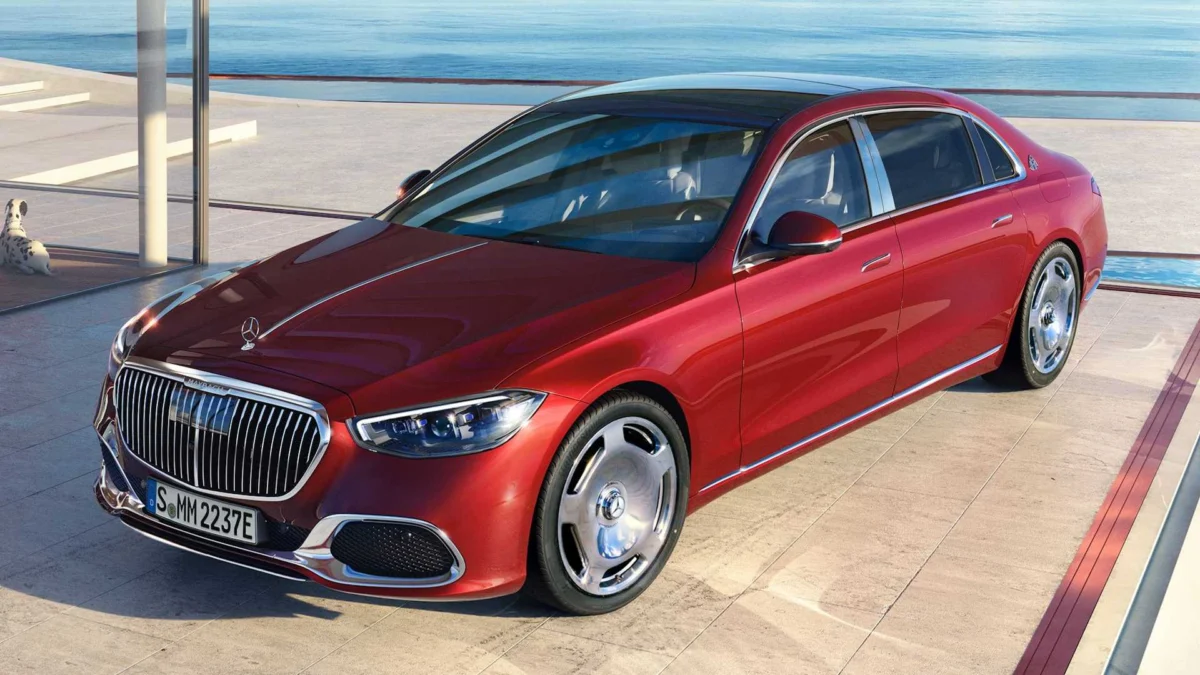
In a significant safety initiative affecting some of its most prestigious luxury offerings, Mercedes-Benz has announced a widespread recall involving 30,064 vehicles in the United States. The campaign centers on a critical manufacturing defect involving the front brake hoses, which, over time, are susceptible to weakening, fluid leakage, and potential structural rupture.
While the automaker has confirmed that it is currently unaware of any accidents, injuries, or property damage directly attributed to this specific fault, the recall underscores the manufacturer’s commitment to addressing mechanical vulnerabilities before they manifest into real-world hazards. The recall, tracked by the National Highway Traffic Safety Administration (NHTSA) under recall number 26V638, encompasses various iterations of the S-Class, Mercedes-Maybach, and Mercedes-AMG sedan lineups produced between February 2021 and late November 2024.
A Technical Breakdown of the Defect
The core of the issue lies in the front brake hoses, which are essential components of the vehicle’s hydraulic braking system. According to documentation filed with the NHTSA, these hoses may be subject to excessive heat and mechanical stress throughout the normal operation of the vehicle.
Over time, this combination of environmental and operational factors can cause the material integrity of the hoses to degrade. Once the material weakens, the hose may develop a breach. A rupture in the brake line leads to a loss of hydraulic brake fluid. Because the system relies on this fluid to transmit force from the brake pedal to the calipers, a significant leak results in a marked reduction in braking efficiency.
In practical terms, this means that drivers may experience significantly increased stopping distances, a condition that poses a severe safety risk, particularly during emergency braking maneuvers. The NHTSA filing highlights a particularly concerning aspect of this failure: it is typically silent. Drivers may receive no warning signs prior to a total hose rupture, though a red brake system warning light is likely to illuminate on the instrument cluster once the fluid level drops below the required threshold.
Chronology of the Recall Campaign
The current recall is actually an expansion of an earlier initiative. Mercedes-Benz first identified the potential for brake hose issues in February 2025. Following that initial internal investigation, the company monitored field reports and conducted further testing. As additional data emerged, the manufacturer opted to widen the scope of the recall to ensure that all potentially affected vehicles were identified and serviced.
The production window for the affected vehicles spans from February 2021 through November 28, 2024, effectively covering the 2022 through 2025 model years. Mercedes-Benz implemented a manufacturing correction late in November 2024; consequently, vehicles produced after November 28, 2024, are equipped with a revised hose design that does not suffer from the same susceptibility to premature failure.
Owners of the impacted vehicles are expected to receive notification letters via mail beginning on November 27, 2026. Given the lengthy lead time before the official notification, many owners may choose to check their vehicle’s status through the NHTSA’s online VIN lookup tool or contact their local dealership service center immediately to determine if their specific vehicle is included in the campaign.
Affected Models and Trims
The breadth of this recall reflects the shared platform architecture utilized across Mercedes-Benz’s flagship sedan segment. The 30,064 vehicles are distributed across several high-performance and luxury variants:
- S580 4Matic: The largest portion of the recall, accounting for 16,881 units.
- S500 4Matic: 7,143 units affected.
- S580 e 4Matic (Plug-in Hybrid): 2,277 units affected.
- AMG S63 E Performance: 1,746 units affected.
- Maybach S680 4Matic: 1,070 units affected.
- Maybach S580 4Matic: 947 units affected.
These models represent the pinnacle of the Mercedes-Benz product range, combining advanced hybrid technology and high-output performance engines. The inclusion of the AMG S63 E Performance—a vehicle designed for high-speed performance—highlights the necessity of maintaining robust braking systems, as these vehicles are subject to higher levels of mechanical and thermal stress during spirited driving.

Official Response and Remediation Strategy
Mercedes-Benz has laid out a clear path for remediation. Authorized dealers will inspect the front brake hoses of affected vehicles and replace them with a redesigned component at no cost to the owner. This is a standard procedure for safety-related recalls, aimed at eliminating the risk of failure rather than attempting a temporary repair.
The manufacturer has not disclosed specific part numbers or the name of the external supplier responsible for the original hose components. However, by replacing the components with an updated design, Mercedes-Benz aims to restore the vehicle to its intended safety standards.
Industry analysts note that while the lack of reported accidents is a positive indicator, the mechanical nature of the failure requires immediate attention. Brake systems are considered "safety-critical" components; therefore, any deviation from performance standards, regardless of the frequency of failure, triggers a mandatory response under federal safety regulations.
The Broader Context of Brake-Related Recalls
The automotive industry has seen an uptick in brake-related safety campaigns over the past few years, as manufacturers navigate the complexities of increasingly heavy vehicles and complex electronic brake-by-wire systems.
For instance, other major manufacturers, including Ford, BMW, and General Motors, have recently grappled with their own large-scale recalls regarding braking components. Ford issued a "Do Not Drive" warning for certain Super Duty trucks due to potential issues with brake pedals, while General Motors has faced probes into its eBoost braking systems, affecting over a million vehicles. Even luxury stalwarts like Ferrari have faced legal scrutiny and recalls concerning persistent braking issues.
These trends suggest that as vehicles become more complex and performance-oriented, the margins for error in component manufacturing are shrinking. For Mercedes-Benz owners, this recall is a reminder of the importance of adhering to service intervals and paying close attention to any changes in pedal feel or dashboard alerts.
Implications for Owners
For the owners of these luxury sedans, the primary concern is the potential for diminished braking performance. While the probability of an immediate failure for any individual vehicle may be low, the risk is non-zero.
Owners are encouraged to take the following steps:
- Monitor the Dashboard: Pay close attention to the instrument cluster for any "Brake Fluid Low" or general brake system warning lights. If such a light appears, the vehicle should be pulled over safely and towed to a service center.
- Verify VIN Status: Use the official NHTSA website to enter the Vehicle Identification Number (VIN) to confirm if your specific car is included in the recall population.
- Schedule Service: Once the official notification is received, contact an authorized Mercedes-Benz dealership promptly to schedule the free replacement.
- Maintain Communication: Keep all records of the service performed. This not only ensures the vehicle remains in compliance with safety standards but also protects the vehicle’s resale value by demonstrating that the necessary recall work was completed by authorized personnel.
The decision by Mercedes-Benz to issue this recall is a proactive measure that aligns with the brand’s reputation for engineering excellence and consumer protection. By acknowledging the vulnerability and providing a definitive fix, the company seeks to maintain the trust of its customer base. As the recall process unfolds toward the end of 2026, the focus will remain on the swift and accurate execution of the hose replacement program across the United States.
In an era where automotive safety technology is rapidly evolving, the fundamental mechanical components—such as brake hoses—remain as vital as ever. This recall serves as a critical checkpoint, ensuring that even the most advanced vehicles on the road remain safe for their drivers and passengers alike.