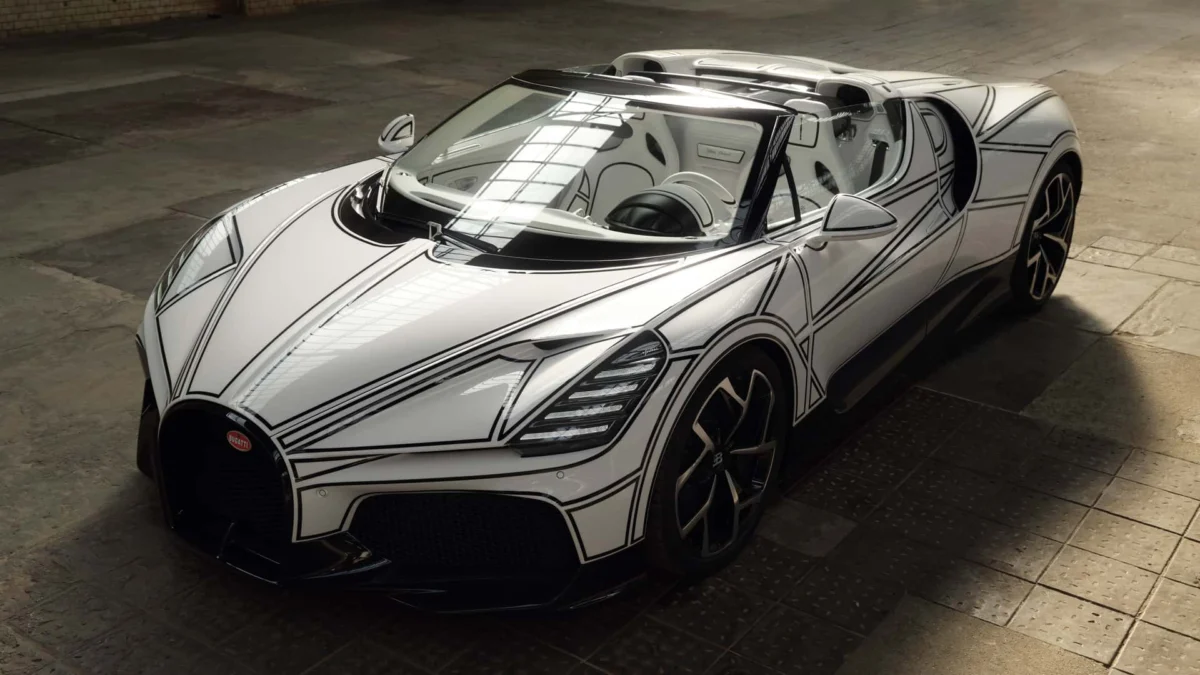
Fifteen years ago, the automotive world witnessed a marriage of two unlikely disciplines: the high-octane engineering of Molsheim and the delicate, centuries-old artistry of the Königliche Porzellan-Manufaktur (KPM) Berlin. That collaboration resulted in the one-off Bugatti Veyron Grand Sport L’Or Blanc, a vehicle that redefined the boundaries between hypercar manufacturing and fine art. Today, Bugatti has returned to this creative well to produce a swan song for its most iconic powertrain: the Bugatti W16 Mistral Blanc Éternel.
Commissioned through the exclusive Bugatti Sur Mesure personalization program, the Blanc Éternel is more than just a bespoke roadster. It serves as a monumental, one-of-one tribute to the legendary 8.0-liter quad-turbocharged W16 engine—a power plant that has defined the Bugatti brand for two decades and is now being phased out to make way for a new era of electrification and hybrid performance.
The Genesis of a Masterpiece: A Chronology of Collaboration
To understand the gravity of the W16 Mistral Blanc Éternel, one must look back at the historical trajectory of Bugatti’s aesthetic evolution.
The 2010 Precedent
In 2010, Bugatti and KPM Berlin collaborated to create the Veyron Grand Sport L’Or Blanc. At the time, the industry was skeptical; the integration of porcelain—a material characterized by its fragility and high-temperature firing requirements—into a car capable of exceeding 250 mph seemed counterintuitive. However, the result was a triumph of material science. The L’Or Blanc proved that porcelain could be structurally integrated into a vehicle’s exterior and interior, provided the craftsmanship was impeccable.
The Mistral Era
Fast forward to the present day, and the Mistral represents the final chapter of the W16 engine. Unveiled as the ultimate roadster, the Mistral was designed to be the fastest open-top car in the world. As the production run of the Mistral reaches its climax, the "Blanc Éternel" has emerged as the definitive expression of this farewell. It stands as the culmination of the lessons learned from the 2010 collaboration, featuring even more intricate applications of porcelain than its predecessor.
Engineering Art: Porcelain as a Structural Element
The W16 Mistral Blanc Éternel is defined by its extensive use of white ceramic elements. Porcelain is not merely applied as a surface finish; it is integrated into the vehicle’s identity.
Exterior Applications
On the outside, the porcelain is applied to the EB emblems, the fuel filler cap, and the intricate engine inlays. Achieving the perfect finish on these components is a feat of engineering. KPM Berlin uses specialized techniques to ensure that the porcelain can withstand the thermal stresses of the engine bay while maintaining the structural integrity required for high-speed aerodynamics. The high-contrast white-and-black aesthetic creates a visual depth that makes the car look almost like a three-dimensional sketch from an animated masterpiece.
Interior Refinement
The interior is where the collaboration truly shines. The gear shifter, speaker covers, and armrests are crafted from porcelain, creating a tactile experience that contrasts with the traditional carbon fiber and Alcantara found in the cabin. The precision required to mold these pieces to the ergonomic demands of the cockpit is testament to the expertise of KPM’s master craftsmen.
The W16 Legacy: A Technical Retrospective
The W16 Mistral Blanc Éternel serves as a poignant reminder of the engine that changed the hypercar landscape forever.
The Engine of the Century
The 8.0-liter, quad-turbocharged W16 engine is perhaps the most significant internal combustion engine of the 21st century. Introduced in the original Veyron, it shattered the 1,000-horsepower barrier, a milestone that many engineers deemed impossible for a production road car at the time. Through its various iterations—from the Chiron to the Divo, Centodieci, and finally the Mistral—the W16 has evolved from a 1,001-hp titan to an engine producing over 1,600 hp in its final, most potent forms.
Why the Transition?
The phasing out of the W16 is not a failure of performance, but a necessity of the modern regulatory and technological climate. As Bugatti moves toward its future, the focus has shifted to efficiency and hybrid integration. The W16’s successor, the 8.3-liter naturally aspirated V16 found in the new Bugatti Tourbillon, represents a radical departure. While the W16 relied on massive forced induction to generate its power, the new V16 will be paired with three electric motors to provide a different kind of performance—one that prioritizes throttle response, torque fill, and a broader power band.
Official Perspectives: The Philosophy of "Sur Mesure"
The Bugatti Sur Mesure program is the division responsible for the Blanc Éternel. It represents the brand’s shift toward "hyper-personalization." According to Bugatti design executives, the goal of the Sur Mesure program is to turn the vehicle into a canvas for the owner’s vision.
"With the W16 Mistral Blanc Éternel, we are not just creating a car; we are creating a legacy piece," a spokesperson for the brand noted. "The partnership with KPM Berlin allows us to blend the history of porcelain manufacturing in Germany with the future of automotive technology. It is a dialogue between the past and the present."
By choosing to use porcelain—a material that is timeless and fragile—against the raw, industrial power of the W16, Bugatti is making a statement about the nature of the machine. They are suggesting that the W16 is not just a tool for speed, but an object of beauty that deserves to be memorialized in materials usually reserved for the royal courts of Europe.
Implications for the Hypercar Market
The release of the Blanc Éternel carries significant weight for the collector market and the future of automotive design.
The Collector’s Perspective
One-off vehicles like the Blanc Éternel are rarely seen on the road. Instead, they serve as "blue-chip" assets for the world’s most elite car collectors. The historical significance of this specific car—being the final, porcelain-adorned version of the final W16—virtually guarantees its appreciation in value. It marks the end of an era, and collectors are increasingly turning their attention to these "last of the line" models as the automotive world pivots to hybrid and electric platforms.
A Blueprint for Future Personalization
The success of this collaboration sets a new standard for luxury automotive customization. We are likely to see more manufacturers partnering with traditional artisanal houses—whether they specialize in glass, metalwork, or ceramics—to distinguish their limited-edition vehicles. Bugatti has successfully moved the goalposts; it is no longer enough to offer custom paint colors or leather stitching. True luxury, in the current market, requires the integration of materials that have their own historical and cultural weight.
Conclusion: A Farewell in White
The Bugatti W16 Mistral Blanc Éternel is an elegant, somber, and spectacular sendoff. It acknowledges the end of a golden age of internal combustion while celebrating the human ingenuity that made that age possible.
As the Tourbillon prepares to take the spotlight as the brand’s premier model, the Mistral stands as a guardian of the W16 legacy. It is a car that asks its viewer to pause and appreciate the details—the fine grain of the porcelain, the contrast of the black lines against the white body, and the sheer audacity of an engine that defined an entire generation of engineering.
While the W16 engine may soon fall silent in the production lines of Molsheim, the Blanc Éternel ensures that its memory will be etched in something far more permanent than memory alone: it will be immortalized in stone and fire, just like the porcelain that adorns it. In the world of hypercars, where performance metrics are often the only language spoken, Bugatti has chosen to speak in the language of art. And in doing so, they have ensured that the W16 will be remembered not just for how fast it could go, but for the beauty it left behind.