For nearly two decades, Amazon Mechanical Turk (MTurk) has functioned as the invisible scaffolding of the digital age. It was a digital marketplace where “human intelligence tasks” (HITs)—small, often monotonous chores ranging from transcribing audio to identifying sentiment in text—were offloaded to a global, decentralized workforce. However, the era of the Turk is drawing to a close.
In a quiet announcement that marks the end of an internet epoch, Amazon has declared that as of July 30, 2026, the service will officially close its doors to all new customers. While existing clients will retain access to the platform for the time being, the company has signaled a definitive cessation of innovation. Amazon Web Services (AWS) confirmed that while they will continue to provide security and availability maintenance, no new features will be developed. The service is, for all intents and purposes, on life support.
The Genesis: A Marketplace for the "Impossible"
Launched in 2005, Mechanical Turk was born from a realization that even as computing power surged, there were certain cognitive tasks that computers simply could not master. Whether it was distinguishing a blurry captcha, identifying the nuance of human emotion in a social media post, or moderating content, the silicon chips of the mid-2000s were woefully inadequate.
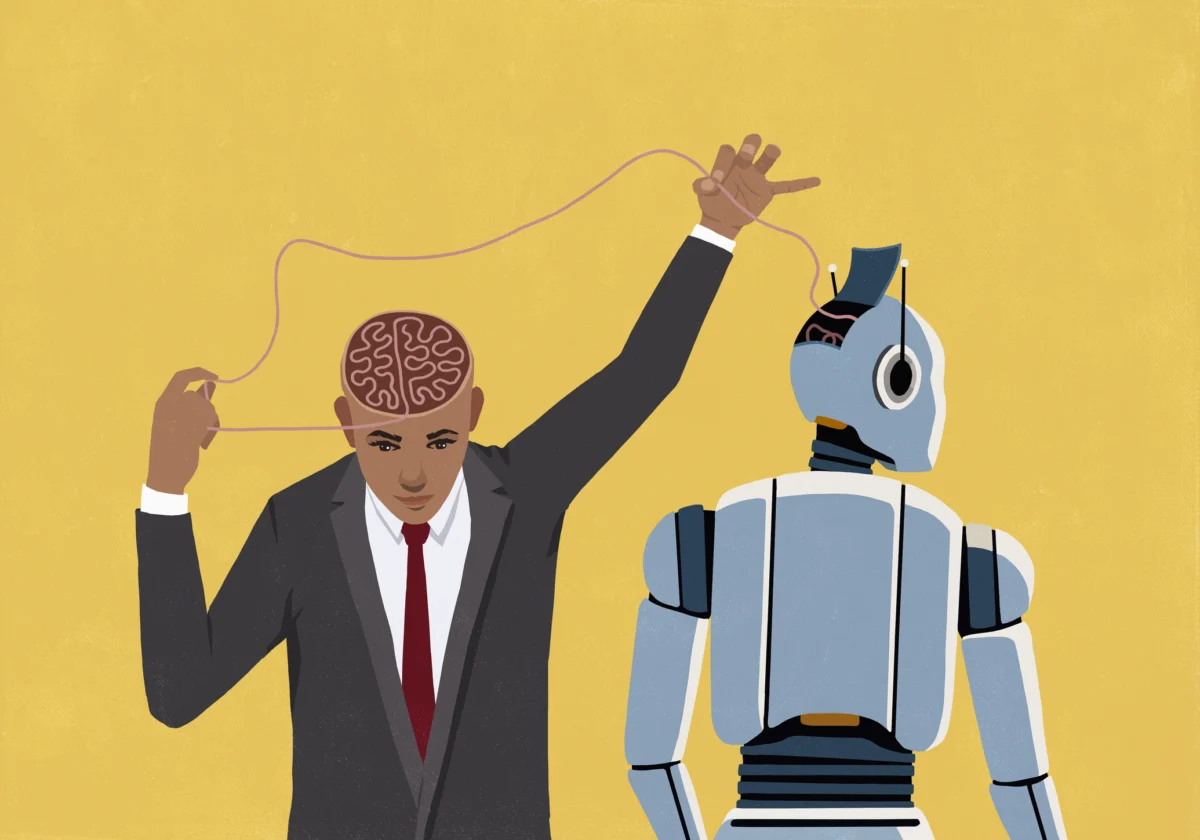
The name itself was a stroke of historical irony, borrowed from the 18th-century "Mechanical Turk"—a chess-playing automaton that dazzled European royalty but was, in reality, a sophisticated hoax concealing a human master inside a cabinet. By naming their service after this fraudulent machine, Amazon inadvertently defined its own trajectory: a platform that relied on human labor to simulate machine intelligence.
A Chronology of the Crowdsourcing Era
- 2005: Amazon launches Mechanical Turk, creating a revolutionary way for developers to access on-demand human labor via an API.
- 2008–2010: The platform becomes a primary hub for academic researchers and data scientists, providing a cost-effective way to gather large-scale human datasets.
- 2018: Amazon pivots its marketing, integrating MTurk into its SageMaker AI suite, positioning it as a vital tool for annotating data to train neural networks.
- 2023: A turning point occurs as research reveals a massive uptick in workers using generative AI to complete their tasks, turning the platform into a feedback loop of machine-generated data.
- 2026: Amazon announces the closure of the platform to new customers, signaling the beginning of the end for the service.
The Ethical Labyrinth: Labor and Exploitation
Throughout its existence, MTurk was never far from controversy. Because the tasks were often broken down into microscopic segments paying only cents per unit, the platform became a lightning rod for debates regarding the ethics of digital labor. Critics argued that the service incentivized the "gig-ification" of intellectual work, stripping away the protections of traditional employment while paying wages that often failed to meet minimum standards in many parts of the world.
The platform’s reach was vast, extending into the darkest corners of tech industry scandals. Notably, it played a quiet but significant role in the early stages of the Facebook-Cambridge Analytica data-harvesting controversy. As the platform grew, it became clear that "crowdsourced labor" was not merely a way to solve technical problems; it was a mechanism for harvesting human cognition to power opaque corporate agendas.
The "Potemkin AI" Phenomenon
Perhaps the most stinging critique of Mechanical Turk in its later years was its role in the proliferation of what some have called "Potemkin AI." In the rush to market artificial intelligence products, many startups and tech giants found that their "autonomous" systems were failing. To bridge the gap, they turned to MTurk.
Behind the interface of a sleek, AI-driven app often sat a team of human "Turkers" performing the heavy lifting in real-time. This "fake-it-till-you-make-it" approach allowed companies to secure funding and market share while masquerading human labor as proprietary machine learning. In this context, the name "Mechanical Turk" became an indictment rather than a brand; it was the mechanism that allowed the illusion of AI to persist long before the technology was ready.
The Snake-Eating Its Own Tail: The AI Feedback Loop
The most profound irony in the history of Mechanical Turk manifested in the early 2020s. As large language models (LLMs) became more accessible, the workers on the platform—people hired specifically to provide "human" input—began using these same AI tools to complete their tasks.
A 2023 analysis revealed that between 33% and 46% of workers on the platform were utilizing generative AI to finish their assignments. This created a profound systemic failure: the data being used to train the next generation of AI models was being produced by the current generation of AI models. This "model collapse" raised fundamental questions about the reliability of human-annotated data. If the "human in the loop" is just a prompt engineer for an LLM, does the data retain any real-world accuracy, or is it merely reinforcing the biases and hallucinations of the software?
The Reddit Consensus: A Long, Slow Decline
For those who have spent years navigating the platform, the closure announcement came as a relief rather than a shock. On online forums such as Reddit, the community of workers—often referred to as "Turkers"—have long complained about the degradation of the ecosystem.
Years of rampant bot activity, fraudulent tasks, and declining pay rates had already decimated the platform’s utility. "The platform died years ago," one user noted on a thread following the announcement. "The quality of work dropped, the researchers left for more reliable platforms, and Amazon stopped caring about the user experience for the workers." The consensus among long-time participants is that Amazon’s decision is merely the formal recognition of a state of decay that had been visible to everyone on the inside for nearly a decade.
Implications: The Post-Turk Landscape
What does the sunset of Mechanical Turk mean for the broader tech industry?
First, it signals a shift in data collection. The industry has moved away from the fragmented, crowdsourced model of MTurk toward massive, automated web-scraping and synthetic data generation. As AI becomes better at learning from its own outputs, the need for the "cheap, human" labor that MTurk provided has shifted toward specialized, high-expertise human verification.
Second, the closure forces a reckoning with the future of digital labor. If the platform that pioneered the gig economy for cognitive work is no longer viable, what does that say about the sustainability of human-in-the-loop workflows? As AI continues to replace the very tasks humans were once hired to do on MTurk, the labor market for low-level data annotation is effectively evaporating.
Finally, the closure of MTurk serves as a cautionary tale for the tech industry. It reminds us that every "innovation" has a human cost, and that the history of technology is littered with the tools we used to reach the next milestone—only to abandon them once they become obsolete.
Looking Forward: A Legacy of Complexity
Amazon’s Mechanical Turk was neither purely a villain nor a savior. It provided a lifeline of income for millions of people in regions where formal work was scarce, and it allowed researchers to conduct studies that would have been impossible on a smaller scale. Yet, it also facilitated a race to the bottom in wages and contributed to the confusion between what is truly "intelligent" and what is merely simulated.
As the clock ticks toward July 2026, the digital world will move on. New platforms, new AI-driven workflows, and new ethical dilemmas will take its place. But the legacy of the Mechanical Turk—the hidden hand behind the curtain of the modern internet—will remain a reminder of the era when we were still teaching machines how to think by paying people to pretend they were machines.