Main Facts: Supreme Court Intervenes in White House Construction Dispute
WASHINGTON — Chief Justice John G. Roberts Jr. granted an emergency request from the Trump administration on Friday, issuing a temporary order that sets aside a lower court ruling halting above-ground construction on a planned White House ballroom and military complex.
The single-sentence order signed by Chief Justice Roberts provided no legal reasoning for the decision—a standard practice for routine administrative stays issued on emergency dockets. Roberts clarified that the order is temporary while the full Supreme Court continues to review the broader application for a stay pending further judicial proceedings.
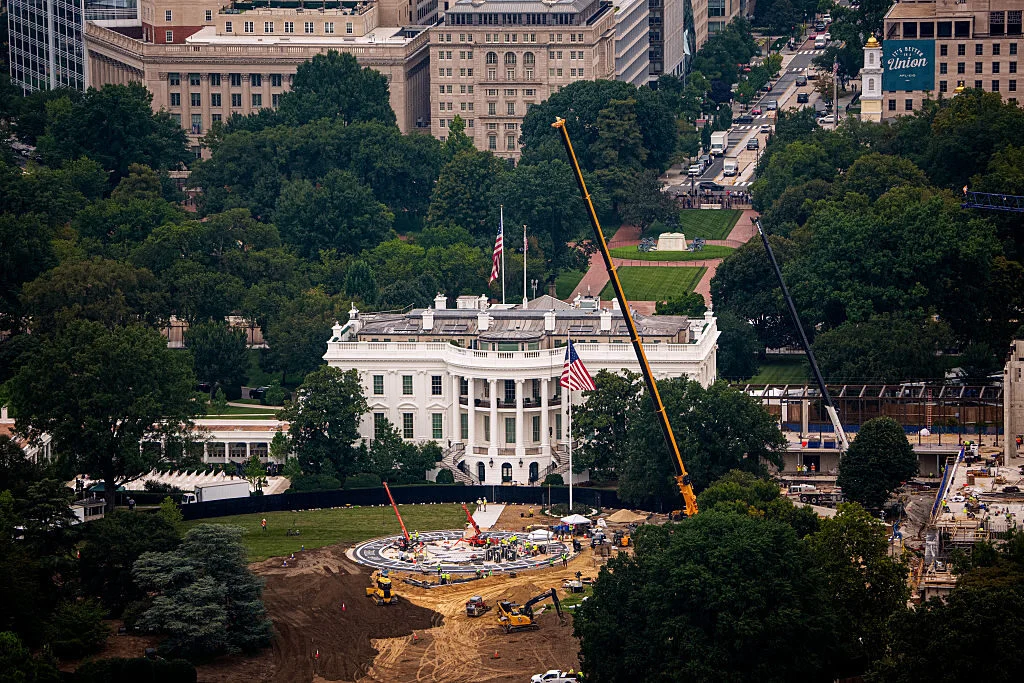
The intervention pauses a preliminary injunction previously granted by the U.S. District Court for the District of Columbia and subsequently upheld by the U.S. Court of Appeals for the D.C. Circuit. That appellate ruling had effectively frozen all above-ground construction on the historic footprint previously occupied by the White House East Wing, prohibiting further development of the proposed event space without explicit authorization from Congress.
The emergency ruling allows the executive branch to immediately resume work on the controversial multi-million-dollar facility, which has drawn fierce opposition from historic preservationists, environmental advocates, and congressional lawmakers. While the order does not represent a final ruling on the merits of the case, it prevents a mandatory shutdown of construction activities that was scheduled to take effect on Friday.
Detailed Chronology: From Demolition to High Court Emergency Motion
The legal battle over the White House ballroom complex traces a complex path through federal regulatory challenges, security incidents, and rapid judicial escalation.
[Dec 12] National Trust files lawsuit under APA & NEPA
   │
[April] Security incident at WHCA Dinner triggers GOP authorization bill
   │
[Aug 7] D.C. Circuit upholds injunction on above-ground construction
   │
[Mid-Aug] Emergency stay petition filed with Supreme Court (Docket 26A203)
   │
[Friday] Chief Justice Roberts issues administrative stay allowing work
The December Lawsuit and Historic Preservation Claims
The conflict formally entered the judicial system on December 12, when the National Trust for Historic Preservation filed a federal lawsuit challenging the administration’s actions. The preservation group alleged that the executive branch had illegally demolished significant portions of the historic East Wing and initiated groundwork for a massive ballroom complex without adhering to mandatory federal statutory processes.
The complaint alleged direct violations of the Administrative Procedure Act (APA) and the National Environmental Policy Act (NEPA). According to the plaintiffs, the federal government bypassed required consultations with regional and historical oversight authorities, including the National Capital Planning Commission (NCPC) and the Commission of Fine Arts (CFA), while failing to conduct an environmental assessment or secure statutory authorization from Capitol Hill.
Security Escalations and Congressional Gridlock
Tensions surrounding executive venue security escalated sharply in April following a high-profile shooting outside the venue of the White House Correspondents’ Association dinner. In response to heightened security vulnerabilities associated with hosting major events at off-site commercial locations, congressional Republicans introduced legislation to formally authorize and fund a dedicated secure event facility on the executive mansion’s grounds.
However, these legislative proposals stalled in Congress amid partisan debate over the scope of executive authority, fiscal priorities, and the destruction of historic White House architecture.
Appeals Court Ruling and the Emergency Injunction
Despite the lack of explicit legislative approval, construction activities on the site accelerated throughout the spring and summer. On August 7, the U.S. Court of Appeals for the D.C. Circuit affirmed a district court’s preliminary injunction. The appellate panel concluded that the administration had likely exceeded its statutory authority by proceeding with major capital construction without legislative consent.
To balance national security concerns against statutory compliance, the appellate court crafted a tailored order: it halted all above-ground architectural construction while explicitly carving out an exemption for sub-surface infrastructure. This exemption allowed the administration to continue work on a subterranean bunker intended to enhance presidential protection.
Facing a hard deadline of Friday for the above-ground construction freeze to take effect, the Department of Justice filed an emergency application with the Supreme Court, leading to Chief Justice Roberts’ administrative order.
Legal Arguments and Supporting Data: Executive Power vs. Statutory Mandates
The legal dispute before the Supreme Court encapsulates a fundamental constitutional friction between presidential management of federal property and statutory mandates enacted by Congress.
The Administration’s Article II and Security Claims
In court filings submitted to the Supreme Court by the Department of Justice and the National Park Service (NPS), the administration framed the ballroom complex as an essential operational and national security upgrade rather than a discretionary architectural project.
- National Security Imperative: Government attorneys argued that delaying the construction schedule introduces "intolerable risks" to presidential security, emphasizing that modern threat landscapes necessitate integrated, highly secure facilities within the perimeter of the White House complex.
- Historical Executive Precedent: The administration contended that the President possesses broad, inherent discretion under Article II of the Constitution to modify executive residences and operational facilities. NPS filings noted a historical pattern where past presidents executed renovations and modifications on White House grounds without seeking specific, project-by-project statutory approval from Congress.
- Irreparable Harm: The government argued that enforcing the injunction would result in contractual defaults, severe financial penalties, and logistical delays that would jeopardize the structural integrity of both the underground bunker and the overarching complex.
The Statutory Framework: APA, NEPA, and Historic Oversight
Conversely, the National Trust for Historic Preservation argued that the executive branch is bound by federal environmental and preservation statutes enacted by Congress to safeguard public lands and heritage sites.
| Statute / Authority | Mandatory Requirement | Alleged Administration Action |
|---|---|---|
| National Environmental Policy Act (NEPA) | Conduct comprehensive environmental impact assessments prior to major federal action. | Proceeded with demolition without publishing environmental impact evaluations. |
| Administrative Procedure Act (APA) | Adhere to standardized administrative rule-making and public notification procedures. | Undertook unilateral executive action bypassing standard agency review procedures. |
| Advisory Commissions (NCPC & CFA) | Submit capital architectural plans for formal review and advisory clearance. | Bypassed formal design review and historic mitigation consultations. |
| Congressional Authorization | Secure explicit legislative approval for major federal capital construction on public grounds. | Asserted unilateral executive authority over White House perimeter modifications. |
Plaintiffs emphasized in their brief opposing the stay that two lower courts had examined the administration’s claims and found a total absence of legal authority for unilateral construction:
"Each court has told Petitioners in no uncertain terms that they must stop their illegal construction unless and until they receive express approval from Congress."
Preservation attorneys further argued that the administration was attempting to "outrun judicial review" by accelerating physical construction on the site to create an irreversible fait accompli before appellate courts could render final rulings on the merits.
Judicial Distinction: Above-Ground Ballroom vs. Underground Bunker
A crucial piece of legal data highlighted by the respondents is the specific boundary established by the D.C. Circuit’s August 7 ruling. The lower court’s injunction was explicitly narrow:
- Underground Facilities: Construction of the subterranean secure bunker—the primary security concern identified by the government—was permitted to proceed uninterrupted.
- Above-Ground Facilities: Construction of the visible, above-ground ceremonial ballroom was suspended pending statutory compliance.
The preservation group argued that because the subterranean national security elements were already exempt from the shutdown, the administration’s emergency plea regarding immediate security risks was legally unpersuasive.
Official Responses: Statements from the Administration and Preservationists
The temporary Supreme Court order elicited immediate, starkly contrasting reactions from key stakeholders involved in the litigation.
Executive Branch and Presidential Statements
President Donald Trump welcomed the decision, praising Chief Justice Roberts’ administrative intervention in a post published on his social media platform, Truth Social. The President underscored the operational necessity of the structure, framing it as a long-overdue addition to executive infrastructure:
"The Military/Ballroom Complex being built on the hallowed grounds of the White House, which is so vital for National Security, will be THE GREATEST OF ITS KIND! It is something that Presidents have wanted for 150 years, and that the Military has been seeking for the last 100 years."
Legal representatives for the Department of Justice reiterated that the administration remains confident in its ultimate legal position as briefings continue before the high court.
Plaintiff Response and Preservation Community Concerns
The National Trust for Historic Preservation expressed disappointment over the temporary pause on the injunction, warning that ongoing construction risks permanent damage to iconic public heritage.
Legal counsel for the trust reiterated that the demolition of the East Wing represented an unprecedented disruption to historic preservation laws governing federal landmarks. Representatives stated that they would continue to push for a definitive ruling from the Supreme Court that re-establishes the requirement for historic oversight and legislative authorization.
Legislative Measures in Capitol Hill
Members of Congress remain sharply divided over the fallout from the case. Congressional Republicans who introduced authorization measures following the April security incident urged colleagues to pass formal legislation ratifying the project to render the ongoing court battles moot.
Conversely, Democratic lawmakers argued that allowing the administration to override standard oversight protocols undermines Congress’s constitutional power of the purse and management of federal real estate.
Broader Implications: Executive Authority, Historic Preservation, and Constitutional Balance
The Supreme Court’s eventual decision on whether to grant a permanent stay—and its potential ultimate review of the case on the merits—carries far-reaching implications for constitutional law, federal land management, and public accountability.
Precedent for Presidential Modifications to Historic Grounds
At the core of this litigation is the question of whether the White House complex constitutes an exclusive presidential domain exempt from standard federal statutory oversight, or whether it remains a public federal landmark governed by congressional enactments.
A ruling in favor of the administration could establish broad executive discretion to alter, demolish, or construct structures on federal property under the rubric of presidential prerogative and national security. Conversely, a decision upholding the lower courts’ rulings would re-affirm that executive infrastructure projects—regardless of location or security justification—must strictly comply with environmental, historic preservation, and statutory oversight laws enacted by Congress.
          ┌────────────────────────────────────────────────────────┐
          │      Constitutional Dispute: Property Control          │
          └───────────────────────────┬────────────────────────────┘
                                      │
              ┌───────────────────────┴───────────────────────┐
              ▼                                               ▼
┌──────────────────────────┐                     ┌──────────────────────────┐
│   Executive Branch      │                     │   Legislative Branch     │
│   (Article II)           │                     │   (Article I)            │
├──────────────────────────┤                     ├──────────────────────────┤
│ • Inherent discretion    │                     │ • Power of the purse     │
│ • Unilateral security    │      VS.            │ • Control over federal   │
│   mandates               │                     │   lands & property       │
│ • Historical usage       │                     │ • Statutory frameworks   │
│   precedents             │                     │   (NEPA, APA)            │
└──────────────────────────┘                     └──────────────────────────┘
Separation of Powers and Legislative Control of Public Lands
The conflict sharply illustrates the legal friction that arises when executive emergency security arguments intersect with legislative authority over federal land and appropriations. If the court ultimately determines that national security justifications can bypass clear statutory review processes without express congressional authorization, it may alter the legal framework governing federal public works projects nationwide.
Next Steps in the High Court
Chief Justice Roberts’ administrative stay is explicitly temporary. It serves solely to preserve the status quo while the full Supreme Court reviews the emergency filings and responses from all parties.
In the coming weeks, the justices are expected to issue a formal order either granting a full stay pending appeal or dissolving Roberts’ administrative order, which would re-impose the injunction halting above-ground construction. Should the court elect to hear the case on the merits during an upcoming term, its ruling could establish landmark constitutional precedent defining the boundary between presidential authority and statutory regulation at the heart of the American republic.