The geopolitical landscape of the High North is undergoing a seismic shift. US President Donald Trump has announced that a "massive" campaign for oil, gas, and mineral exploration is set to commence in Greenland, signaling a new era of American focus on the Arctic. This development, framed by the President as a triumph for both domestic energy security and continental defense, follows a period of intense diplomatic friction between Washington, Copenhagen, and Nuuk. As melting polar ice reveals previously inaccessible resources and potential shipping lanes, Greenland has transitioned from a remote territory to a cornerstone of modern military strategy and global resource supply chains.
Main Facts: The New Arctic Doctrine
President Trump’s recent declaration, disseminated via his Truth Social platform, characterized Greenland as a resource-rich frontier with potential oil reserves that he claims are "far greater than that of almost… anywhere in the World." While the President did not specify which American firms would spearhead these operations, his rhetoric suggests a comprehensive push to integrate the island’s untapped rare earth deposits into the American industrial base.
Central to this initiative is the "Golden Dome"—an ambitious, multi-layered missile defense shield. According to the administration, Greenland’s geographical position makes it the "second to none" location for monitoring and intercepting threats. The President emphasized that any future aerial threat to the United States, whether via drones, advanced missiles, or emerging technologies, would be effectively neutralized over the Arctic before reaching the North American mainland.
Chronology: From Diplomatic Tension to Strategic Integration
The current state of affairs is the culmination of a volatile diplomatic timeline that began with a controversial suggestion by President Trump to purchase the island.
- 2019: The Purchase Proposal: The diplomatic relationship reached an initial breaking point when President Trump publicly expressed interest in buying Greenland. The Danish government, led by Prime Minister Mette Frederiksen, dismissed the idea as "absurd," leading to the cancellation of a scheduled state visit.
- 2025: Heightened Arctic Maneuvering: As global interest in the Arctic intensified, tensions simmered regarding sovereignty. Reports emerged of US-affiliated energy companies conducting exploratory geological surveys in remote eastern Greenland without broad public consultation, causing significant anxiety among local Greenlandic communities.
- 2026 (August): The Crisis Point: Escalating rhetoric from Washington suggested that the US might be prepared to assert its strategic interests by force if necessary. This pressure forced a rapid recalibration of the trilateral relationship between Washington, Copenhagen, and Nuuk.
- 2026 (September): The Security Agreement: In a diplomatic breakthrough, the three parties signed a landmark security agreement. The deal formalizes an expanded US military footprint on the island, including the construction of two new military bases and the deployment of the "Golden Dome" infrastructure.
Supporting Data: The Strategic and Economic Value of Greenland
Greenland’s strategic value is derived from a confluence of geography, geology, and climate change.
The Geography of Defense
Situated on the shortest trajectory for intercontinental ballistic missiles (ICBMs) between Russia and the United States, Greenland serves as a natural "watchtower." During the Cold War, the Thule Air Base was the cornerstone of North American early warning systems. Today, the expansion of these capabilities into the "Golden Dome" system is intended to address the threat of hypersonic glide vehicles and advanced drone swarms, which have rendered legacy defense systems increasingly obsolete.
The Economic Treasure Trove
Greenland is home to some of the world’s largest, most pristine deposits of rare earth elements (REEs)—minerals essential for the production of electric vehicles, semiconductors, and high-end military hardware. Currently, the global supply chain for these minerals is heavily dominated by China. By facilitating exploration and extraction in Greenland, the United States aims to diversify its supply chain, effectively "de-risking" its economy from reliance on foreign adversaries.
The Impact of Climate Change
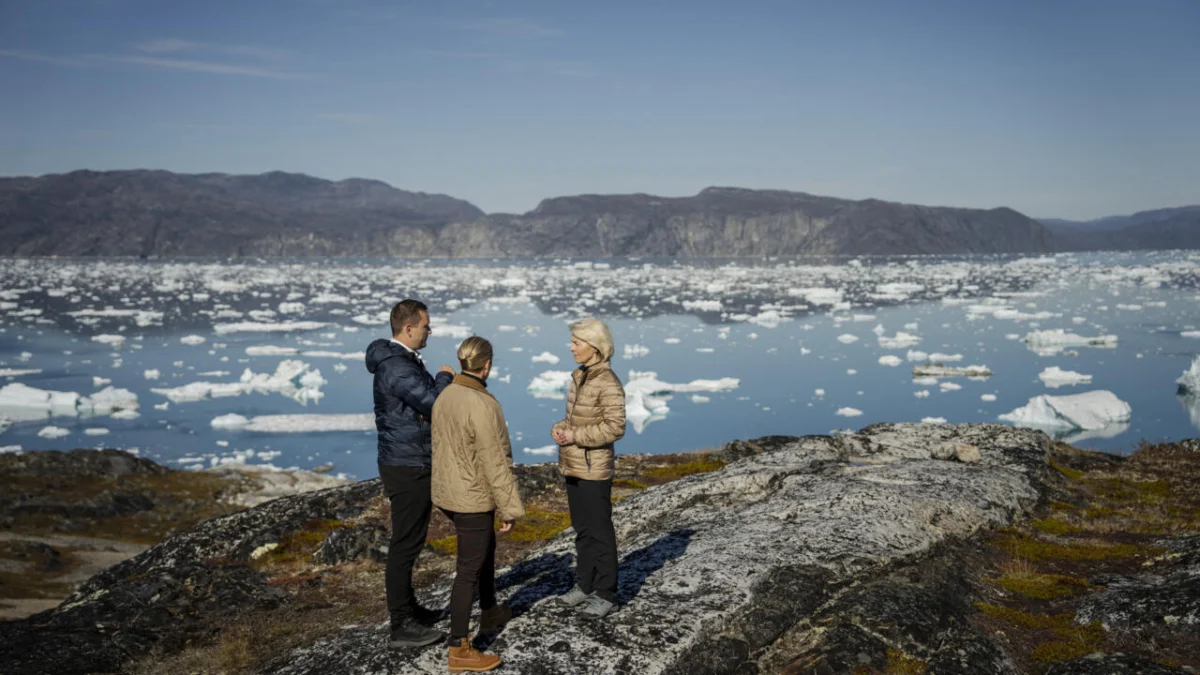
The acceleration of glacial melt is not merely an environmental concern; it is a commercial catalyst. As the Northwest Passage and other Arctic routes become navigable for longer periods during the year, Greenland stands to become a vital hub for international maritime trade. The reduction in ice cover is also what makes the current wave of mineral and hydrocarbon exploration physically possible, as previously frozen or inaccessible terrain becomes open to survey teams.
Official Responses: A Fragile Consensus
The reaction to the US-led initiative has been polarized, reflecting the complex tri-partite relationship.
The Danish Perspective
In Copenhagen, the government has been forced to navigate a difficult path. While Denmark remains a steadfast NATO ally, the aggressive posture adopted by the US regarding Greenland caused significant domestic political backlash. The final security deal was presented as a reaffirmation of Danish sovereignty, with officials emphasizing that the agreement respects Greenland’s right to self-determination. However, critics in the Danish parliament argue that the agreement effectively binds Copenhagen to a "US-first" Arctic policy, limiting Denmark’s autonomy in regional decision-making.
The Greenlandic View
For the people of Greenland, the situation is one of cautious apprehension. While the prospect of economic development through mining is enticing, many Greenlanders are concerned about the environmental impact on their traditional lands. Furthermore, the push for military expansion has sparked a national debate over the island’s future. While the legislation is expected to pass in the Greenlandic parliament, significant portions of the populace remain wary of becoming a "pawn" in a great-power competition between the US and its rivals.
The International Community
Russia and China have both voiced concerns. Moscow has viewed the expansion of US military infrastructure in the Arctic as a provocative move, leading to increased Russian naval and aerial activity in the High North. Meanwhile, Beijing—which has long identified itself as a "near-Arctic state"—has criticized the US for "militarizing" the region, framing the American actions as a threat to the peaceful, scientific-focused cooperation that has historically defined Arctic politics.
Implications: The Future of the High North
The implications of this shift are profound and will likely dictate global security and economic policy for the next decade.
A Shift in Global Alliances
The "Golden Dome" agreement signals a move toward a more rigid, militarized Arctic. The days of the Arctic being a "zone of peace" are rapidly vanishing. As the US consolidates its influence through military bases and infrastructure, other nations will likely accelerate their own defense spending in the region. This creates a risk of an "Arctic Arms Race," where miscalculations by regional powers could lead to localized conflict.
Environmental and Ethical Challenges
The extraction of natural resources in such a fragile ecosystem presents enormous ethical and environmental risks. Greenland’s indigenous communities, whose livelihoods are inextricably linked to the Arctic environment, face a changing landscape where the preservation of their heritage is increasingly at odds with the demands of global industrialization. The international community is now watching closely to see if the proposed "massive" exploration will follow rigorous environmental standards or if it will prioritize speed and output at the cost of the ecosystem.
The New Maritime Order
The opening of new shipping routes through the Arctic could reduce global transport times by weeks, fundamentally altering the economics of global trade. However, the lack of infrastructure—such as search-and-rescue facilities, refueling stations, and navigation aids—means that any increase in shipping activity carries high risks. The US-Greenland-Denmark deal may provide the framework for these necessary civilian infrastructures, provided that the focus remains on more than just military dominance.
Conclusion: A High-Stakes Gambit
President Trump’s announcement marks the beginning of a high-stakes gambit. By asserting the importance of Greenland, the United States has successfully signaled that it will not cede the Arctic to competitors. However, the path forward is fraught with complexity. Success will depend not only on the technological efficacy of the "Golden Dome" or the volume of minerals extracted, but on the ability of Washington to maintain a stable, collaborative, and respectful relationship with its Danish and Greenlandic partners.
As the Arctic ice continues to retreat, the eyes of the world remain fixed on Greenland. What happens on this frozen, strategic island will reverberate through the boardrooms of the world’s most powerful corporations and the halls of its most powerful governments, shaping the security, energy, and environmental future of the 21st century. The era of the "Arctic Frontier" has arrived, and its consequences are only just beginning to unfold.