Executive Summary
In a development that has sent shockwaves through the Ukrainian capital and exposed deep fissures in the intelligence-sharing architecture of the Western alliance, a Russian ballistic missile struck a critical energy facility in Kyiv on Tuesday evening. The attack, which hit the CHP-4 power plant, was executed without any prior warning from Ukraine’s Western partners—a failure that President Volodymyr Zelensky has characterized as "absolutely unjust."
The strike, which resulted in the loss of at least two lives and left approximately 20 civilians wounded after debris fell on a residential complex in the Desnianskyi district, marks a grim departure from the operational status quo. As Kyiv navigates the complexities of a volatile "energy ceasefire" brokered by U.S. President Donald Trump, the lack of early warning signals has raised urgent questions regarding the reliability of intelligence support and the fragility of current diplomatic arrangements.
Chronology of the Strike and Immediate Aftermath
The Tuesday Evening Assault
The attack commenced under the cover of night, catching the city off guard. AFP journalists stationed in Kyiv reported a series of distinct, powerful blasts that rattled the city center. Crucially, the air-raid sirens—typically the first indication of incoming danger—only sounded as the projectiles were already in their terminal descent, leaving residents with virtually no time to seek shelter.
Escalation in the Desnianskyi District
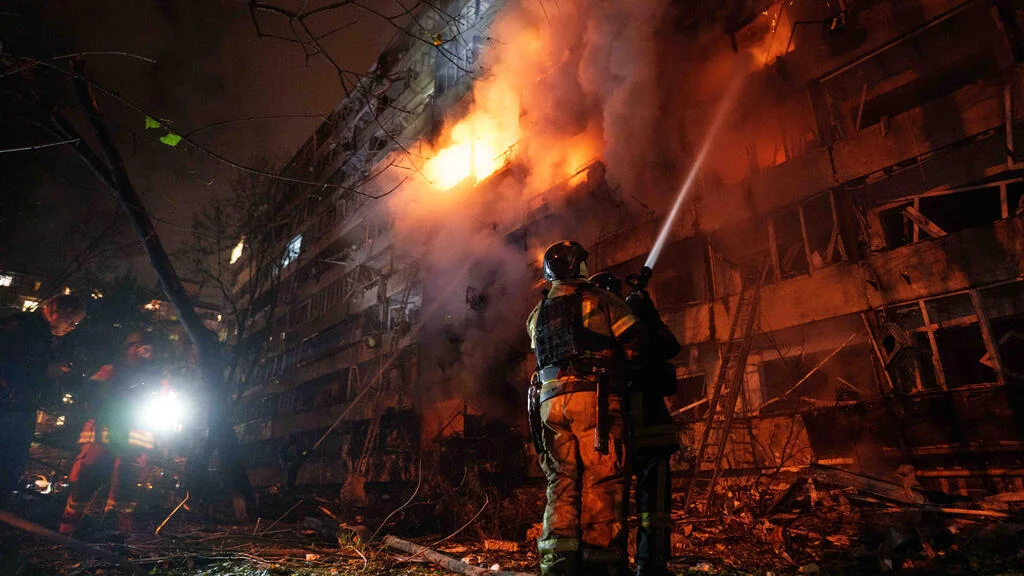
While the primary objective of the Russian strike was the CHP-4 energy infrastructure, the kinetic impact was not limited to the industrial site. Mayor Vitali Klitschko confirmed that the assault caused significant collateral damage in the residential Desnianskyi district. The death toll currently stands at two, with local medical facilities treating 20 individuals for shrapnel wounds and trauma. Emergency services worked through the night to extinguish fires at the site of the impact, while the city’s energy grid operators began assessing the extent of the damage to the heating and electricity network.
The Breakdown of Early Warning
Ukrainian military officials have noted that the Russian military utilized high-speed ballistic weaponry, which is notoriously difficult to track. However, the absence of actionable intelligence from Western allies—who maintain sophisticated satellite and radar monitoring networks—is the central point of contention. President Zelensky expressed his frustration on social media, stating: "Once again, no early warning from our partners. Ukraine’s systems picked up the missiles only as they were nearing the city."
Supporting Data: The Intelligence Gap
Reliance on Western Assets
Since the onset of the full-scale invasion, Ukraine has functioned as a primary consumer of Western intelligence, particularly from the United States. This symbiotic relationship involves the real-time sharing of satellite imagery, electronic signals intelligence (SIGINT), and radar data that allows Kyiv to anticipate Russian launch patterns. This intelligence is the backbone of Ukraine’s air defense strategy, providing the precious minutes required to intercept cruise missiles and drones.
The Changing Nature of Russian Tactics
Russian forces have increasingly pivoted toward the use of ballistic missiles, which possess a much flatter and faster trajectory than subsonic cruise missiles or loitering munitions. Military analysts suggest that Russia is also experimenting with flight paths designed to mask the launch point, potentially exploiting gaps in the sensor coverage provided by NATO-aligned assets.
The incident on Tuesday suggests a shift in either the capability of the missiles being deployed or a fundamental change in the intelligence pipeline. If Western allies are withholding, or failing to detect, these launches, the operational parity between Russian offensive capabilities and Ukrainian defensive systems may be collapsing.
The "Trump Ceasefire" and Diplomatic Turmoil
The Truth Social Announcement
The atmosphere in Kyiv is currently defined by the confusion surrounding the "energy ceasefire" announced by U.S. President Donald Trump on Sunday. Trump, utilizing his Truth Social platform, claimed that both Russia and Ukraine had reached an agreement to halt long-range strikes on energy infrastructure and oil refineries. This announcement was met with skepticism from international observers and uncertainty within the Ukrainian government, which has been under intense pressure from the White House to refrain from striking Russian oil assets.

A Fractured Relationship
The relationship between President Zelensky and President Trump has grown increasingly strained. Trump has been vocal in his disapproval of Ukrainian strikes on Russian refineries, viewing them as destabilizing to global energy markets. His recent rhetoric, which included a suggestion that it was "time for Ukraine to get a new president," underscores the deepening divide between Washington’s current diplomatic strategy and Kyiv’s existential security requirements.
The Tuesday strike on the CHP-4 plant serves as a devastating counterpoint to the ceasefire narrative. If the ceasefire was intended to protect energy infrastructure, the Russian military’s decision to target a power plant—and the lack of an Western response—suggests that the agreement is either being ignored by Moscow or that its terms are interpreted differently by the parties involved.
Official Responses and Political Implications
Zelensky’s Critique
In his public address following the attack, President Zelensky did not mince words. By framing the failure to provide intelligence as "unjust," he signaled a significant cooling of diplomatic relations. The Ukrainian leadership is increasingly concerned that they are being treated as a secondary actor in negotiations, where their infrastructure is used as a bargaining chip by major powers.
Mayor Klitschko’s Call for Vigilance
Mayor Vitali Klitschko has focused on the humanitarian aspect of the crisis, urging citizens to treat all air-raid warnings with extreme urgency, regardless of the perceived status of ceasefires or diplomatic deals. The Kyiv municipal government is currently reviewing shelter protocols, acknowledging that the "rare" instances of explosions occurring before sirens signify a new, more dangerous phase of the conflict.
The View from Washington and Brussels
As of Wednesday morning, there has been no official statement from the U.S. Department of Defense regarding the intelligence failure. However, diplomatic sources suggest that the White House is under immense pressure to clarify its intelligence-sharing commitments. In Brussels, EU officials have expressed concern that the lack of coordination could embolden further Russian aggression, potentially leading to a winter of energy instability across Ukraine.
Implications: The Winter of Uncertainty
Energy Infrastructure as a Kinetic Battlefield
The targeting of the CHP-4 plant is a clear strategic decision. By hitting heat and power generation facilities, Russia aims to maximize the psychological and economic pressure on the Ukrainian population as winter approaches. If the energy grid remains susceptible to ballistic strikes that bypass early warning systems, the resilience of Ukraine’s civilian population will face its most significant test since 2022.
The Crisis of Trust
The most profound implication of this event is the erosion of trust between Kyiv and its primary Western benefactors. If Ukraine cannot rely on its partners to provide advance notice of incoming strikes, the strategic value of the Western alliance is diminished. This could force Ukraine to seek alternative defense arrangements or, more drastically, to take unilateral actions to secure its own intelligence gathering capabilities—potentially through deeper investments in independent satellite and reconnaissance technologies.
Future Scenarios
Looking ahead, the situation remains precarious. Three potential trajectories have emerged:
- Intelligence Realignment: The U.S. and its allies restore the integrity of the intelligence-sharing pipeline, acknowledging the technical oversight that led to Tuesday’s failure.
- Diplomatic Collapse: The "Trump Ceasefire" is officially declared dead, leading to a renewed, intensified campaign of long-range strikes from both sides, potentially escalating into an even more severe conflict.
- Strategic Autonomy: Ukraine shifts its military doctrine toward increased reliance on domestic deep-strike capabilities and independent surveillance, moving away from its total dependence on Western intelligence.
As the smoke clears over the CHP-4 plant, one thing is certain: the security architecture of the conflict has fundamentally shifted. For the three million residents of Kyiv, the immediate challenge is surviving the impending cold, while for the international community, the challenge is maintaining a cohesive response in the face of an increasingly unpredictable and uncoordinated geopolitical landscape.