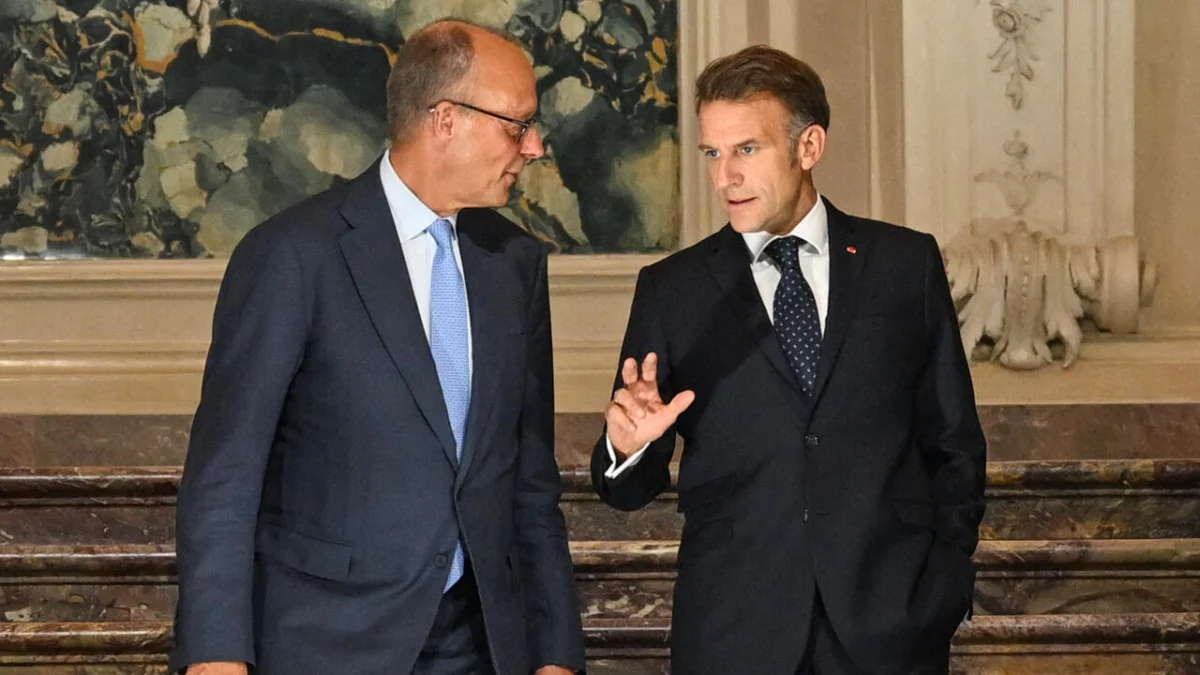
In a bold strategic shift that signals a departure from the European Union’s traditional, consensus-heavy approach to international commerce, French President Emmanuel Macron and German Chancellor Friedrich Merz have issued a joint call for a radical overhaul of the bloc’s defensive trade architecture. In a formal letter addressed to European Commission President Ursula von der Leyen, the two leaders of the EU’s most influential economies have demanded the creation of a "credible instrument" capable of inflicting swift, decisive economic pain on nations that engage in unfair trade practices or weaponize supply chains.
The proposal, which comes as Brussels grapples with an unprecedented trade deficit and rising industrial anxiety, envisions a mechanism that would allow the European Commission to bypass lengthy, often paralyzing, multi-state approval processes to enact countermeasures within days. While the letter strategically avoids naming Beijing directly, the timing of the missive—arriving just as the EU’s trade commissioner prepares for critical negotiations in China—leaves little doubt that the target is the Asian economic superpower.
The Case for a "Legal Arsenal"
At the heart of the Macron-Merz proposal is a fundamental critique of the current European trade apparatus: it is too slow, too bureaucratic, and too vulnerable to political deadlock. The leaders argue that in the modern era of "weaponized interdependence," where critical raw materials and essential technology components are used as diplomatic leverage, the EU currently lacks the necessary "muscle" to project power.
"We need a credible instrument in the hands of the Commission for decisive action," the letter states. The proposed mechanism would empower the executive branch of the EU to take punitive measures—including the potential suspension of access to the European single market—without the need for unanimous approval from all 27 member states. While a weighted majority of states could theoretically block such action, the burden of stopping the Commission would shift from a requirement of consensus to a high-bar hurdle of opposition, effectively granting the Commission a "fast-track" authority.
This move mirrors the United States’ "Section 301" of the Trade Act of 1974, which has long allowed Washington to unilaterally investigate and retaliate against foreign trade practices deemed discriminatory or harmful to U.S. interests. For years, European leaders viewed such unilateralism with suspicion, preferring the multilateral framework of the World Trade Organization (WTO). However, the rise of industrial overcapacity in China and the vulnerability of European manufacturers have forced a pivot toward a more realist, defensive trade posture.
Chronology: From Cooperation to Confrontation
The path to this demand for a more aggressive trade policy is paved with years of escalating economic friction:
- 2023–2024: The European Commission launches multiple investigations into Chinese subsidies, particularly in the electric vehicle (EV) sector, citing that Chinese state support is artificially depressing prices and undercutting European manufacturers.
- Early 2025: Tensions over critical raw materials reach a boiling point. Europe finds its green transition—vital for the climate goals of the European Green Deal—held hostage by supply chain bottlenecks and export controls imposed by dominant global players.
- September 2026: G20 trade ministers meet to address the issue of industrial overcapacity, only to end in a deadlock. U.S. and European officials express deep frustration at the refusal of major manufacturing nations to curb subsidies.
- October 2026 (Present): Macron and Merz deliver their formal letter to President von der Leyen, proposing the new "legal arsenal" to be debated at the upcoming Brussels summit.
Supporting Data: The Magnitude of the Deficit
The economic rationale for this shift is rooted in staggering trade imbalances. Last year, the European Union’s deficit in goods with China swelled to approximately 360 billion euros (roughly $400 billion). This figure represents more than just a balance-of-payments concern; it serves as a measure of the erosion of Europe’s industrial base.
European sectors that were once the envy of the world—including the production of steel for wind turbines, semiconductors, and high-capacity batteries—are increasingly under pressure from Chinese imports that are, in many cases, priced at a fraction of their European counterparts. When factoring in the EU’s reliance on Chinese supplies for rare earth elements and other critical raw materials, the structural dependency is profound. The fear among policymakers in Paris and Berlin is that this economic reliance will eventually be transformed into a strategic vulnerability, where access to the materials necessary for the European digital and green transition is curtailed by Beijing as a bargaining chip.
Official Responses and Political Maneuvering
The proposal has ignited a fierce debate within the European Council. While there is broad consensus that the current tools are "not as effective" as those possessed by the U.S. or China, the prospect of granting the Commission sweeping unilateral powers is controversial.

Small-to-medium-sized member states, historically wary of a "Franco-German axis" dictating trade policy for the entire bloc, have expressed concerns regarding the loss of national sovereignty. "We cannot allow the Commission to act as a judge, jury, and executioner without robust oversight," remarked one diplomat from a Northern European member state.
Conversely, the German government, usually the most cautious when it comes to upsetting trade relations with China, has taken a surprisingly hawkish stance. A government source confirmed the rationale: "If they cut off our supplies, the EU must be able to inflict damage comparable to that being done to us. We cannot continue to play by the rules of the 20th century in a 21st-century trade war."
The European Commission has been more guarded. President von der Leyen has long advocated for "de-risking" rather than "de-coupling" from China, and her team is already exploring options to strengthen existing trade defense instruments. Whether the Commission is willing to accept the political capital expenditure required to secure the powers requested by Macron and Merz remains to be seen.
Global Implications: A New Era of Economic Security
The implications of this proposal extend far beyond the borders of the European Union. Should the EU adopt these new powers, it would mark a significant shift in the global economic order.
1. The Death of the WTO Era?
If the EU begins to implement unilateral trade sanctions without the blessing of the WTO, it signals the definitive end of the "multilateralist" era of trade. This would leave the global economy governed by a series of regional "fortresses," with the U.S., the EU, and China each operating under their own internal rules of economic warfare.
2. Escalation Risks
Beijing is unlikely to remain passive. Should the EU move to impose tariffs or restrict market access using this new, accelerated mechanism, China has historically responded with "tit-for-tat" measures, often targeting European agricultural products or luxury goods. This risks a cycle of retaliatory actions that could drag down global GDP and increase costs for consumers already struggling with inflationary pressures.
3. Supply Chain Realignment
The ultimate goal of Macron and Merz is not necessarily to enter a trade war, but to create the conditions for a "reshoring" or "friend-shoring" of vital industries. By making the cost of trade aggression higher, they hope to incentivize companies to diversify their supply chains away from high-risk environments. This, however, will come at a premium, as the cost of European-made components is significantly higher than those imported from East Asia.
Conclusion: The Summit of Decisions
As European leaders prepare for the summit in Brussels next week, they face a defining choice. The status quo, which has seen the steady erosion of European industrial dominance and a growing reliance on external powers, is increasingly viewed as untenable. The Macron-Merz proposal offers a path toward a more assertive, unified European trade policy, but it brings with it the risk of global fragmentation and heightened economic instability.
Whether this move is a genuine strategy to protect European sovereignty or a tactical bluff designed to bring Beijing to the negotiating table, the message from Paris and Berlin is clear: The era of European economic complacency is over. The Union is preparing its armor, and in the volatile landscape of 21st-century geopolitics, the definition of "free trade" is being rewritten in real-time.