Beneath our feet lies a vast, silent, and essential architecture that dictates the health of the planet. For eons, sprawling networks of fungi have quietly supported terrestrial plant life, acting as a critical carbon sink and a biological conduit for nutrients. Now, for the first time, an international team of researchers has unveiled a global map of these underground fungal networks, providing a breathtaking look at the sheer scale of the infrastructure that sustains life on Earth.
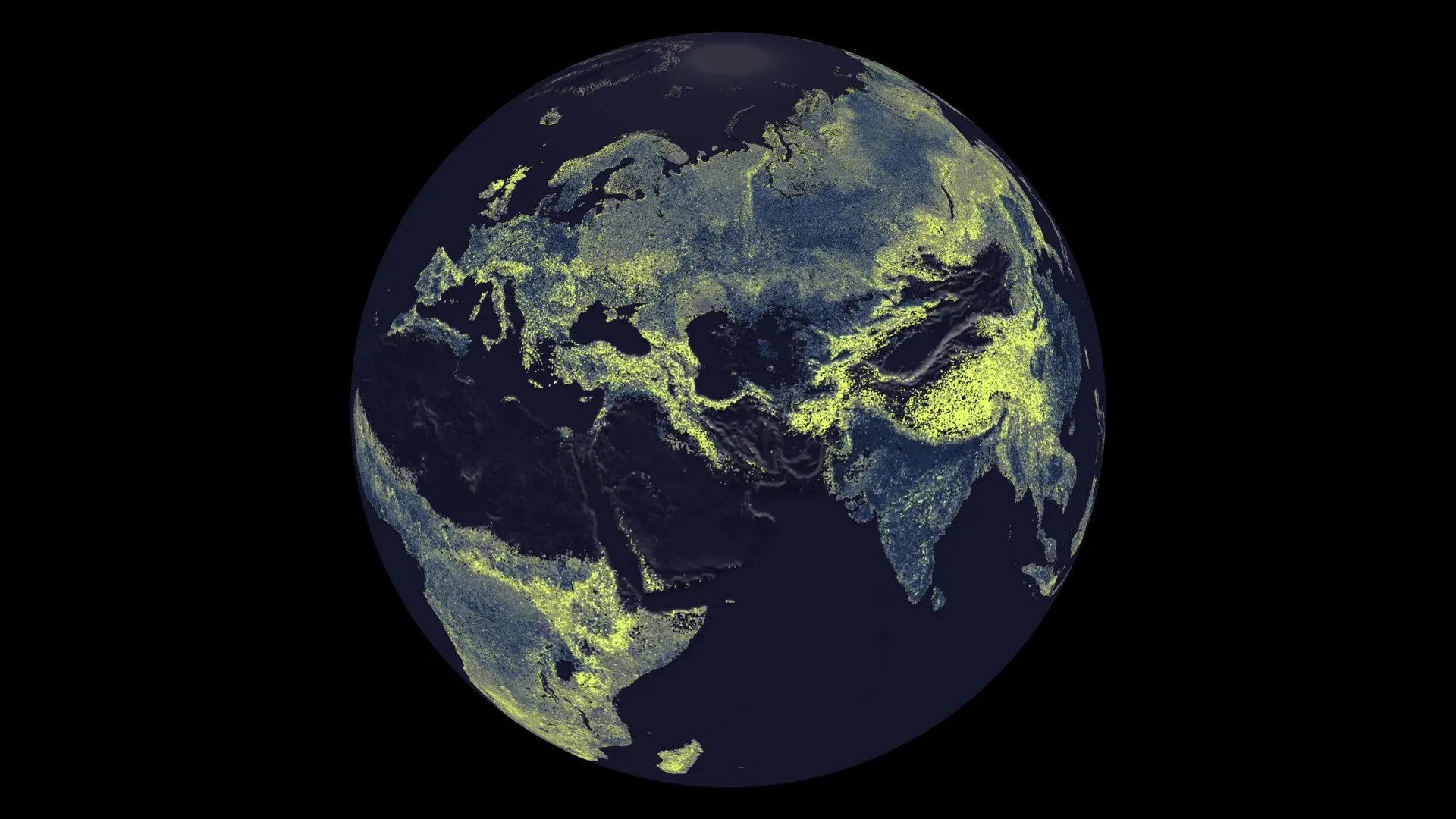
The study, published in the journal Science, offers the most comprehensive assessment of arbuscular mycorrhizal (AM) fungi to date. By combining soil core data, machine learning, and advanced robotic imaging, scientists have quantified an invisible world that spans 110 quadrillion kilometers—a distance so immense it defies human intuition. This discovery not only reshapes our understanding of soil ecology but provides policymakers with a vital new tool to combat climate change and bolster global food security.
The Hidden Partnerships: How AM Fungi Sustain Life
At the center of this research are arbuscular mycorrhizal (AM) fungi. These organisms form symbiotic, mutually beneficial relationships with approximately 70% of all terrestrial plant species. In this sophisticated biological bargain, plants provide the fungi with carbon-rich sugars produced through photosynthesis. In return, the fungal networks extend the reach of plant roots by up to 100 times, scavenging for water and essential minerals—particularly phosphorus, of which they provide more than 80% of a plant’s intake.
These networks are not merely passive attachments; they function as a living, dynamic infrastructure. They facilitate the movement of carbon into the soil, acting as a natural regulator of the planet’s climate. Despite their ubiquity, these systems have historically been overlooked in conservation strategies. Until now, scientists lacked the data to estimate the density and distribution of these networks on a planetary scale.
Chronology: From Invisible Roots to a Global Atlas
The journey to mapping this subterranean world has been a multi-year effort involving interdisciplinary collaboration across physics, biology, and data science.
- 2023–2024 (Foundational Analysis): Researchers began by synthesizing data from over 16,000 soil cores collected from diverse ecosystems, ranging from arid deserts and frozen tundras to lush temperate forests.
- Early 2025 (Diversity Mapping): The team published a seminal analysis in Nature focusing on the diversity of mycorrhizal fungi. This study laid the groundwork for the "Underground Atlas," a digital platform designed to pinpoint biodiversity hotspots beneath the surface.
- Mid-2025 (The Physics of Flow): Researchers published further findings in Nature regarding the speed of nutrient transport within these networks. They discovered that carbon moves through fungal hyphae at speeds of up to 120 micrometers per second—a velocity that, if scaled to human proportions, would feel like traveling at 400 km/h.
- Late 2025 (The Infrastructure Map): Culminating in the current Science publication, the team integrated their previous findings with new robotic imaging data to create the first comprehensive "Mycorrhizal Infrastructure Map," finally visualizing the total physical mass and length of these networks.
Supporting Data: By the Numbers
The scale of these networks is difficult to comprehend, yet the data provided by the research team offers a startling quantitative reality. By utilizing machine-learning models to extrapolate from their 16,000 soil samples and analyzing 300,000 living hyphae via robotic imaging, the researchers reached several key conclusions:
- Total Network Length: Approximately 110 quadrillion kilometers (1.1 x 10¹⁷ km).
- Total Carbon Mass: Roughly 300 megatons. This is equivalent to four to six times the combined mass of all living humans on Earth.
- Density: In a single teaspoon of healthy soil, there may be up to 10 meters (32 feet) of mycorrhizal network.
- Ecosystem Distribution: Wild grasslands, which are currently among the least protected ecosystems, contain approximately 40% of the world’s AM fungal biomass.
- Human Impact: Network densities in managed croplands are predicted to be roughly 50% lower than those in undisturbed wild ecosystems, highlighting the degradation caused by intensive agriculture.
Official Responses and Expert Perspectives
The project, led by the Society for the Protection of Underground Networks (SPUN), has drawn significant praise from the scientific community for its audacity and precision.
"It is hard to overstate the importance and enormity of these fungi," said lead author Dr. Justin Stewart of SPUN. "We are finally beginning to see the ‘circulatory system’ of the Earth. By understanding how these networks distribute nutrients and regulate carbon, we can better manage the ecosystems that provide us with food and climate stability."
Dr. Corentin Bisot, a biophysicist at the AMOLF research institute who co-led the imaging portion of the study, emphasized the technological leap required for this discovery. "With the emergence of new technologies in high-resolution imaging, machine-learning, and robotics, we are starting to reveal what has long been hidden under our feet," Bisot noted. "We are learning how the complex bodies of network-forming fungi transport nutrients and help regulate the climate."
Dr. Toby Kiers, Executive Director of SPUN and a recipient of the prestigious Tyler Prize for Environmental Achievement, expressed a sense of urgency regarding the findings. "Fungi have been ignored in climate and conservation for too long," Kiers stated. "Now is the time to change that trajectory. Our data shows that 95% of biodiversity hotspots for these fungi lie outside of currently protected areas. We need to integrate fungal health into the global conservation agenda immediately."
Biologist Dr. Merlin Sheldrake, a co-author on the study, added, "This study is an exciting step towards understanding how this planetary circulatory system operates and suggests ways that we can better work with fungi to help address many of the unfolding challenges of our times, from food security to climate change."
Implications: A New Era for Conservation and Climate Policy
The publication of the Mycorrhizal Infrastructure Map, created in collaboration with data visualization expert Moritz Stefaner, provides a public resource that is already changing how researchers view terrestrial land management. By offering a 1km² resolution map of the entire planet (excluding ice caps), the tool allows governments to identify where soil health is flourishing and where it is in critical decline.
The Agricultural Dilemma
One of the most pressing implications of this study is the disparity between wild ecosystems and croplands. The fact that croplands harbor only half the fungal density of wild areas suggests that modern industrial farming is essentially "severing" the circulatory system of the soil. As global populations rise and the demand for food security grows, the research provides a roadmap for regenerative agricultural practices that prioritize the restoration of these fungal networks to boost crop yields naturally.
Grasslands as Critical Infrastructure
The discovery that grasslands hold 40% of the world’s AM fungal biomass is particularly alarming given the rate of land conversion. Grasslands are currently being converted to agricultural land four times faster than forests. These findings provide scientific backing for the urgent protection of grasslands, which have historically been undervalued in global carbon sequestration debates.
Future Research Frontiers
While the maps represent a massive leap forward, the authors are the first to acknowledge the gaps in their knowledge. Large swathes of the planet remain under-sampled, and the complex interaction between different fungal species within these networks is still being decoded.
The researchers hope that by making their data publicly available, they will trigger a "gold rush" of soil research. "We are only at the beginning," Dr. Stewart concluded. "The next decade will be defined by our ability to move from observing these networks to actively managing them to help solve the climate crisis."
As the world continues to grapple with the existential threats of climate change and biodiversity loss, the hidden infrastructure beneath our feet offers a glimmer of hope. By recognizing the fungi not as mere organisms, but as a critical, planet-wide circulatory system, we may finally possess the missing piece of the puzzle required to steward the Earth effectively for generations to come.