In an automotive landscape where the average price of a new vehicle continues to hover stubbornly around the $50,000 mark, the American consumer is increasingly finding themselves priced out of the new car market. As high interest rates, inflationary pressures, and the push toward electrification drive entry-level prices upward, major automakers have largely abandoned the budget-conscious buyer. However, one global giant is charting a different course.
Stellantis, the conglomerate behind iconic American brands like Jeep, Ram, Dodge, and Chrysler, has officially signaled a strategic shift to reclaim the “affordable” segment. During the recent Automotive News Congress in Detroit, Stellantis CEO Antonio Filosa articulated a vision that could reshape the industry: a massive rollout of nine distinct vehicle models priced under $40,000. This initiative aims to fill a void left by competitors and solidify the company’s relevance in a market that has long ignored the needs of the average middle-class driver.
The State of the Market: Why Affordability Matters
For years, the industry trend has favored luxury SUVs and high-margin electric vehicles, leaving the $20,000 to $35,000 segment largely to history. The scarcity of affordable options has not only impacted first-time car buyers but has also ripple effects throughout the used car market, as the lack of cheap new inventory keeps used vehicle prices artificially high.
Stellantis is betting that by re-entering this space, it can capture a massive, underserved demographic. "There is a huge opportunity for Stellantis to launch more affordable models," Filosa stated during his keynote in Detroit. By positioning these nine new vehicles strategically, the company aims to offer alternatives that don’t require a decade-long loan, directly challenging the dominance of legacy players like Toyota and Ford, who have similarly struggled to keep price tags low amidst rising production costs.
Chronology of a Strategy: From Roadmap to Reality
The plan to reintroduce budget-friendly vehicles did not happen overnight. It is the culmination of a broader corporate restructuring and product roadmap announced in May, which laid out the blueprint for the company’s North American future.
- May 2024: Stellantis unveils its comprehensive roadmap, confirming that 11 new vehicles are in the pipeline for the North American market. Crucially, the announcement highlights that nine of these 11 models will be priced under $40,000, with two entry-level options targeting a sub-$30,000 price point.
- August 2024: Dodge CEO Matt McAlear provides further clarity on the product pipeline, specifically mentioning the development of the "GLH" crossover. This model is explicitly designed to tap into the sedan and hot-hatch market, bridging the gap between performance and accessibility.
- Late 2024 (Current): CEO Antonio Filosa reaffirms the strategy at the Automotive News Congress, emphasizing the need to be "relevant and strong" against established competitors like the Toyota Tacoma and the Ford Maverick.
- 2025–2028 Horizon: The company enters the execution phase, with the rollout of the Chrysler Airflow, the new compact Arrow series, and the highly anticipated return of the Ram Dakota nameplate.
The Lineup: What to Expect from the Under-$40,000 Fleet
Stellantis is taking a multi-brand approach to its affordability strategy, leveraging the unique identities of its portfolio to target different buyer personas.
The Chrysler Renaissance
The Chrysler brand, which has suffered from a thinning lineup, is set to receive a much-needed infusion of energy. The upcoming mid-size Chrysler Airflow is expected to lead the charge, offering a modern, tech-forward SUV experience for under $40,000. Furthermore, the brand will introduce the "Arrow" and "Arrow Cross," two compact offerings that are expected to serve as the pillars of the company’s entry-level strategy. Industry analysts suggest the base variants for these models could dip as low as $25,000, making them some of the most competitive options in their class.
Ram’s Play for the Compact Truck Segment
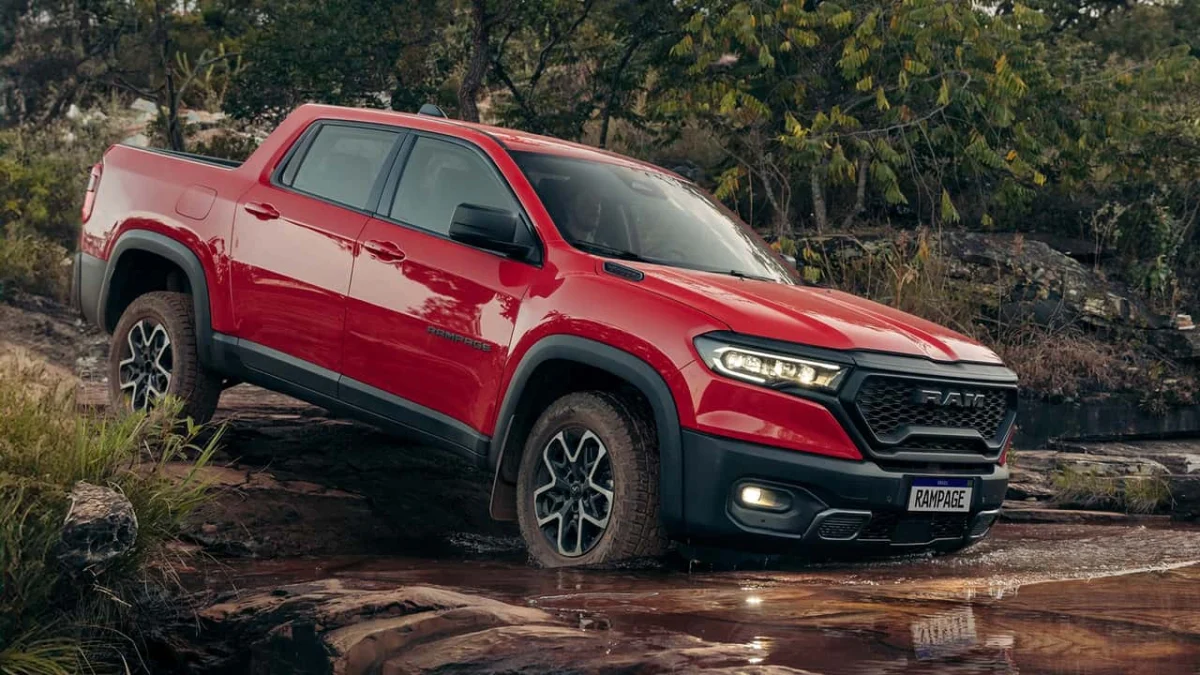
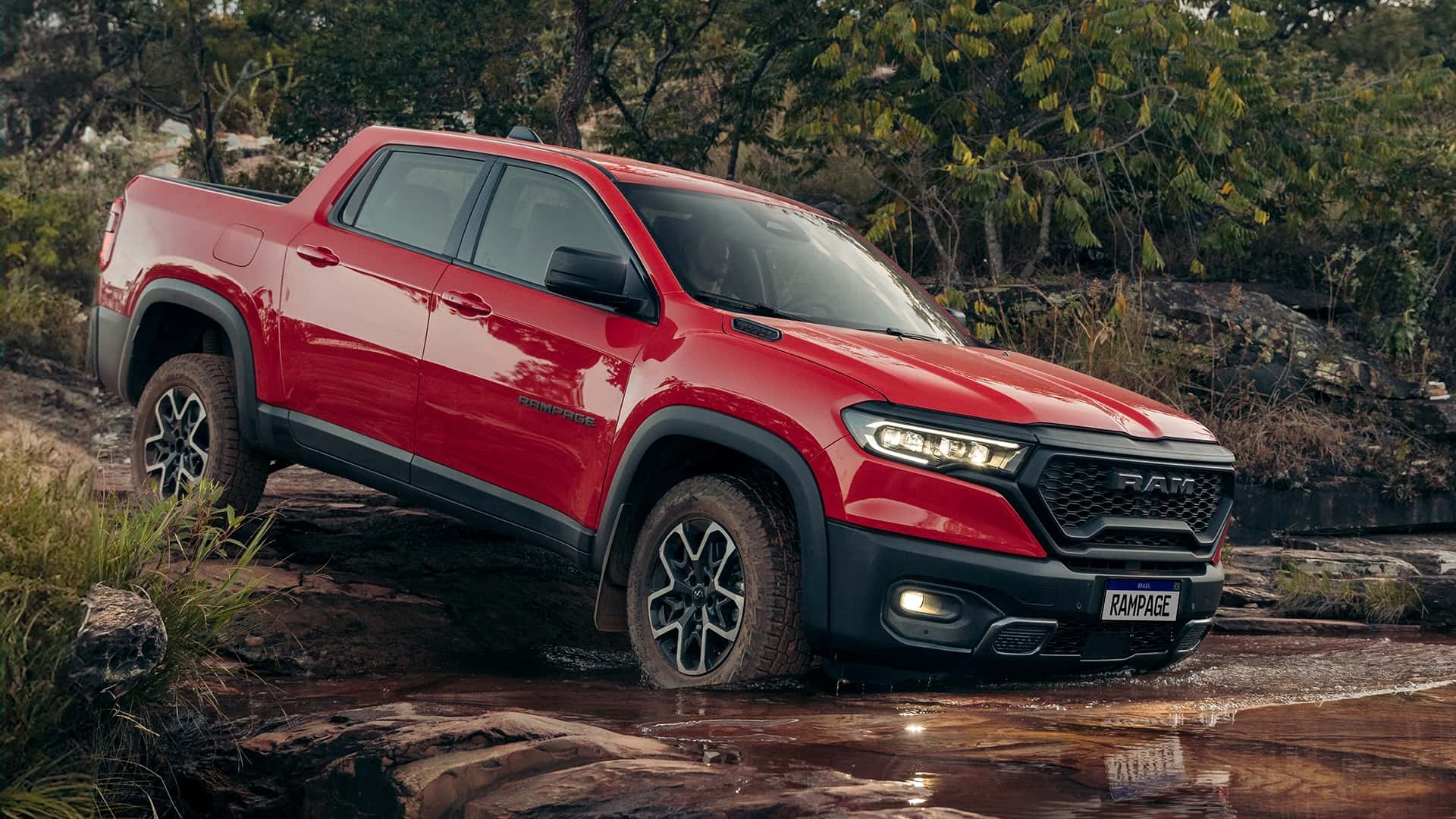
The mid-size and compact truck market is currently dominated by the Ford Maverick, a vehicle that has proven that consumers are hungry for utility at a reasonable price. Ram intends to challenge this with the introduction of the "Rampage" in 2028. Additionally, the revival of the iconic Dakota nameplate is expected to offer a more traditional truck experience while maintaining an MSRP that stays below the $40,000 ceiling. These vehicles are designed to compete directly with the Toyota Tacoma, which has long been the benchmark for reliability in the mid-size truck segment.
The Dodge "GLH" and the Performance Hatch
Dodge is pivoting away from its gas-guzzling muscle car roots toward more versatile, accessible segments. The Dodge GLH (a callback to the legendary "Goes Like Hell" moniker of the 1980s) is being developed as a mid-size crossover. By targeting the hot-hatch demographic—a segment known for high engagement and lower price points—Dodge hopes to keep younger buyers within the brand ecosystem.
Supporting Data: The Hybrid and EREV Bet
Stellantis is not relying on traditional internal combustion engines alone to meet these price points. The company is doubling down on hybrid and Extended-Range Electric Vehicle (EREV) technology to balance fuel efficiency with cost-effectiveness.
Last year, the company successfully resurrected the Jeep Cherokee as a hybrid, utilizing a turbocharged 1.6-liter four-cylinder engine paired with a two-motor transmission. This system produces a respectable 210 horsepower and 230 pound-feet of torque, proving that efficiency doesn’t have to come at the expense of capability.
Perhaps more significant is the development of the EREV powertrain. The Jeep Grand Wagoneer is set to utilize a 3.6-liter Pentastar V6 engine specifically as a generator to recharge the battery pack. This approach provides the benefits of an electric vehicle—instant torque and quiet operation—without the range anxiety or the massive costs associated with battery-only long-range vehicles. Ram is also slated to bring the Ram 1500 REV to production by April 2027, utilizing this EREV technology to offer a "perfect" solution for a niche of customers who require heavy-duty capability but want to transition toward electrification.
Official Perspectives: Addressing Quality and Competition
The transition to a high-volume, lower-price strategy brings its own set of challenges, particularly regarding quality perception. Stellantis has faced scrutiny over reliability issues in recent years, a concern CEO Antonio Filosa has addressed with characteristic bluntness.
During recent press interactions, Filosa noted that the company’s quality control issues are being resolved "very, very, very quickly." This is a critical promise; for a strategy built on affordability to work, the products must not only be cheap to purchase but also cheap to maintain. If the new sub-$40,000 models gain a reputation for frequent repairs, the long-term cost of ownership will negate any savings gained at the dealership.
Furthermore, the company is positioning itself as a direct challenger to the industry giants. By name-dropping the Toyota Tacoma and the Ford Maverick, Filosa is signaling that Stellantis is no longer content with its niche status. The goal is to return to a position of dominance by becoming the go-to provider for the American working class.
Future Implications: Can Affordability Save the Brand?
The shift to sub-$40,000 vehicles is a high-stakes gamble for Stellantis. On one hand, it addresses a genuine market failure. The industry has spent the last five years chasing high-margin customers, leaving the core of the market neglected. By returning to these segments, Stellantis could effectively "lock in" a new generation of buyers who will eventually graduate to more expensive, high-margin vehicles within the brand’s portfolio.
However, the margin pressure is immense. Producing a profitable vehicle under $30,000 while meeting stringent safety, emissions, and connectivity requirements is an engineering and logistical challenge of the highest order. The success of this initiative will depend on Stellantis’ ability to leverage its global supply chain, streamline manufacturing processes, and ensure that "affordable" does not become synonymous with "low quality."
As we look toward 2028, the automotive industry will be watching closely. If the Rampage, the Dakota, and the Arrow series find success, it could force a paradigm shift across the entire automotive sector. It may prove that the path to long-term profitability isn’t just about selling fewer, more expensive cars, but about returning to the fundamental principles of the industry: providing reliable, accessible, and desirable transportation to the masses.
Stellantis has set the stage. Now, the company must prove it can deliver on its promises, transforming its ambitious roadmap into tangible, driveway-ready vehicles that satisfy the needs of the modern American driver.