In the world of high-performance automotive engineering, few badges carry the weight and prestige of the letter "M." Representing the pinnacle of BMW’s engineering prowess, the M division has spent the last five decades defining the synthesis of track-bred precision and daily drivability. This week, the performance brand reached a monumental achievement that serves as both a retrospective of its storied past and a bridge to its high-voltage future: the production of its one-millionth vehicle.
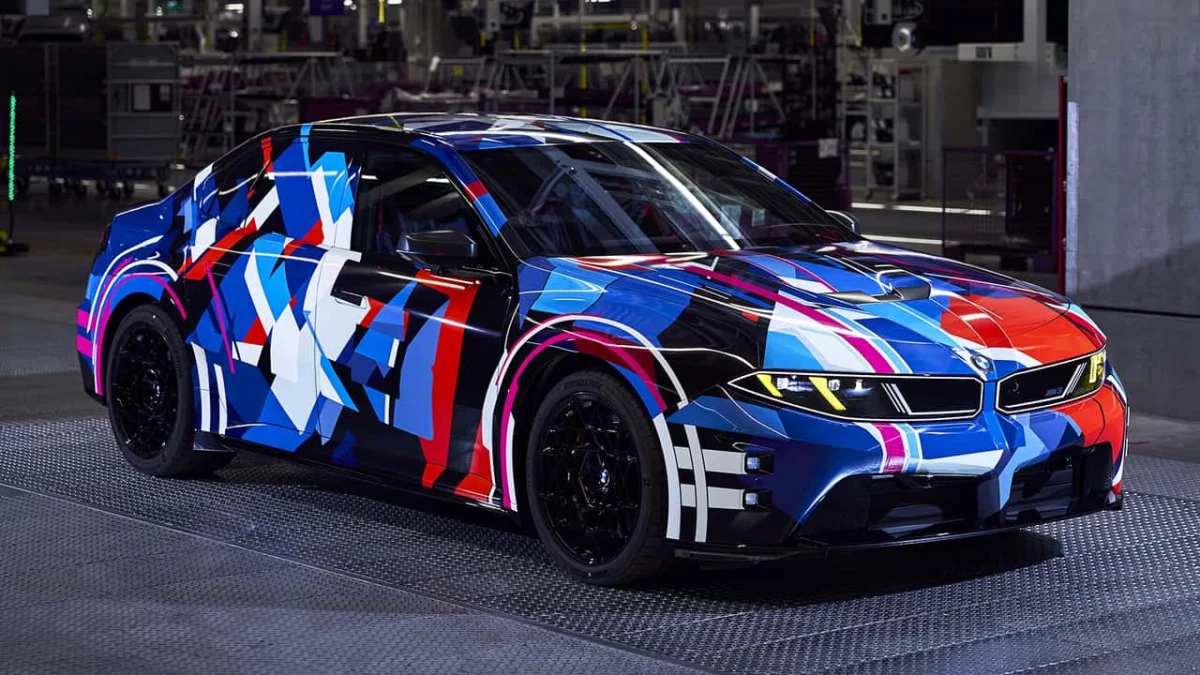
The celebratory milestone was marked by a specially commissioned BMW M3, finished in the striking "Individual Fire Orange III," as it rolled off the assembly line at BMW’s historic Munich factory. This was not merely a ceremonial production run; it was a symbolic handover. In a ceremony attended by leadership, Peter Weber, head of the Munich plant, passed the keys to the vehicle to Frank van Meel, CEO of BMW M. This exchange, taking place in the heart of Bavaria, signaled a transition for the brand as it prepares to integrate its most iconic nameplate into the "Neue Klasse" electric ecosystem.
A Legacy Built on Track-Tested Precision
To understand the significance of the one-millionth vehicle, one must reflect on the origins of the M brand. What began as an effort to facilitate BMW’s racing program in the 1970s—initially centered on the M1—evolved into a phenomenon that democratized performance for the road. The M3, in particular, has remained the heartbeat of the division since its debut in the mid-1980s.
Over the last 40 years, the M3 has evolved through six generations, moving from the raw, four-cylinder naturally aspirated engines of the E30 era to the high-revving straight-sixes and torque-heavy twin-turbo units that define today’s lineup. Each iteration has meticulously balanced the conflicting demands of track-ready rigidity and the comfort required for a daily commute. This duality is precisely what has allowed the M division to sustain its growth, moving from a niche racing operation to a global powerhouse that consistently shifts the goalposts for performance sedans and coupes.
The Munich Transformation: A 650-Million-Euro Bet
The selection of the Munich plant for this milestone is no coincidence. As the home of the current-generation M3, the factory has cultivated a deep, institutional knowledge of the brand’s performance requirements. However, the facility is currently undergoing its most significant transformation since the post-war era.
By 2027, BMW’s primary plant in Munich is slated to transition to an all-electric production site. This is not a superficial change; it represents a comprehensive industrial overhaul involving a capital investment of approximately €650 million. The project encompasses roughly one-third of the entire plant’s footprint, including the construction of a state-of-the-art body shop and a total reimagining of the assembly lines and logistics chains.
Crucially, BMW has managed this transition without halting production. This "surgery while the patient is running" approach is a testament to the German manufacturer’s logistical capability. The facility will soon serve as the cradle for the next-generation, all-electric M3—a vehicle that will be the first high-performance model to leverage the modular and advanced architecture of the "Neue Klasse" platform.
Defining the "Neue Klasse" Era
The "Neue Klasse" (New Class) represents BMW’s vision for the next decade. It is a fundamental departure from existing chassis architectures, designed specifically to maximize the benefits of electric powertrains. The integration of the M3 into this platform is a bold move. Critics often argue that the visceral experience of an M-car is tethered to the combustion engine—the mechanical symphony of an inline-six, the sharp throttle response, and the engagement of a manual transmission.
BMW M leadership, however, views the electric transition not as an end, but as a performance upgrade. Frank van Meel has repeatedly noted that the core philosophy of BMW M—the "M feeling"—is not strictly defined by the propulsion source, but by the chassis dynamics, steering precision, and the ability of the car to respond to the driver’s intent.
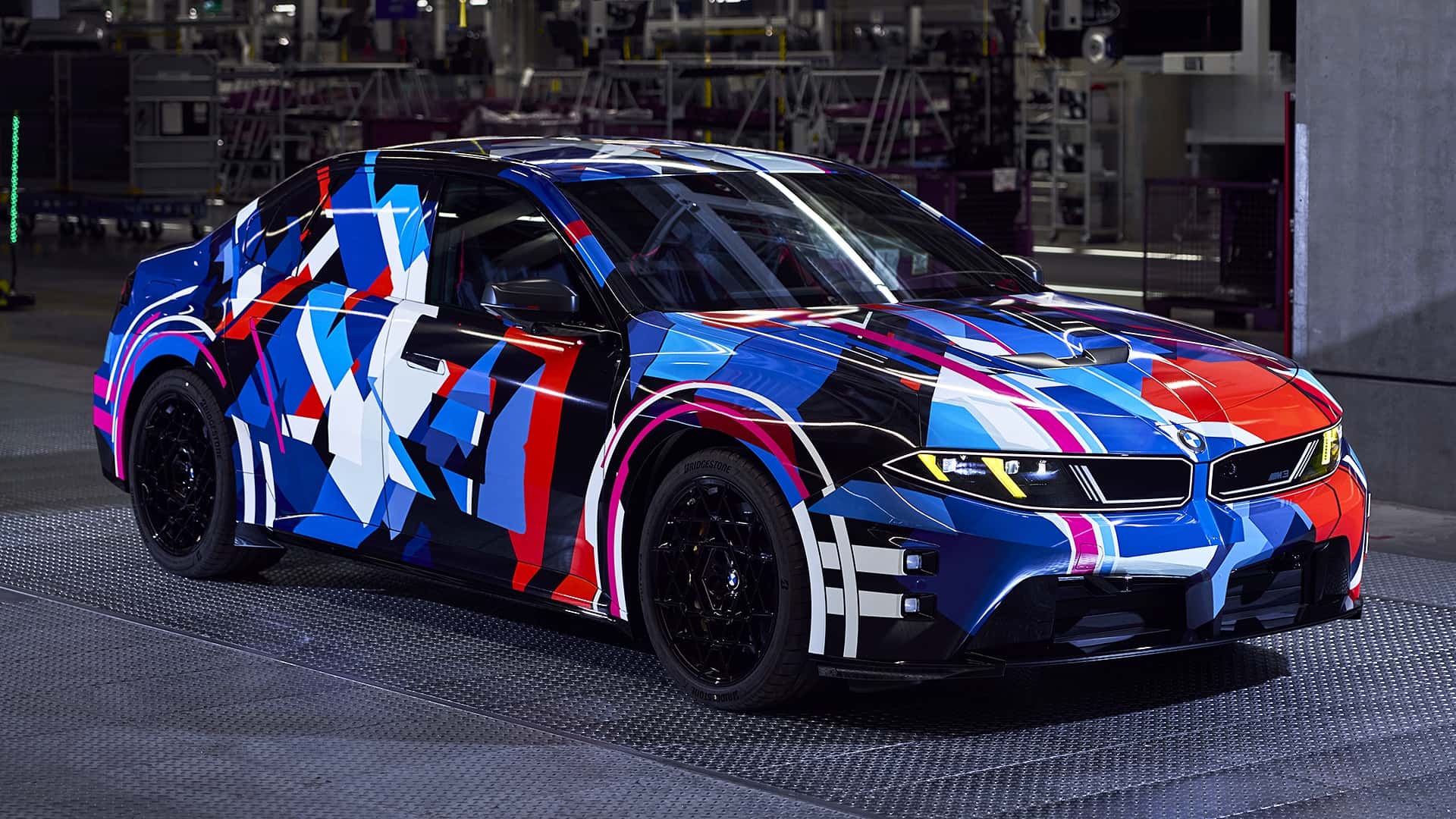
With the Neue Klasse, M engineers have the opportunity to utilize advanced torque-vectoring technology that is simply not possible with mechanical differentials alone. By controlling the power delivery to each wheel with millisecond precision, the upcoming electric M3 could theoretically outperform its combustion-powered predecessors in every metric, from corner-exit speed to longitudinal acceleration.
The Road to 2027: A Strategic Shift
As the automotive industry faces tightening emissions regulations and the inevitable decline of the internal combustion engine, the M division is being tasked with an existential challenge: how to maintain brand identity in a silent, electric world.
The strategy appears to be a tiered approach. In the short term, BMW continues to refine its hybrid and performance-combustion offerings, such as the recently updated X3 M50. These vehicles serve as the financial bridge, allowing the brand to fund the intensive R&D required for the electric revolution.
However, the "Neue Klasse" M3 will act as the technological spearhead. By shifting to a dedicated EV platform, BMW is targeting significant improvements in weight distribution, center of gravity, and battery energy density. The goal is to ensure that while the drivetrain changes, the "soul" of the M3 remains intact. The company is betting that enthusiasts will prioritize the enhanced dynamics and intelligence of the new platform over the acoustic nostalgia of the past.
Implications for the Global Performance Market
The impact of this transition extends far beyond the Munich factory walls. The move to an all-electric M3 will likely trigger a ripple effect across the luxury performance segment. As one of the most recognizable and successful nameplates in history, the M3’s conversion to a battery-electric vehicle (BEV) will serve as a litmus test for the entire industry.
- Market Positioning: If BMW succeeds, it will validate the idea that high-performance luxury vehicles can be sustainable without compromising on the driving experience.
- Technological Synergy: The knowledge gained from the M3’s development will undoubtedly trickle down to other M-badged products, potentially accelerating the electrification of the entire BMW lineup.
- Consumer Adoption: The success of the Neue Klasse will be critical in converting "purist" customers—those who have historically resisted the shift to EVs—to the new technology.
Conclusion: A New Chapter
Reaching the one-millionth vehicle is a moment for celebration, but for BMW M, it is also a deadline. The brand has spent fifty years proving its worth through mechanical innovation, and the next decade will be spent proving its relevance in the age of electrification.
The transition to the Neue Klasse in 2027 is a high-stakes gamble on the future of driving. By investing heavily in the Munich plant, BMW is not just building a new car; it is building a new identity for the M brand. The Fire Orange M3 that marked the millionth milestone may be a tribute to the legacy of internal combustion, but it also serves as a sentinel for what lies ahead. If the engineers can successfully distill the essence of the M experience into a high-performance electric architecture, the brand will not only survive the transition—it will likely define the next generation of performance, just as it has for the last fifty years.
The future of BMW M is being assembled in Munich, and it is powered by more than just electricity; it is powered by the same relentless pursuit of perfection that brought the brand to its first million.