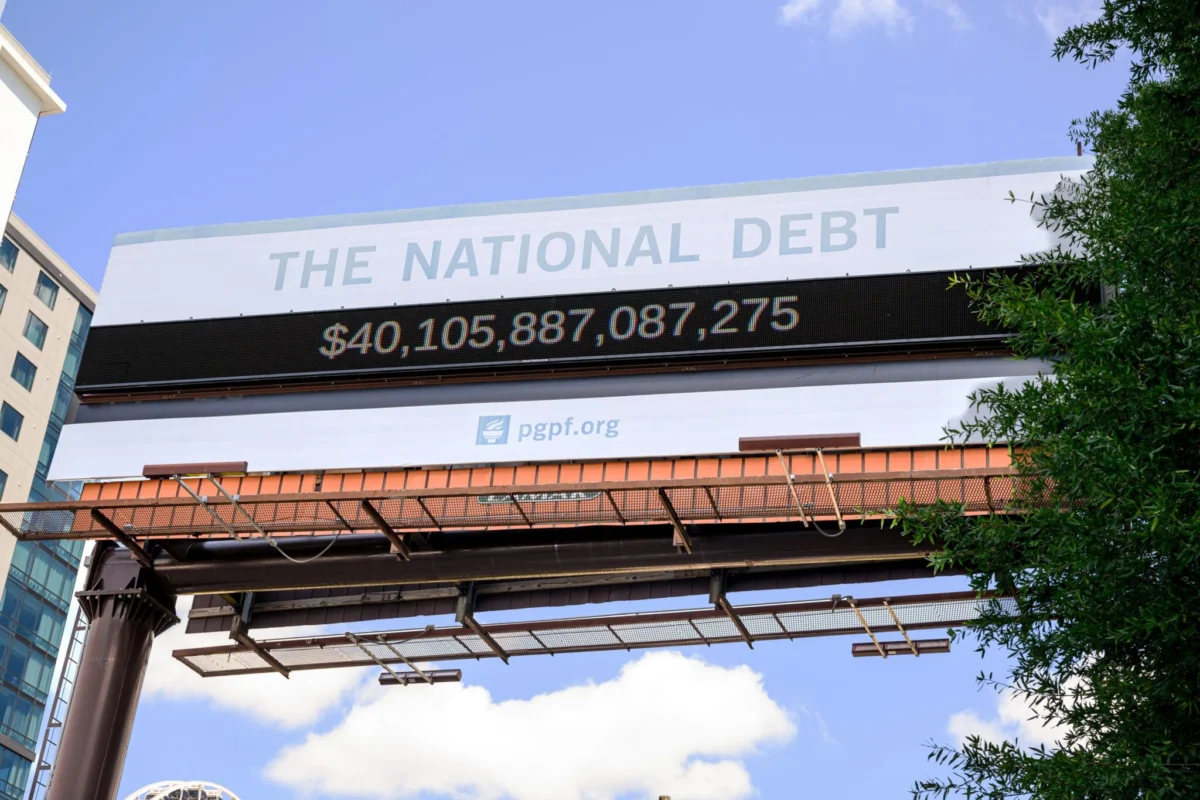
Washington, D.C. — The fundamental pillars of the American economy are facing a mounting challenge that transcends partisan rhetoric: a mathematical collision between rising interest rates and a historic debt burden. In a comprehensive new report, Europe-based Scope Ratings has maintained the United States’ sovereign credit rating at AA-, three notches below the coveted AAA status. While the agency’s outlook remains "stable," the underlying data reveals a superpower increasingly vulnerable to the whims of the bond market and the volatility of global financing conditions.
As the federal government transitioned into fiscal year 2027 this week, the report serves as a stark reminder that the era of "cheap money" has officially ended, replaced by a regime where debt-servicing costs now rival the nation’s largest social and defense programs.
I. Main Facts: A Divergence in Credit Perspectives
The decision by Scope Ratings to keep the U.S. at AA- places it in a more critical camp than its "Big Three" peers. While Moody’s maintains a top-tier rating (though with a negative outlook), and Fitch and S&P Global Ratings sit at AA+, Scope’s assessment reflects a deeper skepticism regarding the long-term sustainability of American fiscal governance.
The Yield Gap and Forecast Failures
The most immediate catalyst for concern is the "yield shock." The 10-year Treasury yield—the benchmark for global borrowing—has surged to 5.27%. This figure is not merely a number on a screen; it represents a total decoupling from the long-term projections utilized by the Congressional Budget Office (CBO). The CBO had previously modeled a fiscal future based on yields averaging 4.3% between 2028 and 2031. By blowing past these forecasts years ahead of schedule, the U.S. has entered a "high-cost" environment that the current budget was never designed to withstand.
The Debt-Servicing Milestone
For the first time in modern history, the cost of servicing the national debt has become the second-largest line item in the federal budget. In fiscal 2026, which concluded this past Wednesday, interest payments reached a staggering $1.1 trillion. To put this in perspective, the U.S. now spends more on interest than it does on either National Defense or Medicare. This 3.4% of GDP allocated solely to interest represents a record high, signaling that the "interest bite" is beginning to crowd out other essential government functions.
II. Chronology: The Road to a $32 Trillion Burden
The current fiscal predicament is the result of a decade-long accumulation of debt, accelerated by global crises and a fundamental shift in Treasury management strategy.
- The Pre-2020 Baseline: Prior to the global pandemic, U.S. debt-to-GDP ratios were already on an upward trajectory, but record-low interest rates kept the "carrying cost" of that debt manageable.
- The Pandemic Expansion: Massive fiscal stimulus packages in 2020 and 2021, while successful in preventing a depression, added trillions to the principal balance.
- The Inflationary Pivot (2022–2024): As the Federal Reserve aggressively raised rates to combat inflation, the era of zero-interest debt refinancing vanished.
- The Biden-Bessent Strategy (2025–2026): Under the Biden administration, the Treasury began rebalancing its portfolio toward shorter-term maturities. This strategy was intended to save on the "term premium" associated with long-term bonds. Current Treasury Secretary Scott Bessent has doubled down on this approach, utilizing debt buybacks to retire long-term bonds by issuing more short-term notes.
- The 2026 Fiscal Year-End: On September 30, 2026, the U.S. closed its books with a $2 trillion deficit (6.2% of GDP) and a total publicly held debt of $32.3 trillion—reaching the 100% debt-to-GDP milestone.
III. Supporting Data: The Math of Unsustainability
The Scope Ratings report and supplementary data from the Committee for a Responsible Federal Budget (CRFB) provide a granular look at why the current path is considered "unsustainable."
The "One Percent" Penalty
The CRFB has estimated a terrifying multiplier for interest rate fluctuations. If Treasury yields remain just one percentage point above the CBO’s original projections, the U.S. will add an additional $3.5 trillion to the national debt over the next decade. This is debt that produces no economic return; it is simply the cost of existing.
Primary vs. Total Deficits
A critical distinction in the Scope report is the "primary deficit"—the gap between spending and revenue excluding interest payments. Scope notes that the primary deficit is expected to remain relatively stable at 3.5% of GDP. In a vacuum, this would suggest fiscal discipline. However, because the total deficit is being driven upward by interest costs, the "stable" primary deficit is insufficient to stop the debt-to-GDP ratio from climbing.
The 160% Threshold
Without what Scope calls "substantial fiscal adjustment" or an unlikely surge in economic growth, the general government debt burden is projected to approach 160% of GDP by 2036. This would place the United States in a debt category historically reserved for nations facing severe sovereign debt crises, potentially threatening the dollar’s status as the world’s primary reserve currency.
IV. Official Responses: Ratings Agencies and Advocacy Warnings
The reaction to these figures highlights a growing rift between market reality and political willpower.
Scope Ratings’ Assessment
The agency was blunt in its evaluation of the American political system. While acknowledging the U.S. still benefits from the "deepest and most liquid capital markets" and the strength of the Federal Reserve, it flagged a "limited political will for fiscal reform." Scope warned that the increasing interest burden "limits the government’s ability to respond to future shocks," such as a recession or a geopolitical conflict.
The CRFB’s Perspective
The Committee for a Responsible Federal Budget issued a sobering year-end tally, noting that the $2 trillion deficit in fiscal 2026 was significantly higher than anticipated. "Based on evidence from the past year, we now expect much higher interest payments and lower tariff revenue going forward," the committee stated. They warned that these factors could send debt surging well beyond even the most pessimistic CBO projections.
Treasury and the Debt Ceiling
The Treasury Department, led by Secretary Bessent, continues to manage the day-to-day liquidity of the nation. However, Scope expects the current debt ceiling of $41.1 trillion to be reached by early 2027. While the Treasury can employ "extraordinary measures" to delay a default, the report notes that the post-midterm political landscape will likely lead to "prolonged partisan standoffs," which contribute to market volatility and weaken the perception of U.S. fiscal governance.
V. Implications: A Changing Market and the Risk of Volatility
The enrichment of the U.S. debt story is not just about the size of the debt, but who owns it and how it is structured.
The Changing Buyer Profile
One of the most concerning shifts noted in the report is the changing composition of Treasury holders. Historically, foreign central banks—seeking stability—were the primary buyers of U.S. debt. Today, they are being replaced by "price-sensitive" hedge funds. Unlike central banks, which hold debt to maturity, hedge funds are more likely to trade in and out of positions based on short-term market movements. This shift has introduced a new level of volatility into the $32 trillion Treasury market, making it more susceptible to "flash crashes" or sudden yield spikes.
The Rollover Trap
The strategy of shifting toward short-term maturities (T-bills) creates a "rollover trap." As more debt comes due in shorter cycles, the Treasury must constantly return to the market to borrow more. When yields spike, as they have to 5.27%, the government is forced to refinance old, cheap debt with new, expensive debt almost immediately. This creates a feedback loop where higher rates lead to higher deficits, which lead to higher debt, which in turn requires higher yields to attract buyers.
The 2027 Deadline
As the U.S. enters fiscal 2027, the "stable" outlook from Scope Ratings feels increasingly like a placeholder. The convergence of a $41.1 trillion debt limit, a $1.1 trillion interest bill, and a polarized Congress suggests that the next 12 to 18 months will be a definitive period for the American economy.
Conclusion: The Need for Structural Reform
The Scope Ratings report serves as a final warning that the U.S. cannot "grow its way out" of the current debt burden through status-quo policies. Without a combination of entitlement reform, revenue increases, or a dramatic cooling of the bond market, the sovereign remains "increasingly exposed to shifts in market sentiment." The "exorbitant privilege" of the U.S. dollar is no longer a shield against the basic laws of arithmetic; it is merely a cushion that is rapidly thinning.