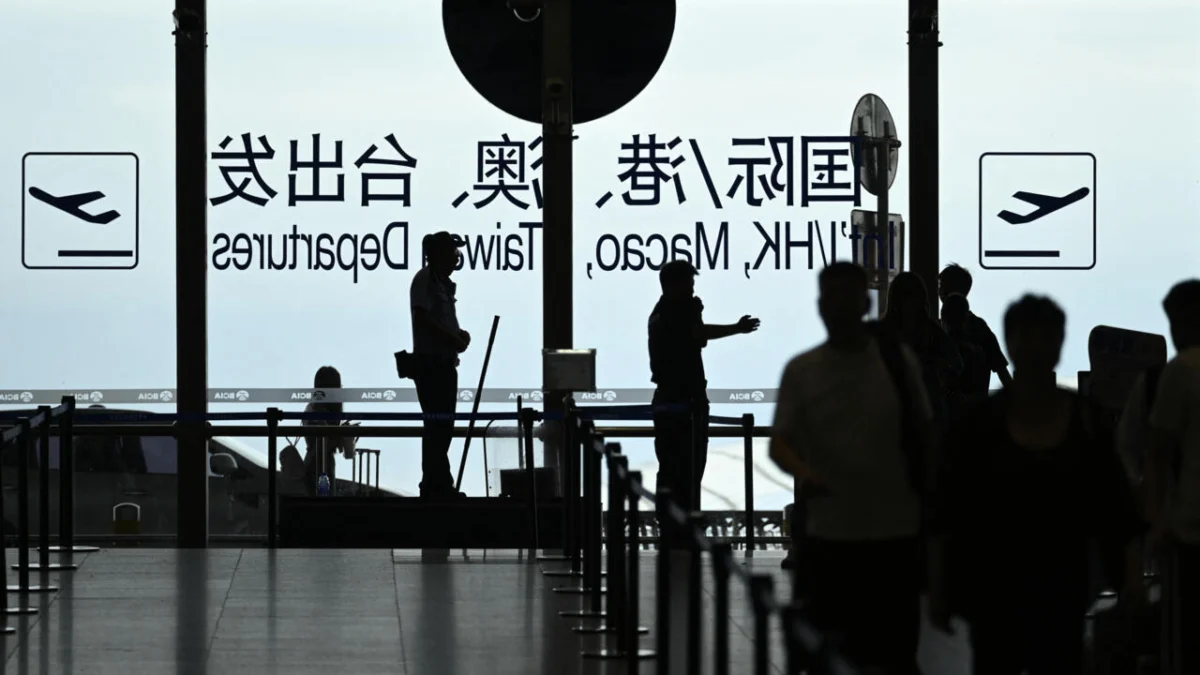
On July 31, the State Council of the People’s Republic of China released a sweeping new set of regulations governing entry and exit procedures. Officially framed as a necessary measure to "preserve national sovereignty and interests," the policy grants border control officials unprecedented, codified discretion to demand exhaustive documentation regarding a traveler’s motives. For a nation that has spent the last decade projecting global power, the new rules represent a stark internal pivot: a tightening of the leash on its own citizens and an expansion of the state’s long-arm jurisdiction.
The regulations represent more than mere administrative housekeeping; they signal the formalization of a "selective openness" model—one where China remains economically integrated with the world while maintaining absolute, granular control over the movement of its people.
The Mechanics of Control: What the New Rules Entail
The new articles establish a rigid framework for travel, transforming what many international observers view as a fundamental right into a state-granted privilege. Under the updated policy, border agents are empowered to conduct in-depth interviews and demand additional evidence regarding the purpose of any international trip.
Penalties and Exit Bans
The repercussions for non-compliance are severe. Those who provide false information or falsified documents face immediate entry or exit prohibitions. More significantly, the regulations codify the use of "exit bans" for a wide array of perceived infractions.
Chinese nationals who have "acquired travel documents by deceit" or are involved in "illegal exiting or entering" face bans ranging from six months to three years. These penalties are in addition to existing criminal sanctions. Crucially, the ban extends to citizens who have "participated in illegal activities" or "threatened national security and interests" while abroad—effectively asserting that the long arm of Beijing’s law follows its citizens beyond its borders.
The Technological Security Clause
Perhaps most alarming to the private sector is the provision regarding technology. The new rules allow authorities to bar citizens from leaving the country if they are found to have "violated" regulations concerning the import and export of technology, particularly when such violations are deemed to endanger China’s "industrial or technological security." This adds a layer of geopolitical risk to the daily operations of scientists, researchers, and corporate executives in the tech sector.
A Chronology of Escalation: From Corporate Vetting to Border Control
The July 31 announcement did not emerge in a vacuum; it is the culmination of years of increasing friction between China’s global ambitions and its domestic security apparatus.
- 2023: Evidence of tightening controls emerged as major financial firms and state-owned enterprises began restricting the overseas travel of bankers and officials, with many forced to surrender their passports to employers for "safekeeping."
- March 2026: Beijing imposed a high-profile travel ban on two co-founders of Manus, a Chinese AI startup. The ban occurred as the company was in the middle of a $2 billion acquisition deal with Meta.
- April 2026: China officially blocked the Manus-Meta acquisition, citing national security concerns—a move that underscored the government’s willingness to disrupt global market integration to protect its technological sovereignty.
- July 31, 2026: The State Council publishes the new, consolidated border control regulations, providing a legal basis for the practices that had previously operated in the shadows of "national security" ambiguity.
Supporting Data: The Human Cost of Restricted Movement
The impact of these regulations is already being felt across various demographics, from high-level intellectuals to ordinary citizens.
The "Stuck" Population
Data provided by Taiwan’s Mainland Affairs Council (MAC) offers a glimpse into the scale of the issue. As of August 14, 2026, there were 416 Taiwanese citizens reported as being unable to leave mainland China. This figure includes 226 individuals under detention, 156 missing, and 34 currently undergoing active questioning.
The Illusion of Due Process
A 2024 report by the NGO Safeguard Defenders highlighted that exit bans are increasingly used as tools of state coercion. The new regulations clarify that while authorities should notify individuals of an exit ban, they are explicitly allowed to withhold this information if they believe notification would "affect national security or a criminal investigation."
This creates a "Kafkaesque" scenario: many citizens may only discover they are subject to a multi-year exit ban when they arrive at the airport, scan their passport, and are denied passage. Because national security cases are rarely subject to transparent judicial review, these individuals often have no path for appeal and no record of the specific evidence used against them.
Official Responses and Expert Analysis
The reaction from the international legal and academic community has been one of deep concern, characterizing the regulations as a shift from "rule of law" to "rule by law."
The "Privilege" Argument
Henry Gao, a law professor at Singapore Management University, has been a vocal critic, urging individuals to evaluate their situation immediately. "These regulations represent another major step in transforming the right to leave China into a privilege granted at the discretion of the state," Gao stated. In his analysis, the new rules do not necessarily introduce new, draconian powers that didn’t exist before, but they provide a formal, legal shield for enforcement agencies to act without the need for high-level, case-by-case approval.
The "Long-Arm" Jurisdiction
Christopher Nye and Charles Sun of the Jamestown Foundation argue that the primary change is the level of specificity. "Standardization of this kind lowers the cost of routine enforcement," they noted in an email response. By defining the criteria for a ban in written law, the state has effectively decentralized the power to punish. Border agents now possess the "express authority" to judge the "truthfulness" of a traveler’s stated intent, a subjective standard that is virtually impossible to challenge in a court of law.
The Perspective from Taipei
The Taiwanese government has been particularly vocal, warning its citizens of the inherent dangers of traveling to a jurisdiction where legal definitions are "abstract and open to interpretation." MAC Minister Chiu Chui-cheng remarked, "China is not a country governed by the rule of law… If they ban you from leaving, then you’re not leaving."
Implications: A New Era of Selective Openness
The implications of these regulations extend far beyond the customs desk. They represent a fundamental shift in the social contract between the Chinese Communist Party and its people.
The Erosion of Trust
Sociologist Li Shaomin, a professor at Old Dominion University, notes the historical irony at play. During the Mao era, travel was restricted because the state fundamentally mistrusted the general population. Today, the state’s anxiety is directed inward, toward its own elite—the very officials, scientists, and business leaders it has groomed for global engagement. The paradox, according to Li, is that "there is an even greater lack of trust in its own officials—in the very people it has promoted."
Repression and Extraterritoriality
Experts warn that the new rules will have a chilling effect on the Chinese diaspora and foreign nationals. For those who engage in advocacy work abroad—or even those who simply hold critical views—the prospect of returning to China now carries the threat of state retaliation.
The regulations effectively export the Party’s standards of "industrial and political security" to every corner of the globe. By threatening family members or future travel rights, the state creates a "standing threat" that encourages self-censorship, even when a citizen is thousands of miles away from the border.
The Future of Foreigners in China
For foreign nationals, the risks are equally acute, though different. Naturalized citizens who were born in China are at the highest risk, as Beijing does not recognize dual nationality. The ongoing case of US seismologist Chen Youlin, who was detained on espionage charges while visiting family, serves as a grim reminder that the new border rules apply to anyone who sets foot on Chinese soil.
Conclusion
As China continues to project itself as a global leader in technology and commerce, its border policies reveal a government defined by a profound sense of insecurity. By codifying its ability to restrict movement, the state is attempting to resolve the contradiction between wanting a vibrant, connected economy and fearing the influence that comes with such connectivity.
Ultimately, the July 31 regulations suggest that Beijing is not interested in returning to the total isolation of the 20th century. Instead, it is building a high-tech, modernized cage—a system that welcomes capital and technology, but keeps its human subjects under constant, enforceable surveillance. For the millions of Chinese citizens who cross the border annually, the message is clear: the state now reserves the right to decide, at any moment, that your journey ends at the departure gate.