Main Facts
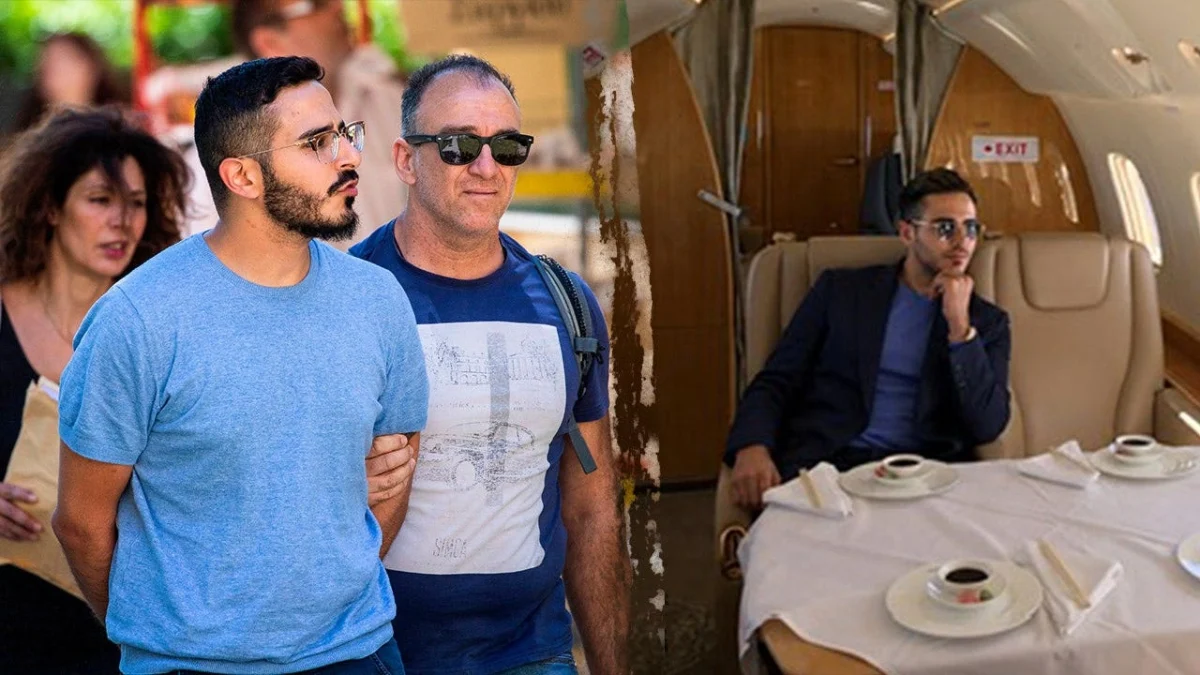
Shimon Hayut, the convicted Israeli con man who gained global notoriety as the "Tinder Swindler," is attempting an audacious pivot from romance fraudster to tech entrepreneur. Hayut has announced the impending launch of his new dating application, "Safe Love," a platform he claims is designed specifically to eliminate the very threats of deception, catfishing, and identity theft that he once mastered.
Operating under the alias Simon Leviev, the 36-year-old Hayut spent years executing elaborate romance scams, extorting millions of dollars from women he met on dating applications to fund a jet-setting lifestyle. Now, Hayut argues that his intimate knowledge of the mechanics of fraud makes him uniquely qualified to build an impenetrable digital dating environment. He compares his transition to that of Frank Abagnale Jr., the infamous check forger who later became a prominent security consultant for the FBI.
However, Hayut’s return to the digital dating space has ignited a firestorm of controversy. The Online Dating and Discovery Association (ODDA), a global industry body dedicated to promoting safety in online dating, has launched an aggressive campaign to block the app. In formal letters sent to tech giants Apple and Google, the ODDA urged the platforms to ban "Safe Love" from their respective app stores, arguing that allowing a convicted romance fraudster to manage a platform built on emotional vulnerability poses an unacceptable risk to public safety.
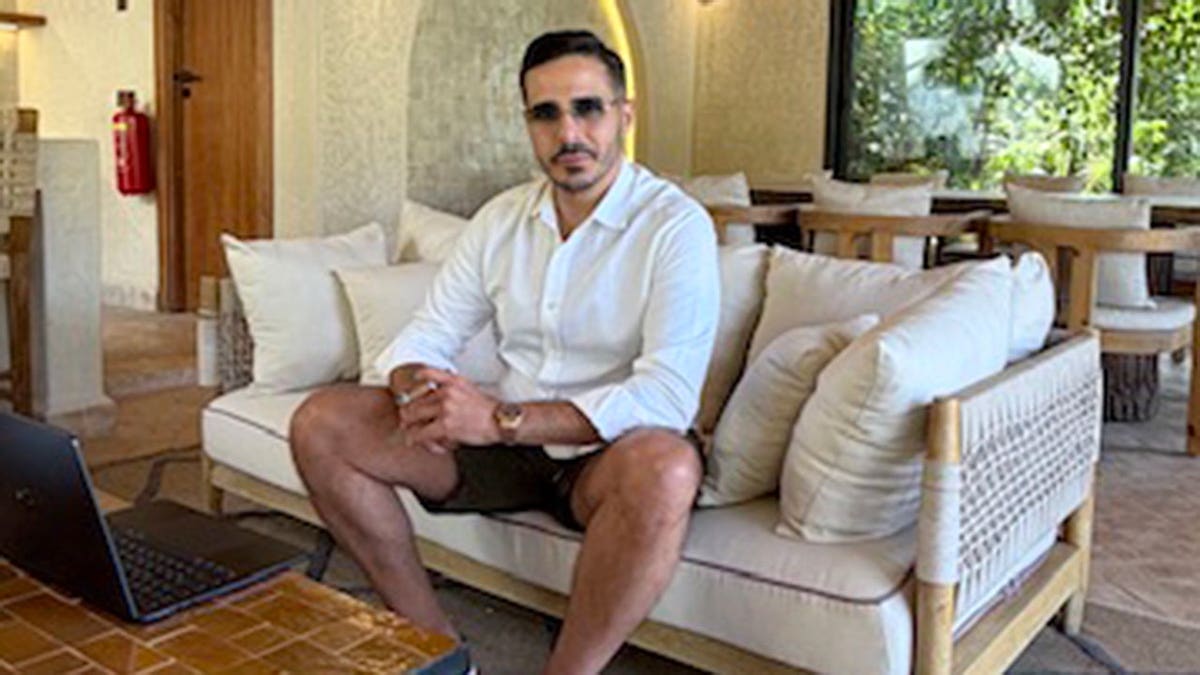
Despite the industry backlash, Hayut remains defiant. Speaking from his offices, where he splits his time between Israel and the United Arab Emirates (UAE), Hayut insists that "Safe Love" is in the final stages of regulatory approval and will launch imminently.
Chronology of Deception and Incarceration
To understand the intense opposition to Hayut’s new business venture, one must examine his extensive history of financial crimes and international evasion across more than a decade.
[2011] First arrested in Israel for theft and forgery; flees the country.
  │
[2015] Convicted in Finland for defrauding three women; sentenced to 2 years.
  │
[2017] Released from Finnish prison; rearrested in Israel but flees a second time.
  │
[2017-2019] Executes global "Tinder Swindler" Ponzi-style romance fraud scheme.
  │
[July 2019] Arrested in Greece using a fake passport; extradited to Israel.
  │
[Dec 2019] Sentenced to 15 months in Israel; released after 5 months (May 2020).
  │
[Present] Developing "Safe Love" app while splitting time between Israel and the UAE.
The Early Offenses and Finnish Convictions (2011–2017)
Hayut’s criminal record began in his native Israel. In 2011, he was arrested and charged with theft, forgery, and fraud for cashing stolen checks. Before he could face trial, Hayut fled the country using a falsified passport.
By 2015, Finnish authorities caught up with him. He was arrested and subsequently convicted of defrauding three different women in Finland. The Finnish court sentenced him to two years in prison. Following his release in early 2017, he was returned to Israel to face the outstanding 2011 charges. However, Hayut managed to flee his home country a second time, adopting the persona of "Simon Leviev"—the fictitious son of Israeli diamond magnate Lev Leviev.
The Peak of the "Tinder Swindler" Scheme (2017–2019)
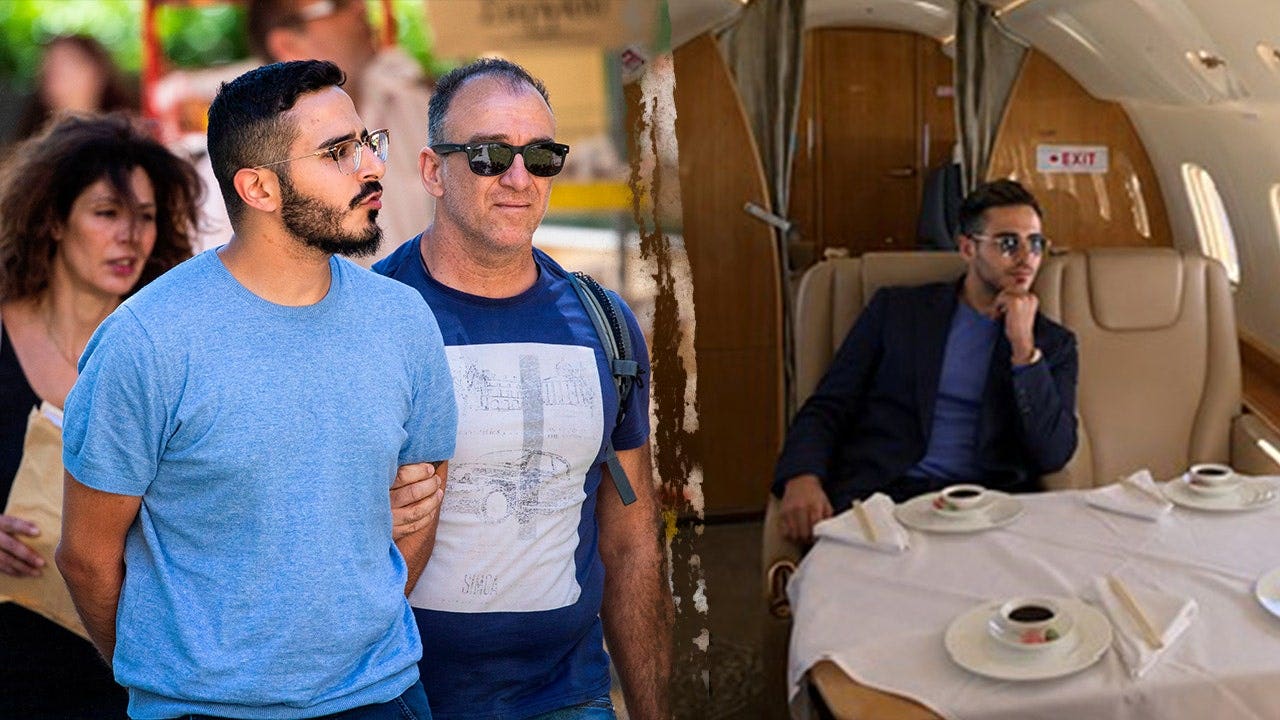
Between 2017 and 2019, Hayut operated a highly sophisticated, Ponzi-style romance scam across Europe. Posing as a wealthy heir to a diamond fortune, he matched with women on Tinder, treated them to lavish dinners, and flew them across borders on private jets.
Once he established trust, Hayut fabricated elaborate crises, claiming that his "enemies" were tracking him and that his credit cards had been frozen for security reasons. He then pleaded with his victims to open credit cards and take out bank loans on his behalf, promising swift repayment. Instead, Hayut used the funds stolen from one victim to finance his dates with the next, accumulating an estimated $10 million in stolen funds.
Arrest, Extradition, and Israeli Imprisonment (2019–2020)
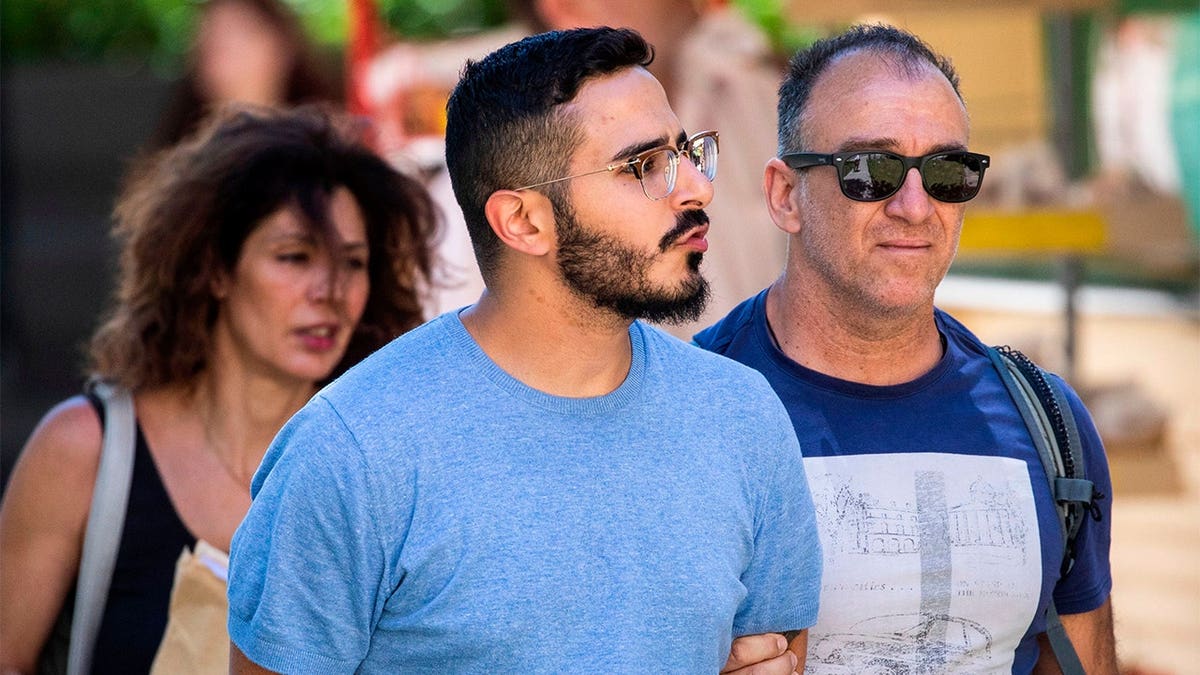
Hayut’s international flight ended in July 2019 when Greek police, acting on an Interpol warrant, arrested him at an Athens airport for using a fraudulent passport.

In June 2019, he was extradited to Israel. In December of that year, he was convicted of four counts of fraud and sentenced to 15 months in an Israeli prison. However, due to administrative efforts to reduce the prison population during the early onset of the COVID-19 pandemic, Hayut was released in May 2020, having served just five months of his sentence.
Supporting Data & App Specifications
Hayut asserts that "Safe Love" will implement the most stringent verification protocols in the industry, specifically designed to address the vulnerabilities he previously exploited.
Technical Features of ‘Safe Love’
According to Hayut, the platform will utilize a multi-layered identity verification architecture:
- Mandatory Government Identification: Users cannot browse profiles without first uploading a valid, government-issued photo ID (such as a passport or driver’s license).
- Real-Time Biometric Matching: Users must take an in-app live selfie. The platform’s algorithm will compare the selfie against the government ID.
- The 15% Variance Rule: To combat catfishing and deceptive photo editing, any subsequent photos uploaded to a user’s profile will be analyzed by facial recognition software. If a photo differs from the verified biometric selfie by more than 15%, the upload will be rejected.
- In-App Emergency SOS System: If a user feels unsafe during an in-person date, they can trigger an SOS button. The phone will immediately begin recording ambient audio and video, while simultaneously broadcasting the user’s real-time GPS coordinates to local law enforcement.
[User Registration]
       │
       ▼
[Upload Government ID] ──► [Live Biometric Selfie]
                                  │
                                  ▼
                        [Facial Recognition Check]
                                  │
         ┌────────────────────────┴────────────────────────┐
         ▼                                                 ▼
[Passed: Profile Active]                      [Failed: Account Blocked]
         │
         ▼
[Continuous Monitoring (Max 15% Photo Variance)]
The Scale of Romance Fraud
The launch of "Safe Love" comes at a time when romance fraud has reached epidemic proportions. According to data from the Federal Trade Commission (FTC), reported losses to romance scams in the United States alone topped $1.3 billion in recent years, with the median loss per victim hovering around $4,400. The rise of sophisticated deepfakes and AI-generated profiles has made identity verification the primary battlefield for modern dating applications.
Official Responses & Industry Backlash
The prospect of a convicted international fraudster operating a database of single, searching users has met with intense resistance from industry watchdogs and security advocates.
The Online Dating and Discovery Association (ODDA) Campaign
The ODDA has taken the lead in trying to halt the app’s launch. In their letters to Apple and Google, the association argued that giving Hayut access to sensitive user data is a recipe for disaster.
"We do not believe either app store wishes to be the platform that hosted a fraudster’s return to the very environment in which his crimes were committed," the ODDA wrote. "Allowing a convicted romance fraud offender to operate a dating platform, an environment built entirely on trust and on the very emotional and financial vulnerabilities he has already been proven to exploit, completely undermines the efforts our sector has made and represents a very real risk to users."
Tech Giants Remain Silent
Both Apple and Google have strict developer guidelines regarding user safety, privacy, and the distribution of apps by entities associated with illegal activity. However, neither company has publicly confirmed whether they will permit "Safe Love" on their platforms. When reached for comment, representatives for Apple and Google did not provide an official response regarding the status of Hayut’s developer account.
Hayut’s Defiant Defense
Hayut has dismissed the ODDA’s campaign as anticompetitive panic. He claims that established dating platforms are threatened by his superior security model.
"They won’t be able to do that, and they won’t succeed," Hayut said regarding the attempts to ban his app. "I mean, they’re threatened by me. My background drives me to make sure this app works perfectly. I have notoriety. It means that I cannot make mistakes. If something goes wrong, I cannot just say, ‘Ah, we have a fault in our system.’ Automatically, I will be considered guilty as charged."
Implications & Ethical Considerations
The emergence of "Safe Love" raises profound questions about rehabilitation, corporate responsibility, and user safety in the digital age.
The Dilemma of Trust and Data Privacy
The primary concern surrounding "Safe Love" is the collection of highly sensitive personal data. To use the app, users must hand over government IDs, biometrics, and real-time location data. Critics point out the dark irony of trusting such information to a man convicted of identity theft and forgery. If the platform’s database were compromised—or if internal access were abused—the potential for extortion and identity theft would be catastrophic.
The "Poacher-Turned-Gamekeeper" Precedent
While cybersecurity firms regularly hire reformed hackers to test their systems, the dating industry is fundamentally different. Romance scams rely on psychological manipulation, emotional grooming, and trust. Unlike a corporate firewall, human emotion cannot be patched with software. Opponents argue that Hayut’s self-comparison to Frank Abagnale Jr. is fundamentally flawed because Abagnale’s work assisted law enforcement, whereas Hayut is attempting to build a proprietary, consumer-facing business that directly targets vulnerable individuals.
Rehabilitation vs. Public Safety
Hayut maintains that he is a reformed man who has paid his debt to society. He points to his role as a father of two children as evidence of his personal growth. "Yes, on paper I’m a convicted criminal," he said. "But I’m not the same kid that I was at 19 years old. And we do change. People do change."
For the tech platforms and potential users, the ultimate question is whether the digital dating industry can afford to gamble on Hayut’s reformation. As "Safe Love" navigates the final stages of app store review, its launch will serve as a critical test of where Silicon Valley draws the line between second chances and user protection.