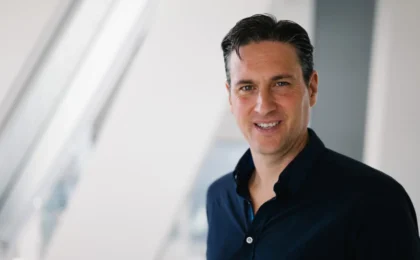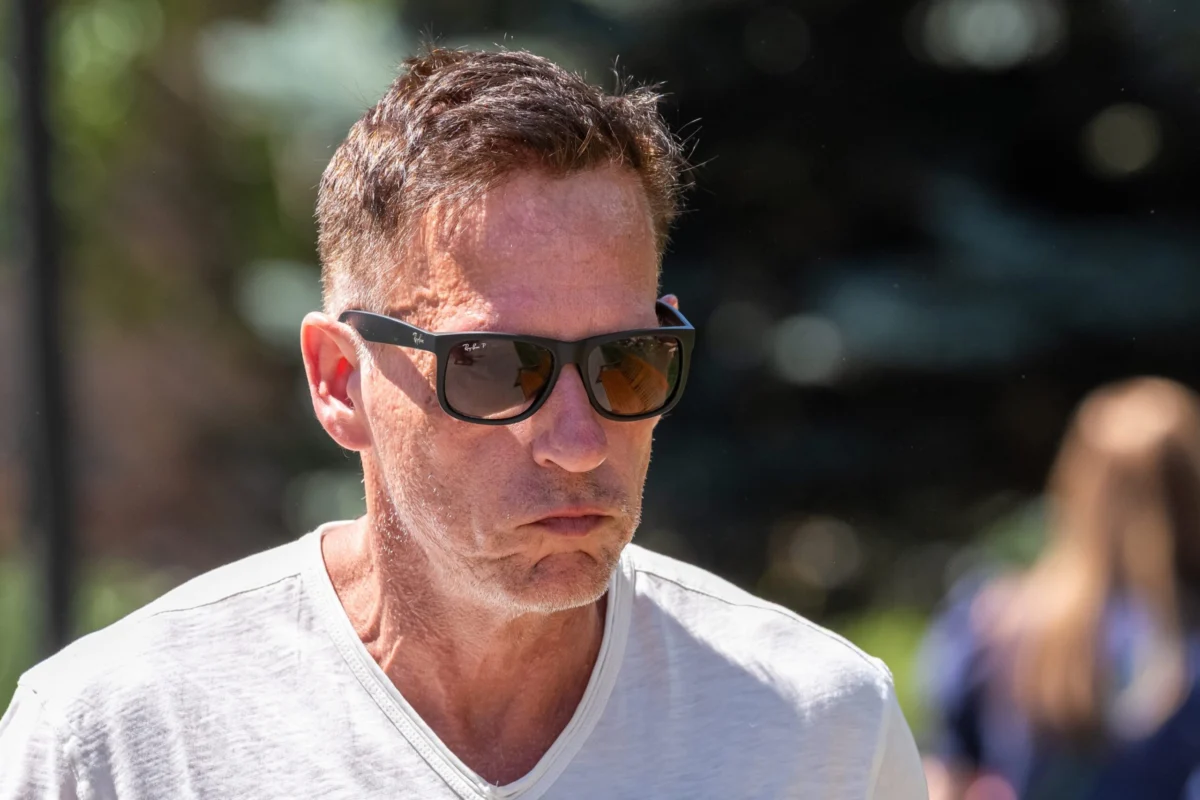
For three decades, Peter Thiel has been the primary architect of a specific brand of Silicon Valley defiance. As the co-founder of Palantir and the first outside investor in Facebook, his influence has been measured in billions of dollars and a string of high-profile political victories—most notably his early support for Donald Trump and his instrumental role in the rise of Vice President J.D. Vance. However, a new chapter in Thiel’s intellectual journey has emerged, one that shifts his long-standing battle against government oversight from the realm of secular economics to the territory of cosmic eschatology.
Thiel is no longer just arguing that regulation is bad for innovation; he is arguing that the global regulatory state is the precursor to the Antichrist.
The Core Thesis: The Technocrat as Ultimate Evil
At the heart of Thiel’s recent intellectual output—spanning private lectures, leaked recordings, and high-brow theological essays—is a provocative redefinition of evil for the 21st century. In Thiel’s framework, the figure of the Antichrist is not a "Dr. Strangelove" villain or a bloodthirsty tyrant like Stalin or Hitler. Instead, the Antichrist is a "beneficent administrator."
According to Thiel and his co-author Sam Wolfe, the figure of ultimate evil is a technocrat who speaks the language of safety, ethics, and global coordination. This figure does not demand worship through terror, but through the promise of a frictionless, managed world. By appealing to "existential risks" such as climate change, pandemics, and the dangers of artificial intelligence, this administrative power justifies the creation of a "harmonized regulatory regime" that effectively replaces individual agency and religious truth with a global, secular consensus.
Thiel’s argument centers on the idea that this technocratic order "absorbs" Christianity, making it a comfortable, toothless partner in a project of global governance. It is a critique that transforms policy disagreements—over the EU’s AI Act or the Paris Climate Agreement—into a spiritual struggle of apocalyptic proportions.
A Chronology of the "Antichrist" Lectures
The development of this theory has followed a deliberate, escalating trajectory over the past year, moving from the shadows of private Silicon Valley salons to the steps of the Vatican.
September 2025: The San Francisco Lectures
The theory first surfaced during a four-part private lecture series held in San Francisco. Addressing an audience of tech elites and conservative intellectuals, Thiel laid the groundwork for his "Antichrist" framework. He argued that the lack of public discourse regarding the Antichrist was, paradoxically, a sign of the figure’s impending arrival.
October 2025: The Washington Post Leak
The privacy of the San Francisco lectures was shattered when leaked audio reached the Washington Post. The recordings revealed Thiel’s attempt to synthesize his libertarian tech-accelerationism with traditionalist Christian prophecy. The story went national, prompting a debate over whether Thiel was undergoing a genuine religious conversion or simply finding a more potent weapon for his political battles.
Late 2025: "Voyages to the End of the World"
Thiel took his argument to First Things, the preeminent journal of Catholic intellectual conservatism in America. Co-authored with Sam Wolfe, the essay "Voyages to the End of the World" provided the first formal theological defense of his views, drawing heavily on the works of 19th-century Russian philosopher Vladimir Solovyov.
March 2026: The Vatican Confrontation
In a move that signaled his ambition to influence the highest levels of religious authority, Thiel repeated his lecture series in Rome, just outside the Vatican. The lectures reportedly targeted the current papacy’s openness to international cooperation and AI regulation, drawing significant pushback from Church officials who viewed Thiel’s interpretation as a "gnostic" distortion of Catholic social teaching.
Present Day: "The Pope and the Antichrist"
Thiel’s second First Things essay, "The Pope and the Antichrist," represents his most pointed critique yet. It explicitly names the current religious and political efforts to regulate technology as part of the "Antichrist’s" infrastructure, narrowing the gap between theological speculation and direct political attack.
Supporting Data: The Intellectual Lineage of a Billionaire’s Prophecy
Thiel’s argument is not a fringe "End Times" rant found on a street corner; it is a sophisticated synthesis of serious theological and philosophical sources.
The Solovyov Template
Thiel leans heavily on Vladimir Solovyov’s 1900 novella, A Short Story of the Antichrist. In this text, the Antichrist is a humanitarian, a pacifist, and a vegetarian who wins the world’s affection by solving global hunger and establishing universal peace. Solovyov’s genius was in portraying the Antichrist as "compelling rather than repellent." Thiel uses this to argue that today’s "Global Greens" and "AI Safety" advocates are playing exactly this role.
The Girardian Influence
Thiel’s mentor at Stanford, the late René Girard, provides the underlying structure for this thinking. Girard’s "mimetic theory" suggests that human conflict arises from people wanting what others have, leading to a cycle of violence that is only stopped by the "scapegoat mechanism." Thiel views the modern regulatory state as a false "peace" that attempts to manage human desire through technocratic control, thereby suppressing the "truth" of Christianity.
The "Legionnaires" and Global Ethos
A key concept in Thiel’s framework is the "legionnaire." He identifies figures like climate activist Greta Thunberg and AI safety researcher Eliezer Yudkowsky not as villains, but as "unwitting infantry." By demanding global treaties and moratoriums, Thiel argues, they are building the "institutional architecture" that a future centralizing power will use to rule. He specifically cites the "World Ethos" project of the late Catholic theologian Hans Küng—which sought a universal ethical consensus—as a structural blueprint for the Antichrist’s reign.
Official Responses and Institutional Pushback
The reaction to Thiel’s theological turn has been a mix of alarm, intellectual curiosity, and accusations of self-interest.
The Vatican’s Stance
Reporting suggests that Thiel’s lectures in Rome were met with "sharp institutional resistance." Sources within the Holy See have expressed concern over Thiel’s framing of Pope Leo XIV’s openness to AI regulation as "demonic." Critics within the Church argue that Thiel is "instrumentalizing faith" to protect his business interests, specifically the surveillance and data-analytics capabilities of Palantir, which often bypass traditional oversight.
The Scientific and Ethical Community
AI safety researchers have largely dismissed Thiel’s "legionnaire" label as a rhetorical distraction. Eliezer Yudkowsky and others have argued that the risks of unaligned AI are physical and mathematical, not metaphysical. They contend that framing a technical safety debate as an apocalyptic battle is a dangerous "category error" designed to prevent necessary democratic oversight of powerful new technologies.
The Political Response
Mainstream political analysts see Thiel’s move as an attempt to solidify the "New Right" coalition. By providing a theological justification for dismantling the administrative state, Thiel bridges the gap between the Silicon Valley "Accelerationists" (who want no limits on tech) and the "Traditionalists" (who distrust globalist institutions).
Implications: The Closing of the Tech Debate
The most significant implication of Thiel’s new theology is the potential end of good-faith policy debate. If the person across the table advocating for an AI audit or a carbon tax is viewed not just as a political opponent, but as an unwitting agent of the Antichrist, compromise becomes impossible.
1. The Weaponization of Eschatology
By elevating policy disagreements to a "cosmic" level, Thiel provides a moral mandate for total obstruction. If the UN or the EU are seen as "instruments of a cosmic power," then any cooperation with them is seen as spiritual treachery. This could lead to a further balkanization of global technology standards and a breakdown in international climate cooperation.
2. The Convenience of the "Antichrist"
The most persistent criticism of Thiel’s theory is its "perfect convenience." The "Antichrist" Thiel describes—a global regulator obsessed with safety—is the exact figure who would most limit the profitability of Thiel’s portfolio. Palantir’s business model thrives on a permissive regulatory environment for surveillance; his AI investments benefit from a lack of external audits. By casting his regulators as "legionnaires of evil," Thiel gives his economic interests a "divine" shield.
3. The Future of the "New Right"
Thiel is effectively building a "Political Theology" for the 21st century. It is a worldview that justifies the concentration of power in the hands of "disruptive" individuals while casting the institutions of collective governance as inherently corrupt or demonic. As this ideology filters down through think tanks and political campaigns, it may redefine the conservative movement’s relationship with the state for a generation.
Conclusion: The Question of Belief
In Solovyov’s novella, the Antichrist is finally unmasked by a single question: "What do you believe about Christ?" The silence that follows is his undoing.
Thiel’s critics ask a similar question: Does he truly believe this theology, or is it a sophisticated "mimetic" mask for power? Regardless of his sincerity, Thiel has succeeded in changing the terms of the debate. He has moved the conversation from "how should we regulate AI?" to "is the act of regulation itself an existential threat to the human spirit?" In doing so, he has ensured that the battle for the future of Silicon Valley will be fought not just in boardrooms and courts, but in the realm of the soul.
For this story, Fortune journalists used generative AI as a research tool. An editor verified the accuracy of the information before publishing.