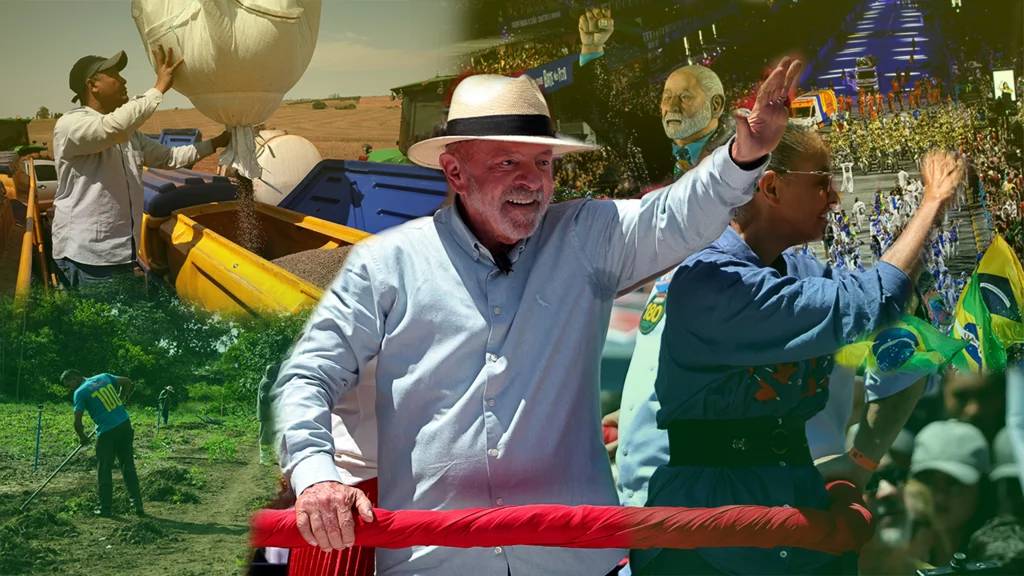
As the sun sets on October 4, Brazil stands at a defining crossroads. Luiz Inácio Lula da Silva, the 81-year-old titan of Latin American politics, finds his name on the presidential ballot for the seventh time. Nearly four decades after his initial foray into national politics, the man who rose from the poverty-stricken backlands of Pernambuco to the heights of the Planalto Palace is once again asking the Brazilian people for a mandate. This time, however, the stakes feel different, the electorate more divided, and the finish line—if he wins—promised as his final departure from the political stage.
The Main Facts: A Seventh Run for the Presidency
Lula’s current campaign is defined by a paradox: he is a seasoned statesman promising a "final term" while functioning as the only figure capable of holding back a resurgent far-right movement. Despite his 2022 campaign pledge that his third term would be his last, the political vacuum within the Workers’ Party (PT) and the existential threat posed by the opposition have drawn him back into the fray.
His opponent, Flavio Bolsonaro, the eldest son of the former president who is currently serving a 27-year prison sentence for his role in a 2026 attempted coup, represents a radical, nationalist shift in the Brazilian right. Polls indicate a dead heat between the two, turning the October 4 election into a high-stakes referendum on the future of Brazilian democracy.
Lula has sought to neutralize concerns regarding his age and health, frequently citing his rigorous exercise regimen and his resilience in overcoming a 2026 battle with early-stage skin cancer. Yet, he is acutely aware that this is a different era. His rhetoric has shifted from the firebrand unionism of the 1970s to a more pragmatic, though still populist, appeal centered on social stability and the protection of Brazil’s institutional integrity.
Chronology: A Life in the Public Eye
To understand the current moment, one must look at the arc of a career that spans the transformation of modern Brazil:
- 1980: Co-founding the Workers’ Party (PT) amidst the tail-end of Brazil’s brutal military dictatorship.
- 1989–1998: Three unsuccessful presidential campaigns. These years were marked by a "radical" image that alienated the Brazilian middle class and private sector.
- 2002: The birth of "Lulinha Paz e Amor" (Little Lula, Peace and Love). By softening his image and courting the market, he won his first presidency with 60% of the vote.
- 2003–2010: Two terms defined by the Bolsa Família program and a commodities boom, which lifted 20 million Brazilians out of poverty.
- 2017: A low point. Lula is convicted of corruption and money laundering, eventually serving 580 days in prison.
- 2021: The Supreme Court annuls his convictions, citing bias and lack of jurisdiction, paving the way for his return.
- 2022: A dramatic return to power with a narrow victory over Jair Bolsonaro.
- 2026: A new campaign cycle begins, dominated by the specter of "Bolsonarismo" and a cooling economy.
Supporting Data: The Economic and Social Landscape
The economic narrative of the current administration is complex. Supporters point to record-low unemployment and the recent legislative victory in May—a reduction of the workweek and the mandate for two rest days—as proof of a pro-labor, pro-growth agenda.

However, the raw data presents a more nuanced reality. While poverty rates have declined, public debt has surged, and household debt remains at critical levels. According to a September 24 Datafolha poll, 34% of Brazilians view the current administration’s performance as "good or excellent," while 40% label it as "bad or very bad." This is a stark decline from the approval ratings he enjoyed during his initial stint in power, suggesting that while his core base remains loyal, the broader middle-class electorate has grown weary of the political establishment.
Marcia Dias, director of the school of political science at the Federal University of the State of Rio de Janeiro, notes that for 30% of the population, the corruption allegations never stuck. "His backstory—the single mother, the migrant journey from the northeast, the life as a shoeshiner—is the Brazilian story," she explains. "For many, he is not just a politician; he is a symbol of the nation’s resilience."
Official Responses and Political Maneuvering
The campaign has been defined by a desperate scramble for the moral high ground. The most surreal episode occurred in late September, when rumors spread that the far-right coalition intended to strip the patron saint, Our Lady of Aparecida, of her status. The resulting national outcry led to a bizarre, optics-heavy campaign phase where Lula was frequently photographed with religious iconography to contrast himself against the secular, often anti-Catholic rhetoric of the Bolsonaro camp.
Regarding the international dimension, the relationship with the United States has soured. The imposition of a 25% tariff on select Brazilian goods in July by the Trump administration has been characterized by the Lula government as "illegal." Lula’s response has been to pivot firmly toward the BRICS alliance, signaling a desire to deepen ties with China and leverage Brazil’s strategic resources—specifically rare earth elements—to drive industrial autonomy.
At the United Nations last month, Lula was clear: "Brazil will not be anyone’s backyard." This stance is intended to serve as a nationalist bulwark against what his administration describes as the "imperialist" pressures of the current U.S. administration, effectively framing the election as a contest between national sovereignty and external interference.
Implications: A Nation at the Precipice
The implications of the October 4 vote extend far beyond the borders of Brazil. The outcome will likely determine the trajectory of South American regional policy for the next decade.

1. The Succession Vacuum
Perhaps the most damaging critique of the current PT administration is its inability to produce a successor. Despite Lula’s promises in 2022 to foster new leadership, the party remains entirely centered on his personality. As experts note, the last time a "hand-off" occurred was to Dilma Rousseff in 2011, a move that ended in political turmoil. The party’s inability to cultivate a new generation of leaders leaves it vulnerable to a post-Lula collapse.
2. The Threat of "Neoliberalism"
Lula frames this election as a final stand against the "radical neoliberalism" of the Bolsonaro faction. For the left, a loss would mean the dismantling of the social safety net, the potential privatization of state assets, and a shift toward a more isolationist, nationalist foreign policy.
3. The Security Crisis
Despite implementing a series of anti-crime policies, the issue of urban security—specifically the rise of "cellphone crime" and organized violence—remains a persistent thorn in the administration’s side. Voters in urban centers like São Paulo are demanding tangible results that go beyond welfare programs; they are demanding safety.
4. The Final Dance
Lula’s legacy is already cemented in the history books, but this election will define the closing chapter. Whether he wins or loses, the country is facing a profound demographic and political shift. Should he win, he will spend his final years in office navigating an increasingly hostile Congress and a global economic climate that is far less forgiving than it was in 2003.
As the ballots are cast, Brazil is not merely choosing a president; it is deciding whether to cling to the familiar, if flawed, comfort of a political legend or to plunge into the unknown territory of a new, more radical political order. For the octogenarian leader, this is indeed the final dance—a high-stakes performance that will ultimately determine if the "Little Lula" of the 1970s can leave behind a stable nation or a country deeply fractured by his own long shadow.