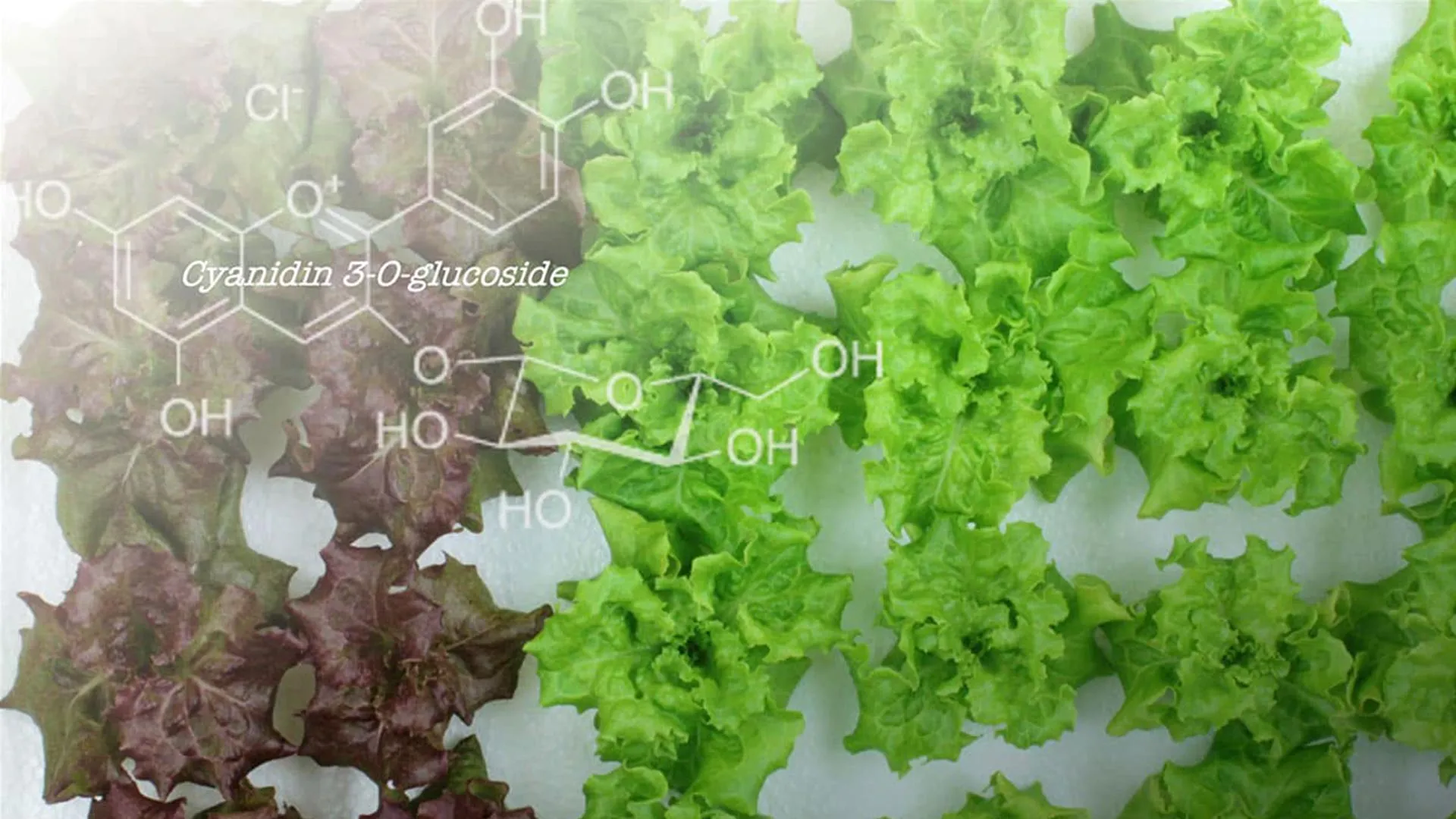
In the quiet, climate-controlled chambers of modern laboratories, researchers are rewriting the biological code of one of the world’s most ubiquitous vegetables. Red leaf lettuce, a staple of salads and culinary garnishes, owes its vibrant hue to anthocyanins—a class of polyphenol pigments lauded for their potent antioxidant properties. However, a groundbreaking study led by the Ezura research group has peeled back the layers of this pigmentation, revealing that by strategically "turning off" specific genetic switches, scientists can manipulate the plant’s internal chemistry to favor other beneficial compounds without sacrificing growth.
This discovery does more than change the color of a leaf; it opens a new frontier in bioengineering, suggesting that we can customize the nutritional profiles of crops to suit specific health needs, all while maintaining the productivity required for commercial agriculture.
The Biochemistry of Color: Understanding Anthocyanins
To understand the significance of this research, one must first look at the metabolic highway that exists within a single leaf of lettuce. Anthocyanins do not simply appear; they are the result of a complex, enzyme-driven metabolic cascade that begins with the amino acid phenylalanine.
As the plant matures, this amino acid undergoes a series of transformations, branching off into various pathways. Along the way, these reactions produce flavonoids—a broad category of plant compounds known for their diverse biological roles, ranging from UV protection to plant signaling. Eventually, a subset of these flavonoids is converted into the anthocyanins that provide the signature deep-red or purple coloration in lettuce.
The researchers focused on a critical bottleneck in this process: the gene responsible for producing dihydroflavonol 4-reductase (DFR). This enzyme acts as a gatekeeper, facilitating the final steps required to synthesize anthocyanins. By isolating this gene, the team sought to see what would happen if they simply closed the gate.
Chronology of the Discovery: From Lab Bench to Greenhouse
The research process was methodical, spanning several stages of genetic modification and rigorous phenotypic analysis.
Phase I: Genetic Disruption
The team utilized modern genome-editing techniques to target and disable the gene responsible for DFR production. The primary goal was to observe the immediate metabolic fallout of removing this specific enzyme from the plant’s biosynthetic repertoire. The result was immediate and visually striking: the plants, which should have developed their characteristic red pigmentation, remained green.
Phase II: Metabolic Profiling
Once the visual phenotype was established, the researchers performed high-resolution biochemical analysis. They discovered that the plant did not simply stop producing flavonoids; instead, it redirected its metabolic resources. With the "anthocyanin gate" closed, the pathway experienced a backlog. Consequently, the concentration of precursor compounds—most notably quercetin—surged.
Phase III: Phenotypic Growth Analysis
Perhaps the most critical phase involved assessing the viability of the modified plants. In many genetic studies, the deletion of a metabolic pathway results in "stunted" or "sickly" plants due to the disruption of essential biological functions. However, the modified lettuce showed no meaningful reduction in growth. It maintained the same leaf area, height, and biomass as its wild-type counterparts, proving that the redirection of the flavonoid pathway was biologically sustainable.
Supporting Data: Redirecting the Metabolic Flow
The data suggests a fascinating principle of plant resilience. In nature, plants are highly adaptable; when one pathway is blocked, the plant often compensates by diverting precursors toward alternative pathways. In this case, the suppression of DFR led to a significant accumulation of upstream flavonoids.
Quercetin, in particular, is a well-documented flavonoid with its own set of health benefits, often associated with anti-inflammatory properties and cardiovascular support. By demonstrating that lettuce can be engineered to hoard these specific compounds instead of anthocyanins, the study provides a blueprint for "nutritional tuning."
| Metric | Wild-Type Red Lettuce | Modified Lettuce |
|---|---|---|
| Phenotype Color | Red/Purple | Green |
| Anthocyanin Levels | High | Near Zero |
| Quercetin Levels | Moderate | High |
| Biomass/Growth Rate | Standard | Standard |
This data confirms that the "Red Leaf" architecture is not a fixed requirement for the plant’s health, but rather a flexible metabolic state that can be nudged toward different chemical outcomes.
Official Responses and Expert Perspective
The research, spearheaded by the Ezura group, has sent ripples through the agricultural biotechnology community. While the researchers acknowledge that they have not yet performed a direct comparative analysis between their modified plants and conventional green lettuce varieties, the implications are clear.
"Red lettuce is already recognized for its high level of polyphenol production," the researchers noted in their report. "Our findings suggest that by blocking the final step of anthocyanin synthesis, we are not destroying the plant’s antioxidant potential, but rather shifting it into a different, potentially more useful, profile."
Independent experts in plant physiology have lauded the study for its precision. "This is a elegant example of metabolic engineering," said one agricultural scientist familiar with the work. "The fact that they maintained plant growth while fundamentally altering the secondary metabolite profile is the ‘holy grail’ of crop modification. It proves that we can create specialized varieties without the typical yield penalties that often plague genetically modified crops."
Implications: The Future of Indoor Farming
The findings arrive at a pivotal moment for global agriculture. With the rise of "plant factories" and vertical farming, the ability to control environmental variables like light intensity, temperature, and atmospheric composition has become a reality.
Optimizing for Plant Factories
Flavonoid production is notoriously sensitive to the environment. Light intensity, for instance, is a major driver of anthocyanin production in nature. Because indoor cultivation systems allow for the absolute control of these factors, the Ezura group’s discovery could be transformative. Growers could theoretically pair the genetically modified lettuce with specific "light recipes" to maximize the accumulation of targeted flavonoids like quercetin.
Customized Nutrition
The prospect of "designer produce" is no longer the stuff of science fiction. If scientists can successfully redirect the flavonoid pathway in lettuce, they may eventually be able to apply the same logic to other crops. Imagine a grocery aisle where lettuce is sold not just by variety (Romaine, Iceberg, Butterhead), but by nutritional profile—lettuce high in specific antioxidants for heart health, or varieties tailored for anti-inflammatory diets.
Sustainability and Productivity
The lack of impact on plant growth is the most crucial takeaway for the commercial sector. For a genetically modified crop to be viable, it must be as profitable and efficient as its predecessor. By confirming that this modification does not interfere with the plant’s development, the research ensures that farmers do not have to choose between nutritional value and crop yield.
Conclusion: A New Era of Cultivation
The Ezura group’s research serves as a beacon for the future of food science. By manipulating the internal biochemical pathways of red leaf lettuce, the team has proven that we are no longer limited by the plant’s natural state. We have moved into an era where we can refine, customize, and optimize the very molecules that give our food its nutritional value.
While the journey from the laboratory bench to the dinner table requires further validation—including long-term safety testing and commercial scaling—the proof of concept is undeniable. As we continue to refine our understanding of the plant genome, the lettuce in our salad bowls may one day be the result of a precise, high-tech calibration designed to keep us healthier than ever before.
Funding Disclosure: The research in the Ezura group is supported by the Program on Open Innovation Platform with Enterprises, Research Institute and Academia, Japan Science and Technology Agency (JSTOPERA, JPMJOP1851).