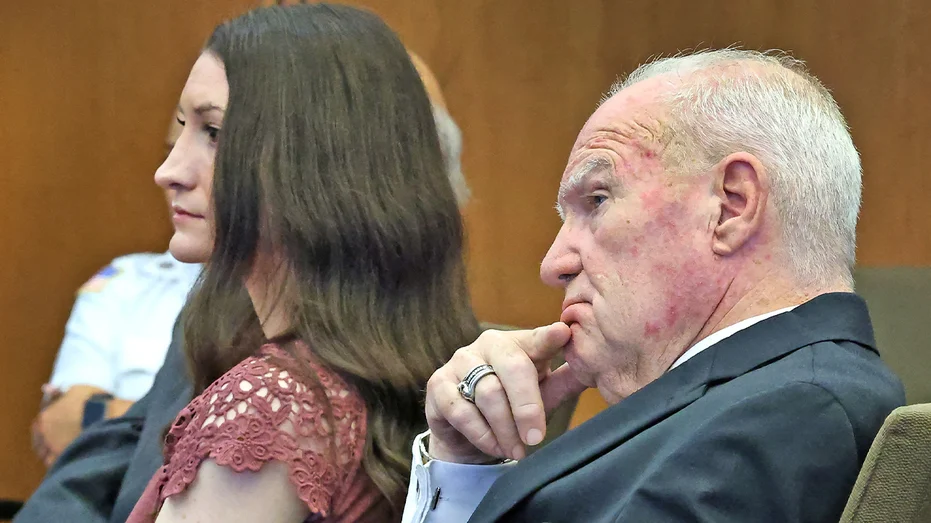
PLYMOUTH, Mass. — In a pivotal development within one of Massachusetts’ most emotionally charged and legally complex criminal cases, Superior Court Judge William Sullivan has denied a motion for a required finding of not guilty filed on behalf of Lindsay Clancy.
Clancy, a Duxbury mother accused of killing her three young children in January 2023, remains facing first-degree murder charges after her defense team’s attempt to secure an outright acquittal was rejected. The ruling solidifies the state’s path toward a potential retrial following a dramatic mistrial declared on September 4, 2026, when a Plymouth County jury proved unable to reach a unanimous verdict.
Main Facts of the Case and Recent Rulings
The legal battle surrounding Lindsay Clancy reached a critical juncture in late September 2026. Following the collapse of the initial trial due to a deadlocked jury, defense attorney Kevin Reddington filed a renewed motion for a required finding of not guilty. Under Massachusetts law, such a motion asks the presiding judge to rule that the prosecution’s evidence was legally insufficient to support a conviction, effectively ending the prosecution and barring a retrial under the constitutional protection against double jeopardy.
Judge William Sullivan, who had previously denied an identical motion when the mistrial was declared, rejected the renewed attempt. In his written order, Judge Sullivan clarified that the threshold for a directed verdict of acquittal had not been met, asserting that the prosecution had presented a viable case for a jury to consider.
"There was evidence introduced, both physical and circumstantial, that would permit a rational trier of fact to find beyond a reasonable doubt the elements of the charge of murder," Sullivan wrote in his decision.
The defense has maintained that Clancy, who suffered from severe postpartum mental health issues, was not criminally responsible for the deaths of her children: five-year-old Cora, three-year-old Dawson, and seven-month-old Callan. Reddington argued that the Commonwealth of Massachusetts failed to prove his client possessed the requisite criminal intent or the physical capacity to commit the acts knowingly.
Conversely, Assistant District Attorney Shanan Buckingham countered that the state’s evidence was "voluminous" and more than sufficient to prove that Clancy acted with deliberate premeditation and understood the wrongfulness of her actions at the time of the killings.
Chronology of the Clancy Case
To understand the gravity of the recent judicial rulings, it is necessary to examine the timeline of events that began with a suburban tragedy and evolved into a national touchstone for debates on maternal mental health and criminal responsibility.
January 2023: The Tragedy in Duxbury
On the evening of January 24, 2023, Patrick Clancy, Lindsay’s husband, left their home in Duxbury, Massachusetts, to pick up a takeout dinner and retrieve medication from a local pharmacy—an errand requested by Lindsay. Upon his return roughly 55 minutes later, Patrick discovered his wife lying on the ground outside their home, having survived a fall from a second-story window in an apparent suicide attempt.
Inside the home, Patrick discovered their three young children in the basement. Cora and Dawson were pronounced dead at the scene, while infant Callan was rushed to Boston Children’s Hospital, where he survived on life support for three days before passing away. Investigators determined the children had been strangled with exercise bands. Lindsay Clancy survived her fall but suffered a severe spinal cord injury that left her permanently paralyzed from the waist down.
February 2023 – Mid-2026: Pre-Trial Proceedings and Hospitalization
In the years following the tragedy, Clancy was arraigned from her hospital bed and subsequently moved to various medical and psychiatric facilities, including Tewksbury State Hospital. Pre-trial hearings focused heavily on her mental state.
The defense presented a narrative of a dedicated pediatric nurse and loving mother who was suffering from severe postpartum depression and suspected postpartum psychosis. Reddington highlighted that Clancy had been prescribed a rotating cocktail of over a dozen psychiatric medications in the months leading up to the tragedy, arguing that she was experiencing a severe, involuntary state of intoxication and psychosis.
The prosecution, however, painted a picture of calculated planning, arguing that Clancy intentionally sent her husband on an errand that she knew would give her enough time to carry out the killings undisturbed.
August – September 2026: The Trial and Mistrial
The highly anticipated trial commenced in late summer 2026 at the Plymouth County Superior Court. Over several weeks, jurors listened to heartbreaking testimony from first responders, medical experts, and Patrick Clancy.
On September 4, 2026, after days of intense deliberations, the jury informed Judge Sullivan that they were hopelessly deadlocked. A mistrial was declared. Reports emerged that the jury was split 11-1, with a lone holdout juror preventing a unanimous verdict.
Late September 2026: Post-Mistrial Maneuvers
Following the mistrial, the defense immediately went on the offensive. On September 29, 2026, Lindsay Clancy appeared in court alongside Reddington for a status hearing. Reddington filed a motion for an outright acquittal and demanded an investigation into the lone holdout juror, alleging that the juror’s conduct during deliberations blocked what would have otherwise been a "not guilty" verdict.
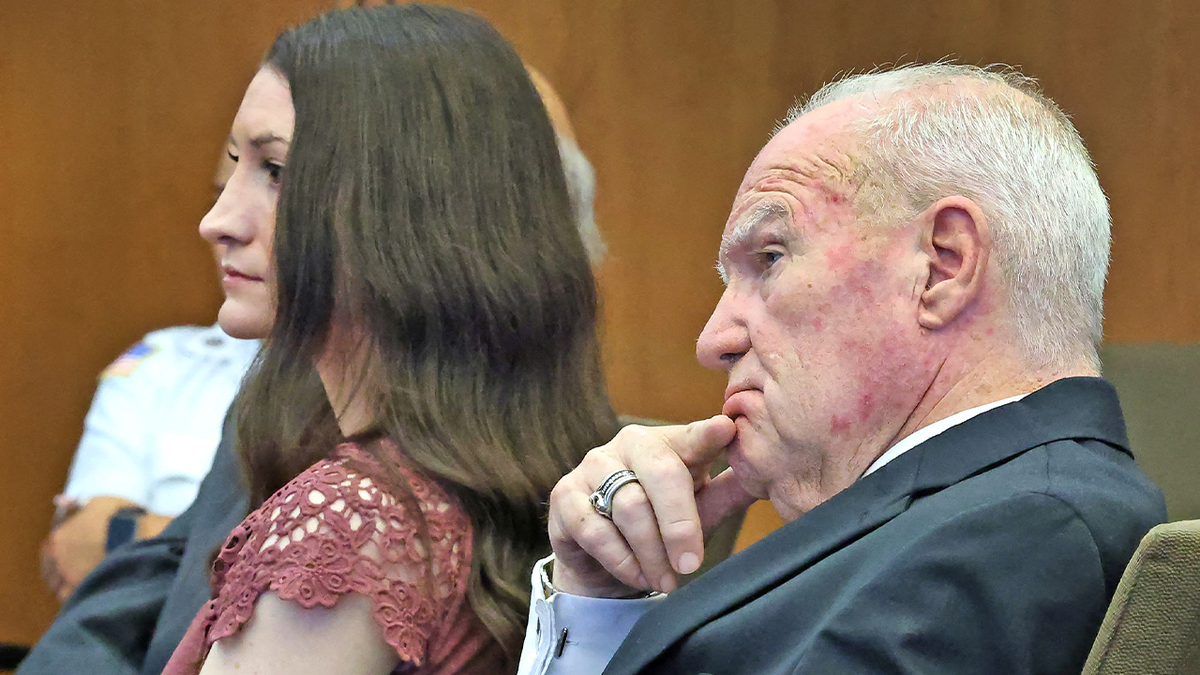
On September 29, Judge Sullivan officially denied the motion for a required finding of not guilty, setting the stage for the next phase of legal proceedings.
Supporting Data and Legal Arguments
The clash between the prosecution and the defense centers on the legal definition of criminal responsibility and the interpretation of physical and behavioral evidence surrounding the events of January 24, 2023.
The Prosecution’s Evidence of Premeditation
Assistant District Attorney Shanan Buckingham argued that Clancy’s actions on the day of the killings demonstrated a high degree of cognitive functioning and deliberate planning. The state presented several key pieces of data:
- The Errands: Prosecutors emphasized that Clancy used her phone to search for the transit time to a restaurant in nearby Plymouth and a CVS pharmacy, calculating exactly how long her husband would be away from the home.
- The Demeanor: Patrick Clancy testified that when he spoke to his wife on the phone while running the errands, her voice sounded completely normal, showing no signs of distress or disorientation.
- The Mechanism of Death: The prosecution argued that the physical act of strangling three children consecutively with exercise bands required sustained physical effort and intent, contradicting the defense’s claim of a sudden, uncontrollable psychotic break.
The Defense’s Evidence of Psychosis and Medical Overmedication
Kevin Reddington countered that the prosecution’s narrative ignored the profound mental illness that had gripped Clancy since the birth of her third child. Supporting data from the defense included:
- Psychiatric Records: Documentation showing that Clancy had sought help repeatedly for severe anxiety, insomnia, and intrusive thoughts. Between October 2022 and January 2023, she was prescribed a heavy regimen of medications, including Prozac, Ativan, Klonopin, and Seroquel.
- Expert Testimony: Psychiatric experts testified that postpartum psychosis can cause mothers to experience command hallucinations or severe delusions, leaving them unable to appreciate the wrongfulness of their actions or control their behavior.
- Post-Event Behavior: The defense argued that Clancy’s subsequent jump from the second-story window was clear evidence of a profound mental health crisis and a desperate desire to end her own life alongside her children, rather than a rational attempt to escape criminal consequences.
Official Responses and Judicial Rulings
In denying the defense’s motion, Judge William Sullivan addressed the intersection of severe mental illness and criminal accountability under Massachusetts law. He rejected the defense’s assertion that Clancy’s diagnosed mental struggles automatically precluded her from being held criminally responsible.
"Mental illness alone does not preclude a finding of criminal responsibility beyond a reasonable doubt," Sullivan wrote in his judicial order.
+-----------------------------------------------------------------------------------------+
|                              MASSACHUSETTS LEGAL STANDARD                               |
|                                                                                         |
|  "A person is not criminally responsible for criminal conduct if at the time of such     |
|  conduct as a result of mental disease or defect he lacks substantial capacity either    |
|  to appreciate the criminality [wrongfulness] of his conduct or to conform his          |
|  conduct to the requirements of law."                                                   |
|                                                                                         |
|  -- Commonwealth v. McHoul, 352 Mass. 544 (1967)                                        |
+-----------------------------------------------------------------------------------------+
Sullivan explained that the Commonwealth’s theory of the case met the legal standards necessary to proceed. "The Commonwealth’s theory of criminal responsibility was that when the defendant committed the crime, she did not lack substantial capacity to appreciate the criminality or wrongfulness of her conduct and did not lack the substantial capacity to conform her conduct to the requirements of the law," the judge wrote. He concluded that the state had introduced sufficient evidence regarding "the nature and methods of the killings and the defendant’s actions and demeanor at times surrounding the killings" to allow a jury to make that determination.
The defense’s aggressive post-trial tactics have drawn sharp criticism from other legal professionals. Attorney Edward Paltzik publicly criticized Reddington’s actions following the mistrial, particularly the public demands for an investigation into the jury’s internal deliberations. Paltzik argued that attempting to scrutinize or penalize a lone holdout juror undermines the sanctity of the jury system and represents an unusual and potentially improper defense strategy.

Legal and Societal Implications
The Lindsay Clancy case carries profound implications that extend far beyond the courtroom in Plymouth County, touching on judicial precedents, the mechanics of the jury system, and public awareness of maternal mental health.
The Insanity Defense and Postpartum Psychosis
The case represents one of the most high-profile tests of the "McHoul standard"—Massachusetts’ test for criminal responsibility—in recent memory. A successful defense of lack of criminal responsibility by reason of insanity is historically rare and difficult to achieve, particularly in cases involving children.
The outcome of a potential retrial could set a significant modern precedent for how courts evaluate postpartum depression (PPD) and postpartum psychosis (PPP). Advocacy groups have watched the trial closely, hoping it will foster a deeper medical and legal understanding of how severe hormonal and psychological shifts can impair a mother’s cognitive faculties.
The Debate Over Jury Confidentiality
Reddington’s push for an inquiry into the "lone holdout" juror raises critical questions about jury privacy and the finality of deliberations. In American jurisprudence, the discussions that occur inside a jury room are strictly confidential to protect jurors from external pressure, harassment, or retaliation.
If Judge Sullivan allows an inquiry into the holdout juror during the upcoming November hearing, it could open a controversial legal avenue for challenging deadlocked verdicts. Conversely, a denial of this request will reinforce the traditional protections afforded to individual jurors who dissent from the majority.
What Lies Ahead
Lindsay Clancy is scheduled to return to court on November 2, 2026. This hearing will address two critical issues:
- The Double Jeopardy Motion: The defense will argue that retrying Clancy constitutes double jeopardy, asserting that the first trial’s evidence was so deficient that a second trial should be legally barred.
- The Jury Inquiry Request: The court will hear arguments on whether there are legitimate grounds to investigate the deliberations of the deadlocked jury.
If the double jeopardy motion is denied, as legal experts expect given Judge Sullivan’s recent rulings, the Plymouth County District Attorney’s office will begin preparing to empanel a new jury for a second trial. The case continues to draw intense national interest, serving as a tragic reminder of the complex intersections between severe mental illness, maternal tragedy, and the uncompromising demands of the criminal justice system.