Introduction: A Clash Over Public Access
The ongoing dispute over "College Walk"—the historic, tree-lined pedestrian artery that cuts through the heart of Columbia University’s Morningside Heights campus—has reached a fever pitch. In a dramatic pivot from the previous administration’s stance, New York City Mayor Zohran Mamdani has officially signaled that his office is prepared to pursue legal action against the Ivy League institution.
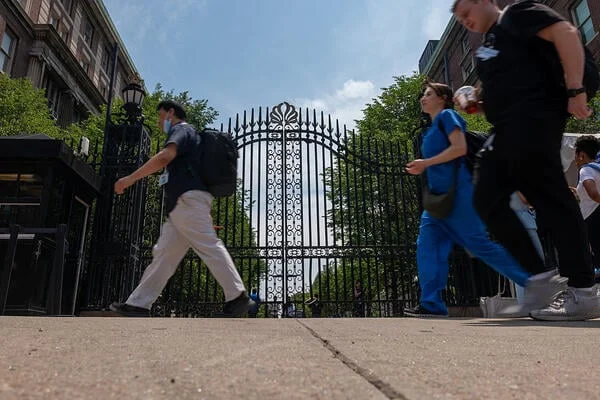
The conflict centers on the university’s decision to restrict access to the walkway, a move implemented during the height of the 2024 pro-Palestinian protests. For decades, the path served as a vital, open corridor for students and neighborhood residents alike, bridging the gap between Broadway and Amsterdam Avenue. Today, however, that bridge is guarded by a digital barrier, requiring non-affiliated visitors to navigate a QR-code registration system—a policy that the current mayoral administration now deems an unacceptable infringement on public rights.
The Chronology of a Campus Conduit
To understand the gravity of the current legal standoff, one must look back to the origins of the land use agreement.
- 1953: Columbia University acquires the sidewalk from the City of New York. The foundational agreement explicitly mandates that the city retain "free and unhampered access" for the maintenance, repair, and potential relocation of municipal facilities.
- 1953–2023: For seven decades, the walkway functions as a de facto public square. Morningside Heights residents and commuters traverse the campus daily, creating a unique integration between the university and the surrounding urban fabric.
- 2024: Amidst widespread campus unrest and political demonstrations, the university administration abruptly locks the gates, citing security concerns. The implementation of a strict, app-based entry system follows.
- 2025: A coalition of frustrated Morningside Heights residents files a lawsuit against both the university and the city, alleging that the closure violates the 1953 covenant.
- 2025 (The Adams Era): Then-Mayor Eric Adams files a motion to dismiss the residents’ suit, arguing that College Walk is not a public street and that the city’s rights are limited to specific, narrow municipal services.
- 2026 (The Mamdani Reversal): Mayor Zohran Mamdani, following his election, formally reverses the city’s legal position. In September 2026, the city notifies the New York Supreme Court of its intent to force the reopening of the thoroughfare.
Legal Foundations and the "Limited Easement" Dispute
The legal crux of this battle rests on the interpretation of the 1953 agreement. Columbia University’s defense, bolstered by the previous administration’s motion to dismiss, hinges on the argument that the university holds private ownership of the land. They assert that the city’s rights are restricted to a "limited easement at grade for municipal purposes and services only."
Conversely, the plaintiffs—now supported by the Mamdani administration—argue that the phrase "free and unhampered access" is broad and intended to protect the public character of the space. Legal analysts suggest that the court’s interpretation of this specific clause will set a significant precedent for how private universities in urban settings manage their borders in an era of heightened security.
The Shift in Municipal Policy: Why the Reversal?
The transition from the Adams administration’s hands-off approach to Mayor Mamdani’s aggressive intervention marks a significant shift in the city’s philosophy regarding campus autonomy.
In a letter submitted to the New York Supreme Court on September 3, 2026, a city attorney made the administration’s position unequivocal: "The City supports the reopening of the walkway through the Columbia University campus to the public." This was followed by a formal stipulation filed this week, which contained a pointed warning: if the gates remain closed, the city will take "prompt legal action to ensure that Columbia reopens the pedestrian walkway consistent with its past practices."
For the Mamdani administration, this is a matter of public right-of-way and the maintenance of the social contract between the university and the neighborhood. By signaling that the city will act as an adversary to the university, the Mayor is positioning himself as a defender of public space against what critics call the "fortressing" of elite institutions.

Implications for Campus Security and Civil Liberties
The situation at Columbia University is reflective of a larger national conversation regarding the tension between university security and public accessibility.
Security vs. Openness
Columbia’s administration has maintained that the QR-code system is a necessary security measure to protect the student body and faculty during volatile times. However, civil liberty advocates argue that such measures create a chilling effect on public engagement and effectively privatize what has historically functioned as public infrastructure.
Urban Integration
The Morningside Heights community is uniquely integrated with Columbia. The closure of College Walk is not merely a logistical inconvenience for commuters; it represents a psychological and physical severing of the university from the neighborhood. For local businesses and residents, the path is an essential artery that connects the West Side of Manhattan.
Precedent for Other Institutions
If the court rules in favor of the City and the residents, the implications will ripple far beyond the gates of Columbia. Universities across the country, particularly those located in dense urban environments like New York, Boston, and Chicago, may face renewed pressure to justify their own security perimeters. The case could force a re-evaluation of how "private" a private campus can be when it relies on municipal infrastructure and public goodwill.
Official Responses and Next Steps
Columbia University has yet to release a detailed counter-statement to the latest filing, but representatives have previously emphasized their commitment to the safety of the campus community. The university is expected to argue that the 1953 agreement does not grant the public an unconditional right to traverse private property, particularly when that property is subject to significant security threats.
The legal battle is now set to escalate in the New York Supreme Court. The city’s ultimatum—demanding immediate reopening—puts the ball squarely in Columbia’s court. Failure to comply could lead to a protracted and costly litigation process, potentially involving court-ordered injunctions or even the threat of municipal intervention regarding city-serviced utilities on the walk.
Conclusion: The Future of the "Open" Campus
As the dispute continues, the gates at College Walk serve as a stark visual metaphor for the evolving relationship between the ivory tower and the city that surrounds it. Mayor Mamdani’s intervention signals a new era in which the city is less willing to defer to the administrative preferences of universities when public access is at stake.
Whether the court upholds the 1953 agreement as a broad mandate for public access or finds that the university’s property rights and security needs take precedence remains to be seen. What is certain, however, is that the outcome will redefine the landscape of Morningside Heights and serve as a bellwether for the future of urban university campuses nationwide. For now, the students, faculty, and residents remain caught in the middle, waiting to see if the gates will once again swing open to the public.