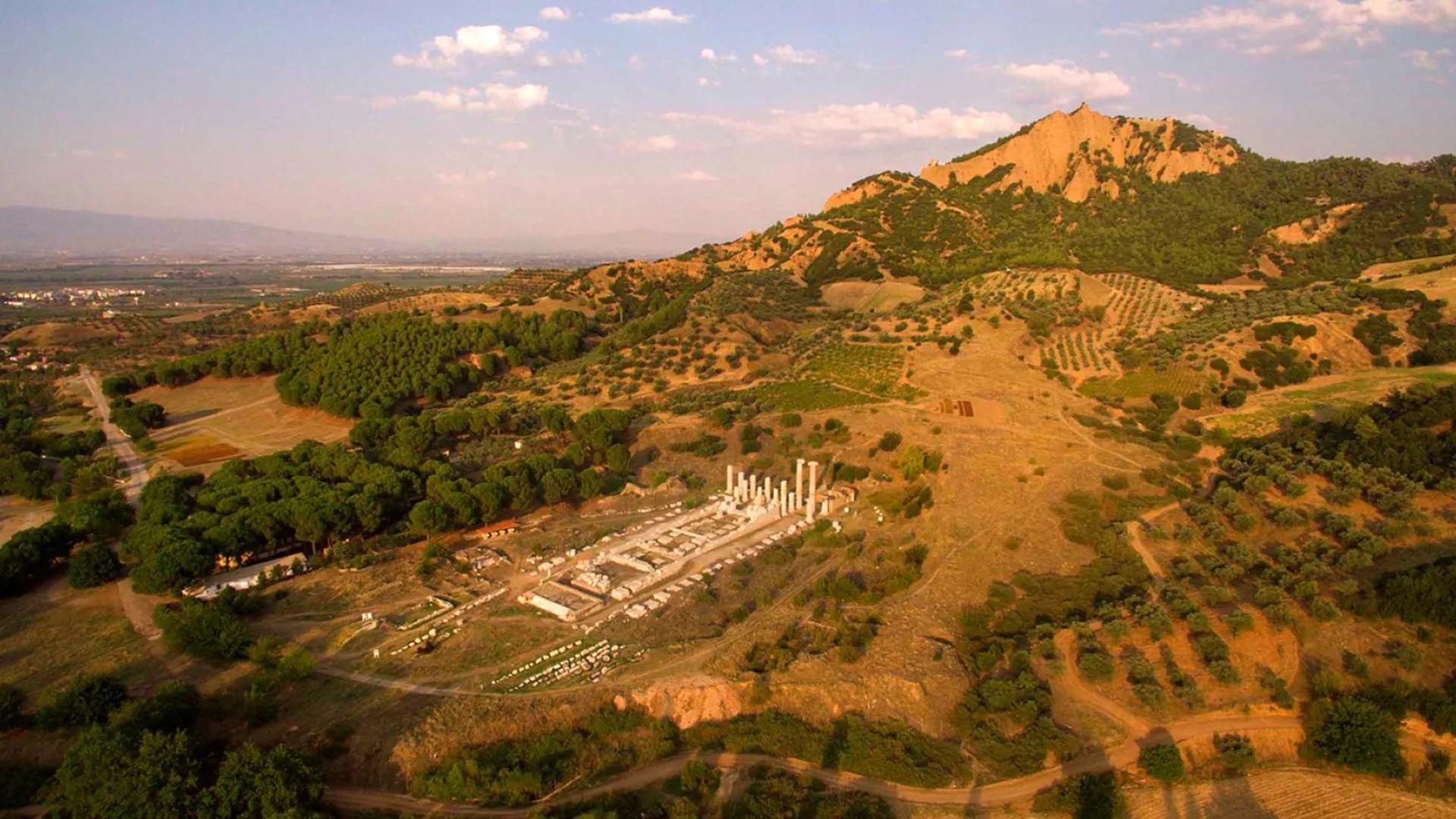
For thousands of years, the ancient city of Sardis in western Turkey stood as a crucible of human civilization. A strategic nexus between the Mediterranean world and the Anatolian plateau, the city witnessed the rise and fall of empires, serving as a throne for Lydian kings, a provincial center for the Persians, a vibrant hub under the Romans, and a spiritual stronghold for the Byzantines. Yet, while the rulers of Sardis changed, the city’s story remained largely buried beneath the dust of millennia—until 1958.
Since that year, archaeologists have returned to the site annually as part of the Harvard-Cornell Exploration of Ancient Sardis. This endeavor has become one of the longest-running institutional excavation projects in the history of the field, transforming our understanding of the ancient world. This summer, that commitment was validated on the global stage when the site was officially inscribed on the UNESCO World Heritage List, marking a new chapter for a city that has spent nearly seven decades under the microscope of modern science.
A Tapestry of Civilizations: The Chronology of Sardis
To understand Sardis is to understand the layering of human history. The city’s timeline stretches back to the third millennium BCE, beginning as a Bronze Age settlement before ascending to prominence as the capital of the Iron Age kingdom of Lydia. It was here, in the shadow of the Tmolus Mountains, that the Lydians are widely credited with a transformative invention: the world’s first coinage.
The legendary King Croesus, whose name became a synonym for unimaginable wealth, ruled from this seat. However, the city’s strategic value inevitably invited conquest. Following the arrival of Alexander the Great, Sardis was absorbed into the Hellenistic world, later transitioning into a vital Roman administrative center. As the Roman Empire fractured, the city evolved into a Byzantine bastion, eventually passing into the hands of the Ottoman Empire.
Unlike many ancient sites that were entombed by the sprawl of modern metropolises, Sardis remained relatively isolated, preserved by the rural nature of its surroundings. "Because it was not overbuilt by a modern city—it’s only a little village—Sardis gives you a really long history," explains Annetta Alexandridis, associate professor of the history of art and classics at Cornell University. "These layers are all there, and they make it sometimes difficult to excavate because they are not clearly stratified. They interfere with each other, but in a way, it’s an ongoing history, and that makes it so fascinating for us."
The Evolution of Archaeological Stewardship
The modern exploration of Sardis is as much a study in ethics as it is in history. In the early 20th century, the American Society for the Excavation of Sardis launched an initial, large-scale project that, while archaeologically productive, was fraught with the colonial-era controversies that defined early archaeology. Artifacts—including a massive, iconic column now housed in the Metropolitan Museum of Art—were removed through methods that would be considered unethical today.
When the Harvard-Cornell partnership began in 1958 under the leadership of Harvard’s George M. A. Hanfmann and Cornell’s Henry Detweiler, the ethos of the project shifted toward stewardship and public engagement. Unlike their predecessors, the new team focused on preservation, reconstruction, and the "legibility" of the site.
"If you went to Sardis in 1950, there were a few things sticking up above ground, but there was nothing really to see," says Benjamin Anderson, associate professor of the history of art and visual studies at Cornell. The team pioneered a model of site management that involved restoring structures like the monumental bath-gymnasium complex and the ancient world’s largest synagogue. These efforts turned the ruins into an educational landscape, providing a "total experience" for visitors rather than merely extracting objects for publication.
Data, Mentorship, and the "Critical Mass" of Discovery
The longevity of the Sardis project has allowed for a rare consistency in methodology and data collection. In archaeology, where research often survives only as long as a grant cycle, the institutional continuity of the Harvard-Cornell project is an anomaly.
"Many of us know and have been mentored by colleagues of the previous generation of excavators," Anderson notes. "As a result, it’s one of the few long-term archaeological projects in the region that has generated a critical mass of data."
This critical mass has allowed researchers to pivot from mere discovery to deep, contextual analysis. Over the decades, the team has uncovered everything from Persian-period refuse pits to gold-refining workshops and complex sanctuary plazas. Most recently, the project has turned its attention to the acropolis and the city’s extensive funerary culture. Alexandridis is currently leading a comprehensive survey of the city’s cemeteries, which remain historically under-studied compared to the famous Bin Tepe burial mounds located ten kilometers away.
Training the Future: The Human Element
Sardis serves as a primary training ground for the next generation of archaeologists. As one of only three major global excavation sites where most American classical archaeologists cut their teeth, the project offers a rigorous, hands-on education. During the ten-week summer sessions, graduate and undergraduate students manage deep-trench excavations, some reaching 12 meters into the alluvial soil.
"Local workers, who are already trained, gradually remove the soil, and the students are there observing, documenting, taking notes, and asking questions," Anderson explains.
Crucially, the project has evolved to be a collaborative effort between international scholars and Turkish experts. Today, more than half of the research team is comprised of Turkish nationals, reflecting a modern shift toward local empowerment and cross-cultural partnership. Leyla Uğurer, a doctoral student and local to the region, represents this new wave of scholarship. Having grown up near the ruins, she now leads excavations of late Roman sites, bridging the gap between her childhood admiration for the site and her professional stewardship of it.
The UNESCO Milestone and the Threat of Modern Loots
The recent UNESCO World Heritage designation is both a celebration and a shield. While the title brings prestige, funding, and increased tourism, it also highlights the urgent need for protection. The landscape of Sardis remains under constant threat from natural erosion, agricultural expansion, and, most alarmingly, organized looting.
"Treasure hunters now operate on an industrial scale," says Alexandridis. The use of explosives and heavy machinery to target ancient tumuli has created a crisis for heritage professionals. By formalizing the site’s status, the project hopes to bolster legal protections and secure the resources necessary to guard against those who view history as a commodity rather than a shared heritage.
Implications: A Living History
The significance of Sardis lies not just in the gold of Croesus or the coins of the Lydians, but in the continuity of the human experience. The site serves as a reminder that the "East and West" have been in a state of constant, fluid encounter for thousands of years.
As the team continues their work, the project remains a beacon of how archaeology should be conducted: with transparency, local inclusion, and a long-term view. The "broken pots" and "mud brick walls" that students catalog each summer are more than data points; they are the debris of a city that refused to be forgotten.
"This is why the long-term commitment is so important," Anderson concludes. "One season’s work, you’ll learn how to do the thing, but you’re not necessarily going to find something that will be especially significant for the history of the site until, maybe 10 years later, you find something else a little bit further away, and the pieces start to add up."
As Sardis enters this new era of global recognition, the work of the Harvard-Cornell Exploration serves as a testament to the fact that when we commit to the slow, painstaking process of uncovering the past, we do more than just record history—we ensure that the voices of those who walked these roads millennia ago continue to resonate in our own time.