For decades, the Australian discourse surrounding forest management has been trapped in a rigid, binary deadlock. On one side, environmental advocates have championed the total preservation of native forests, arguing that any human intervention represents a death knell for biodiversity. On the other, the timber industry has historically defended "clearfelling"—the practice of harvesting every tree in a designated block—as a necessary mimicry of the catastrophic bushfires to which species like the mountain ash have evolved.
This polarized debate, often characterized by heated rhetoric and mutual distrust, has long obscured a nuanced reality. However, a landmark, decades-old experiment recently rediscovered in Victoria’s mountain ash forests suggests that the "all-or-nothing" approach is not only outdated but factually incomplete. New research revisiting the "Silvicultural Systems Project" (SSP) reveals that there is a middle ground—one that balances economic output, carbon sequestration, and habitat restoration.
A Chronology of Conflict and Curiosity
The controversy surrounding clearfelling in Australia is not new. Since the 1970s, the practice has been a lightning rod for public protest. Critics argued that clearfelling obliterated the structural complexity required by rare, hollow-dependent species, effectively turning diverse ecosystems into uniform timber plantations. Conversely, foresters maintained that mountain ash forests are "fire-dependent" ecosystems; they argued that by removing the canopy and exposing the soil to ash and sunlight, clearfelling creates the ideal conditions for the next generation of trees to germinate, mirroring the aftermath of a massive, high-intensity wildfire.
Caught in this impasse, the Victorian government in the mid-1980s sought to move beyond speculation. In a bold policy move, they invested approximately A$26 million (in modern currency) to launch the Silvicultural Systems Project. The initiative aimed to move past the binary and test the efficacy of various "silvicultural" techniques—the science of tending, growing, and managing forest stands.
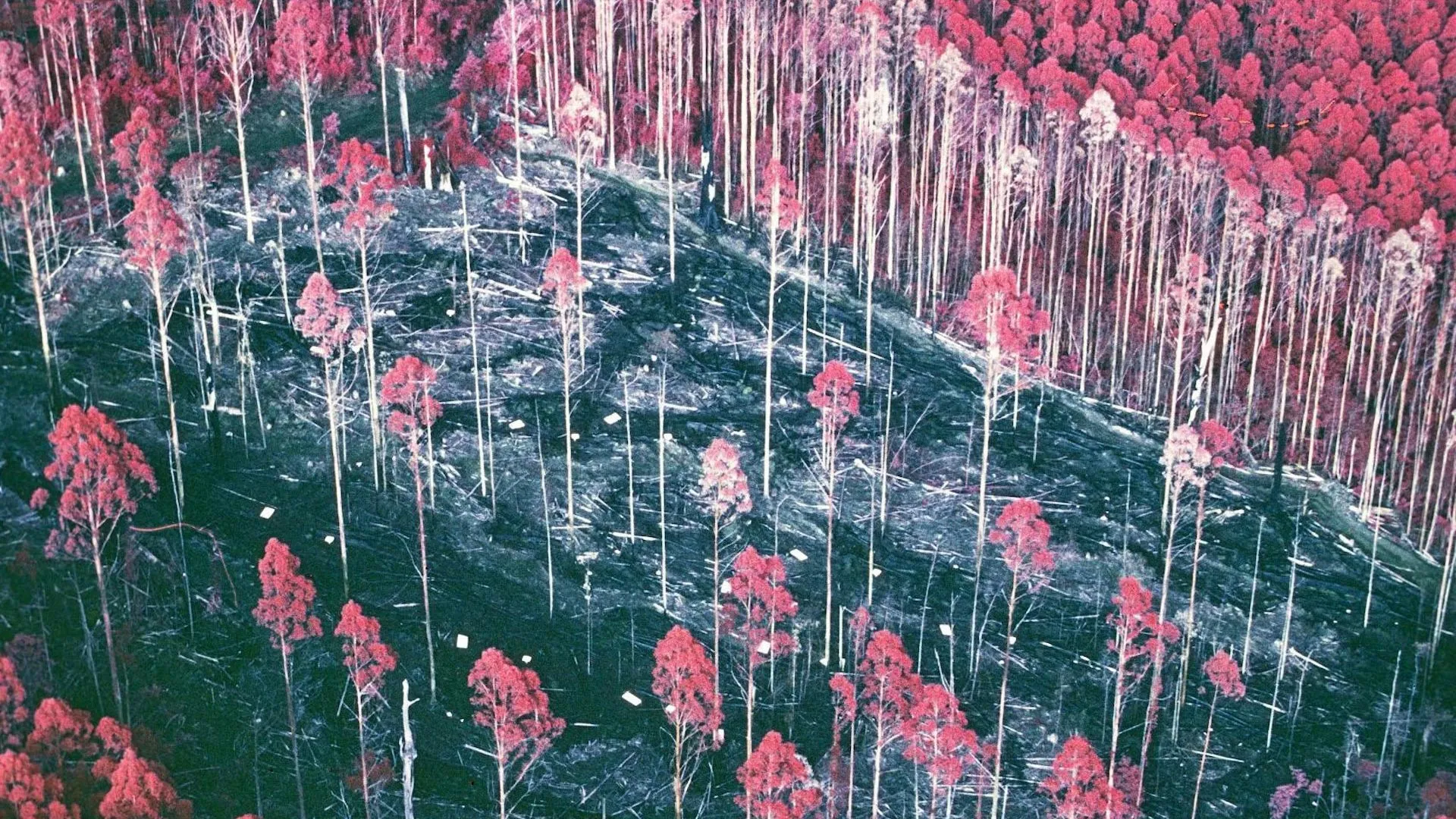
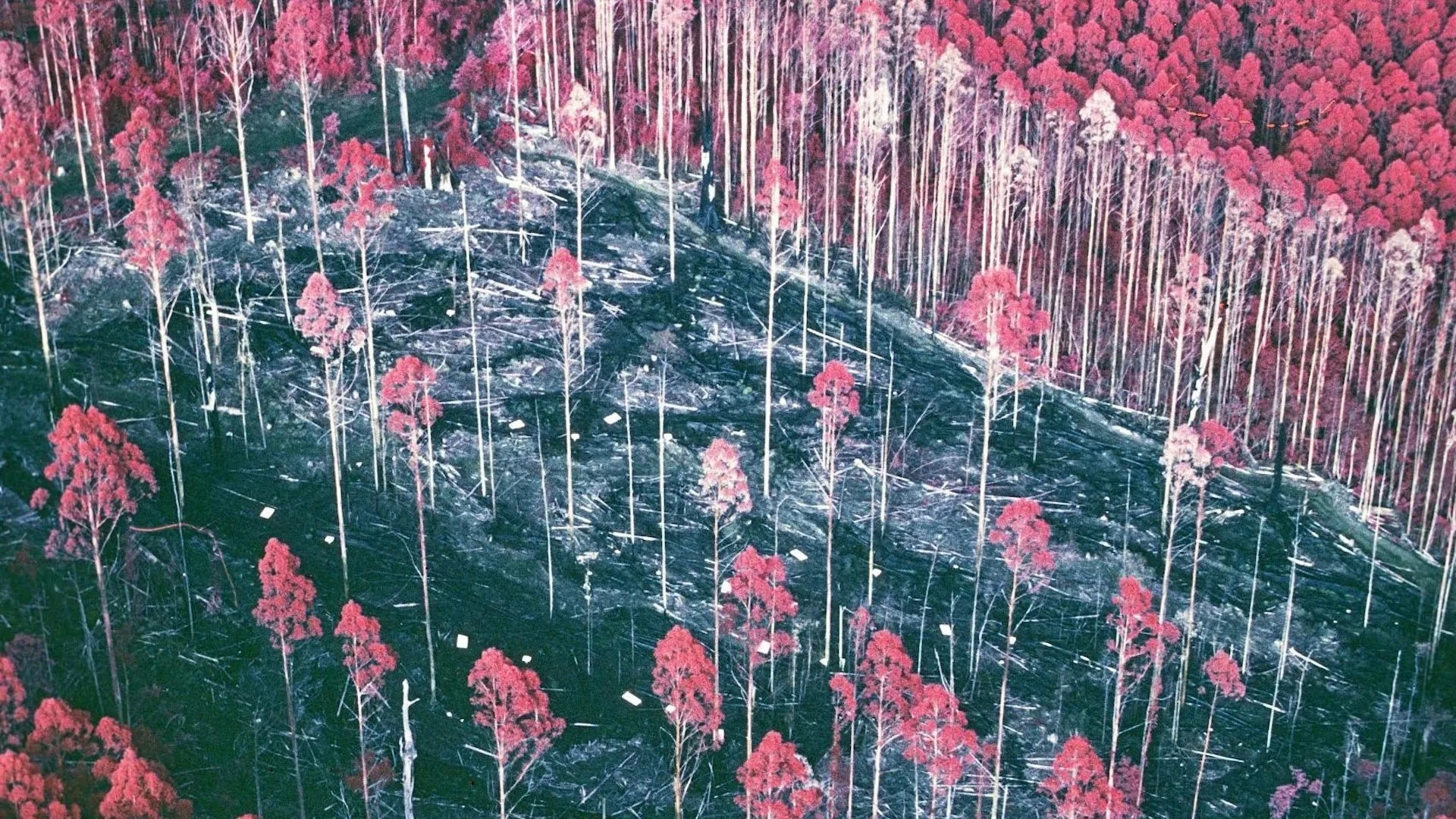
Between 1987 and 1989, researchers established two primary experimental sites: Tanjil Bren in the Central Highlands and Cabbage Tree Creek in East Gippsland. The project was, at the time, the most comprehensive study of forest regeneration in Australian history. Researchers established plots ranging from traditional clearfells (250–350 meters wide) to smaller, less intensive "patch" clearfells (50–140 meters wide) and heavy thinning operations, where 50–70% of trees were removed. Crucially, large swaths of unharvested forest were maintained as "control" benchmarks.
By the early 2000s, the preliminary results were published. At the time, the data seemed to favor clearfelling for pure timber regeneration, as mountain ash struggled to compete with understory species like acacia in smaller patches. With the findings documented, the project funding dried up. The access roads grew over with scrub, the signage collapsed, and the experiment was consigned to the archives. The public debate, largely unaware of the nuanced results, continued to rage.
Rediscovery and Astounding Data
In 2014, a group of researchers from the University of Melbourne, including those who had helped establish the project, returned to the Tanjil Bren site to show students the long-term impacts of different management systems. What they found thirty years later was not merely a record of past trials, but a revelation that challenged the very foundations of modern forestry policy.
The Growth of Thinned Stands
While the original 2000s-era findings regarding clearfell regeneration held true, the long-term outcomes for the "thinned" sections of the forest were startling. The trees remaining after the 1980s thinning operation had not just survived; they had flourished.
Despite being only 80 years old, the largest trees in the thinned stands averaged well over a meter in diameter at chest height, with some specimens exceeding 1.5 meters. In a direct comparison with the unharvested "control" plots, the thinned trees were, on average, 20% larger in diameter. By providing these trees with additional space, light, and nutrient resources, the thinning process had accelerated their development, creating a forest structure that would typically take decades longer to achieve.
Carbon Sequestration and Climate Resilience
Perhaps the most significant finding from the 2014 survey was the forest’s carbon-storing capacity. Contrary to the assumption that harvesting always results in a net loss of carbon storage, the heavily thinned stands had recovered remarkably. In just 30 years, these areas had not only reclaimed the carbon removed during the initial harvest but had actually accumulated as much, if not more, carbon than the unharvested control areas.
This suggests that managed thinning can create a "carbon-productive" landscape that maintains high biomass while allowing for sustainable timber extraction. Furthermore, the increased diameter of the trees makes them more resilient to the high-intensity fire events that are becoming more frequent in a changing climate. Larger trees have thicker bark and are structurally more robust, giving them a higher survival probability during bushfires.
Biodiversity Outcomes
The ecological benefits extended beyond the trees themselves. The research team utilized camera traps to monitor wildlife across the different plots. To their surprise, the rare Leadbeater’s possum—an icon of Victorian conservation—was found in every silvicultural treatment plot surveyed.
The acacia understory, which had been criticized in earlier reports as a "problem" for timber growth, proved to be an essential forage and navigation corridor for the possums. Furthermore, the massive girth of the thinned trees increases the likelihood of natural hollow formation. These hollows are the "gold standard" of habitat for species like the greater glider and the Leadbeater’s possum, providing essential shelter in a landscape where old-growth hollows are in steep decline.
Official Responses and Industry Implications
The academic community and environmental regulators have begun to take notice of these long-term findings. While the timber industry has historically pushed for clearfelling to maximize efficiency, the Tanjil Bren data provides a compelling argument for a shift toward "variable retention" and thinning models.
Government forestry agencies, historically cautious about shifting away from established clearfelling protocols, are now under pressure to integrate these findings into their Regional Forest Agreements. The evidence suggests that a transition toward thinning, where appropriate, could satisfy the dual demands of industry stakeholders and environmental conservationists. However, industry representatives have noted that thinning is significantly more labor-intensive and expensive than clearfelling, requiring a recalibration of economic models if it is to be implemented on a commercial scale.
Implications: A New Era of Forest Stewardship
The Tanjil Bren experiment provides three foundational lessons that should guide the future of global forestry policy:
1. The Necessity of Long-Term Monitoring:
Scientific research is often hindered by short-term grant cycles. The fact that this landmark study was "forgotten" underscores the fragility of our scientific knowledge. Australia’s forests are peppered with decades-old experiments that, if unearthed and properly funded, could provide the keys to solving modern climate and biodiversity challenges. We must prioritize the preservation of these research sites as "living laboratories."
2. Challenging the Trade-off Myth:
The data definitively proves that forest management is not always a zero-sum game. When performed correctly, thinning acts as a "win-win-win." It provides the wood products required by society, maintains or enhances carbon sequestration, and fosters the structural diversity needed for wildlife habitat. Moving away from the "conservation versus production" dichotomy is not just a rhetorical necessity; it is a practical requirement for sustainable land management.
3. The End of the "Silver Bullet":
Perhaps the most sobering lesson is that there is no universal "silver bullet." Clearfelling may be appropriate for some scenarios, while thinning is superior in others. Management must be site-specific, adaptive, and informed by decades of longitudinal data rather than the short-term political pressures of the day.
The story of Tanjil Bren serves as a poignant reminder that forests are resilient, dynamic systems that respond to how we treat them. By moving past the polarized debates of the past and embracing a more sophisticated, evidence-based approach to silviculture, we can protect the ecological integrity of our landscapes while continuing to support the communities that depend upon them. The trees, as the researchers discovered, have been doing the hard work of growing all along; it is time our policies caught up with them.