In the rugged, windswept landscape of 1930s Biscay, survival is not merely a goal—it is an obsession. This visceral tension lies at the heart of The Blind Ants (Inurri Itsuak), the latest cinematic achievement from acclaimed Basque director Igor Legarreta. Having recently celebrated its world premiere on September 18 at the 74th San Sebastián International Film Festival, the film has firmly cemented itself as a contender for the prestigious Irizar Award for Basque Cinema. As it prepares for a theatrical rollout in Spain on October 9 via Buena Vista International, The Blind Ants stands as a testament to the power of regional storytelling scaled for a global audience.
A Narrative Forged in Salt and Struggle
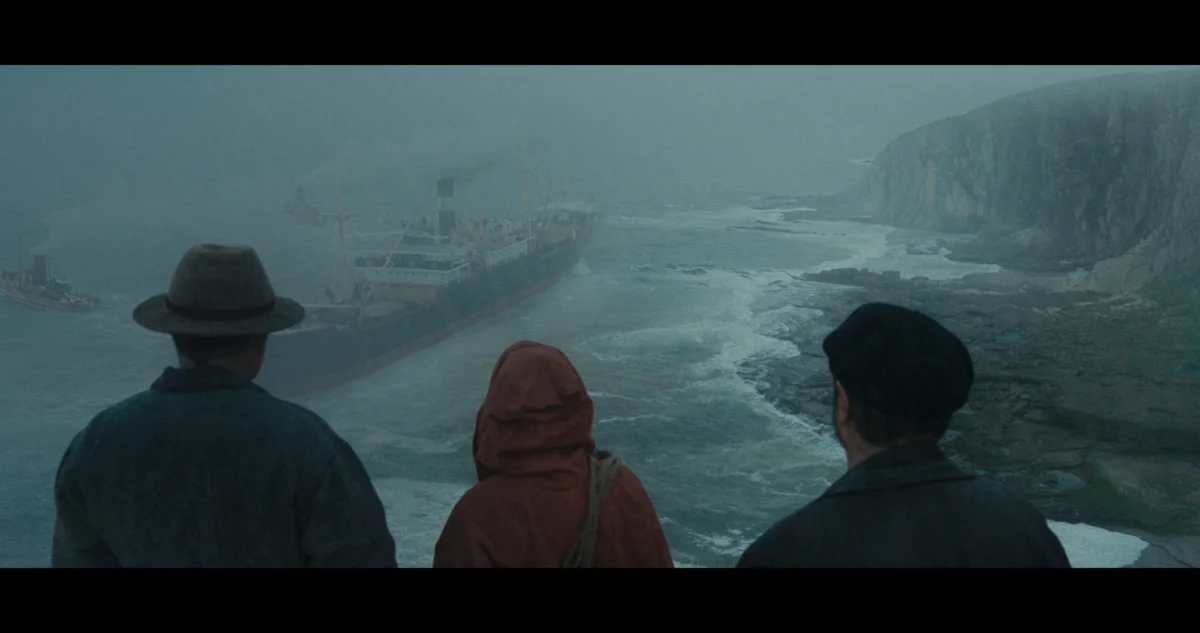
Set against the backdrop of a relentless, unforgiving Atlantic storm, the film centers on a harrowing historical incident: an English merchant ship, laden with tons of high-value coal, runs aground on the shores of Algorta. For the impoverished local population, the wreckage is not a tragedy, but a lifeline.
The story follows the Jauregui family, who make a desperate, high-stakes decision to brave the lethal elements to secure a portion of this "black gold." Their choice to challenge the fury of the ocean triggers a cascade of tragic consequences, fundamentally altering the fabric of their lives and testing the limits of human morality in the face of scarcity. Legarreta describes the film as a "coastal Western," a moniker that perfectly captures the grit, the high-noon tension of the survivalist struggle, and the cinematic grandeur of the Basque landscape.
Chronology of a Production: From Novel to Screen
The path from the printed page to the silver screen was a deliberate, meticulous journey. Based on the literary work of Ramiro Pinilla, the adaptation process presented unique challenges for Legarreta.
"Adapting a novel is a double-edged sword," Legarreta explained in an interview with Variety ahead of the premiere. "On the one hand, you have all the necessary materials: plot, characters, and theme. But on the other hand, you have to transfer a literary universe to a very different world such as cinema. It is a long and complex process where you must try to separate yourself from the initial material, but without ever betraying it."
The development phase was marked by a steady expansion of the project’s scope. Initially conceived as a local Basque production, the film grew in ambition as it attracted international partners. The involvement of Belgium’s Caviar production house proved pivotal, as did the collaborative synergy with producers at Lazona Zinema. The result is a film that maintains its deep roots in the Basque linguistic and cultural tradition while employing the sophisticated production values typical of major international features.
The Artistic Architecture: Production and Design
One of the most significant hurdles during production was the recreation of the brutal storm that drives the narrative. Rather than relying solely on location shooting, which would have posed impossible safety risks, the production team opted for a hybrid approach.

"Half of the novel takes place during a stormy night on a cliff," Legarreta noted. "When it came to filming, we decided to build a huge set to be able to shoot in the best conditions. We had to guarantee full safety in the scene, while we needed to have absolute control over all the elements."
This technical feat was led by production designer Mikel Serrano. The resulting set design allowed the director to manipulate the environment, capturing the raw, elemental power of the storm while maintaining the intimate, claustrophobic emotional beats that define the Jauregui family’s plight. The film serves as a showcase for local craft, blending the natural beauty of the Bizkaia coast with the precise, artificial control of a studio environment.
A Stellar Ensemble: The Jauregui Family
The emotional resonance of The Blind Ants relies heavily on the chemistry of its cast. Legarreta prioritized finding actors who could project a genuine sense of familial bond, a challenge that required careful curation.
The cast is anchored by Urko Olazábal, a Goya Award winner for Maixabel who recently garnered critical acclaim for Soy Nevenka. He is joined by the globally recognized Itziar Ituño, known for her powerful performances in Money Heist and Intimacy. The ensemble is rounded out by Josean Bengoetxea (Balenciaga, Loreak), Miren Gaztañaga (The Platform), and Carlos Santos (1992).
Legarreta’s relationship with Ituño is long-standing, dating back to their university days when both were fledgling filmmakers. "Working with her is always a pleasure," said Legarreta. "She is a very close person, generous in her way of working, the kind of actress that is always part of the crew. Perhaps that’s why she has an enormous capacity to connect with real emotions and with real life."
The director noted that the chemistry among the entire cast was not merely performed; it was nurtured during the grueling production process. "It was a challenge to bring together a family as extensive and particular as the Jaureguis. We had to find a group of actors that could give us a real sense of family. It has been a wonderful team that managed to take that bond beyond the filming."
Industry Perspectives: The Strategic Vision
The commercial strategy behind The Blind Ants reflects a broader trend in European cinema: the "glocal" approach. By focusing on hyper-local stories—like those of Ramiro Pinilla—and executing them with high-budget production standards, producers are finding that these films possess a unique "travelability."

Luis Ferrón of Lazona Zinema articulated this vision clearly to Variety: "We launched a production company in the Basque Country with a clear vision: to combine our strengths with local talent to create films that are artistically ambitious and uncompromising in their production values. We achieved this with Inurri Itsuak: a Basque-language film with international appeal and high production value."
The film is the result of a massive collaborative effort between Lamia Producciones, Lamia Films, Lazona Zinema, Lazona Producciones, Buendía Estudios Bizkaia, Bruja del Norte AIE, Sideral Cinema, and the Belgian co-producers at Caviar Antwerp. This network of production entities ensures that the film has the logistical support to navigate both the domestic market and international sales via Playtime.
Implications for Basque Cinema
The premiere at the San Sebastián International Film Festival is more than a milestone for the cast and crew; it is a signal of the health and maturity of the Basque film industry. By placing The Blind Ants in the Zinemira section, the festival highlights the region’s ability to produce cinema that is both culturally specific and technically competitive on a global stage.
The film’s focus on the caserío (the traditional Basque farmhouse) and the historical struggle for dignity speaks to a collective memory that is both local and universal. As Legarreta suggests, the core of the film is about willpower—the internal engine that allows a family to survive when the external world is collapsing around them.
Looking Ahead
As the October 9 release date approaches, the anticipation surrounding The Blind Ants is palpable. For audiences, it promises a gripping, atmospheric experience that bridges the gap between historical drama and survivalist thriller. For the industry, it stands as a case study in how to leverage regional identity to create compelling, high-stakes cinema.
Igor Legarreta has not only adapted a literary gem; he has resurrected a piece of history, imbuing it with a visual and emotional intensity that is rare in modern drama. Whether the film secures the Irizar Award or not, its place in the 2026 festival circuit is already secure, marking a high point for the career of its director and a triumphant moment for the collaborative spirit of Basque and European cinema. As the lights go down and the storm on screen begins to howl, the audience will witness not just the tragedy of the Jaureguis, but the indomitable spirit of those who, like ants, keep moving forward, even when they cannot see the path ahead.