In the landscape of contemporary European cinema, the debut of a new feature by an emerging director is often a moment of anticipation. For young Czech filmmaker Šimon Holý, his fourth feature, Chica Checa, which recently premiered in the prestigious Crystal Globe competition at the Karlovy Vary International Film Festival, represents a distinct shift in tone and intent. While the film’s narrative scaffolding—the sale of a ancestral home, the complexities of a mother-son relationship, and the subversion of small-town conservatism through drag performance—suggests a high-stakes dramatic crucible, the final product opts for a radically different path. Rather than leaning into the inherent friction of these subjects, Chica Checa attempts to lower the emotional temperature, resulting in a project that feels more like a light, middlebrow television dramedy than the arthouse contender the festival setting might imply.
Main Facts: A Gentle Exploration of Heavy Themes
Chica Checa centers on Zdena (played by Pavla Tomicová), a middle-aged woman navigating the quietude of her life in a rural Czech village. Her existence is defined by a sense of duty, primarily focused on caring for her ailing mother in a local hospital. Her life is punctuated by the looming decision to sell her sprawling, memory-laden family home to an affluent city-dweller.
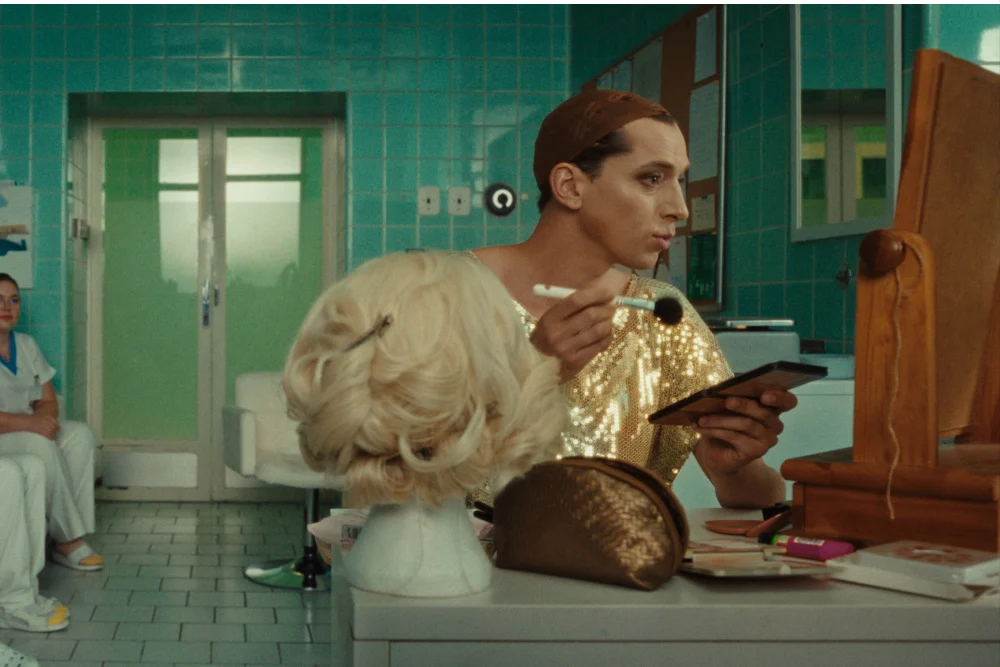
The narrative catalyst occurs when her adult son, Lukáš (Jan Cina), returns from his life in France for an extended visit. The ensuing tension, rooted in a sudden, accidental disclosure of Lukáš’s sexuality and his secret life as a drag performer, serves as the film’s primary emotional engine. However, throughout its runtime, the film remains resolutely committed to a narrative arc where the audience is never left in doubt that a saccharine, harmonious resolution is inevitable.
Chronology of Narrative Stumbles
The narrative development of Chica Checa is marked by a series of temporal and logical inconsistencies that undermine the audience’s immersion. The film introduces Zdena as a woman of profound isolation, supposedly reclusive since the passing of her husband years prior. Yet, the film’s opening sequence finds her at a local dance, and she is later seen attending a bustling house party. These small but nagging contradictions suggest a lack of structural rigor, leaving viewers to wonder if the script’s primary concern was coherence or mere convenience.
The interaction between Zdena and Lukáš, following his coming-out, serves as the most prominent example of the film’s "will-this-do" approach to screenwriting. After a tense evening where Zdena inadvertently employs a homophobic slur, leading to Lukáš’s revelation, the two characters wake up the next morning as if the previous night’s trauma never occurred. While one could argue that this represents an attempt at radical forgiveness, the transition feels less like a profound character beat and more like a failure of narrative follow-through. The film suggests that people are simply "too nice" to sustain conflict, a premise that might function in a high-concept screwball comedy but feels jarringly thin in a drama ostensibly dealing with the weight of generational prejudice.
Supporting Data: Technical and Aesthetic Shortcomings
The formal execution of Chica Checa faces similar challenges. The film is plagued by a visual and aesthetic inconsistency that frequently distracts from the performances. The costume design, for instance, leans toward a garish, overly saturated palette more common in budget television programming than in feature-length cinema.
Furthermore, the cinematography is occasionally marred by the inexplicable use of wide-angle lenses in intimate, dialogue-driven scenes. These choices, which distort the frame without serving a clear narrative purpose, contribute to the sense that the film is unfinished or hurried. When potential sources of tension do arise—such as a sudden, out-of-character tantrum thrown by Lukáš—they are presented with such clumsy artifice that they evoke the feeling of an educational training video rather than a lived-in cinematic moment.
The Performance Gap: Tomicová vs. Cina
The tonal instability of Chica Checa is most evident in the contrasting acting styles of its leads. Pavla Tomicová, tasked with embodying the "sunny disposition" that resolves every narrative crack, opts for a performance of wide-eyed, almost performative meekness. Her interpretation of Zdena is so mannered that it pulls the film toward a state of constant artifice, making it difficult for the audience to believe in the depth of her character’s internal transformation.
In contrast, Jan Cina delivers a grounded, naturalistic performance as Lukáš. Cina carries the emotional weight of the film, conveying the higher stakes of a son navigating his identity in a conservative environment. The friction between Tomicová’s stylized, theater-esque performance and Cina’s grounded realism creates a disjointed experience. Had the director opted for a more stylized, screwball aesthetic throughout, this combination might have found a successful rhythm. As it stands, the film exists in an uneasy middle ground that satisfies neither the desire for poignant drama nor the requirements of a pure comedy.
Implications: The Dangers of Relentless Positivity
Perhaps the most significant critique of Chica Checa lies in its well-intentioned but glib handling of social issues. The film is clearly designed to normalize LGBTQ+ identities for older, perhaps more traditional, Czech audiences. By showing that "love overcomes all," Holý aims to bridge a cultural divide. However, there is a dangerous line between optimistic representation and the trivialization of real-world prejudice.
The film relies on the conceit that Zdena’s small, brave acts—such as telling a village acquaintance about her son’s boyfriend—are sufficient to dismantle deep-seated homophobia. By focusing only on the "harmless little quips" of the villagers, the film avoids the much harder, more necessary questions about what happens when intolerance meets genuine resistance. It presents a sanitized, "best-case scenario" version of acceptance that ignores the structural and emotional labor required for real social progress.
Conclusion: A Lost Opportunity
Ultimately, Chica Checa stands as a cautionary tale of "low-effort delight." While there is a place in cinema for pleasant, life-affirming stories that prioritize warmth over grit, such films require a level of formal precision and tonal consistency that this project lacks. By attempting to straddle the line between an arthouse festival entry and a commercial crowd-pleaser, the film fails to commit to either.
The result is a work that feels too clumsy to be poignant and too uneven to be truly entertaining. While it may resonate with a local audience looking for a familiar, non-threatening narrative, those seeking a nuanced exploration of the human condition or a meaningful dialogue on generational change will likely find themselves underwhelmed. Chica Checa promises a heartfelt look at the resilience of family, but it delivers a script that is more interested in avoiding friction than in examining the truths that lie beneath it. For Šimon Holý, the film serves as a reminder that even the most well-meaning stories require a firm, consistent hand to truly leave a lasting impression on their audience.