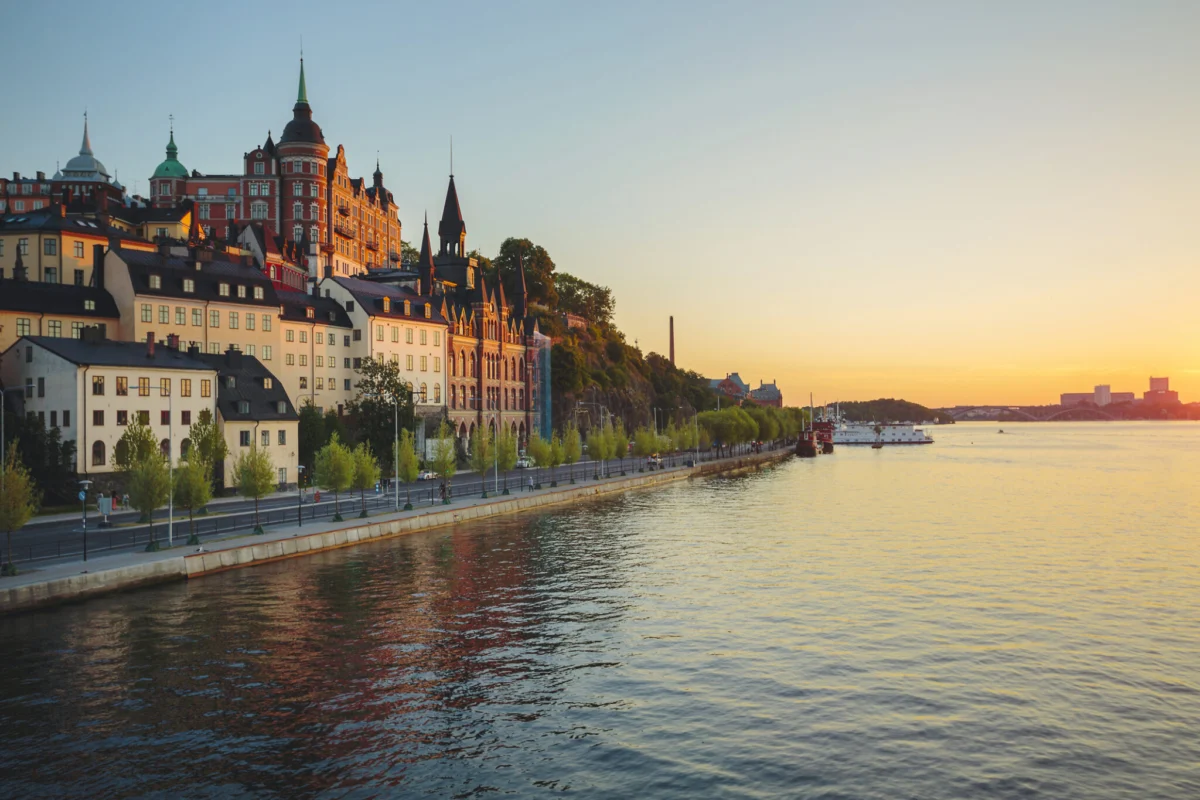
For years, the global narrative surrounding Sweden’s tech sector was anchored by a few singular, albeit monumental, success stories: the music-streaming revolution of Spotify and the fintech disruption spearheaded by Klarna. While these "unicorns" cemented Stockholm’s reputation as a legitimate player on the international stage, recent developments suggest that the region has evolved from a collection of isolated successes into a self-sustaining, high-velocity innovation engine.
From the rise of "vibe-coding" tool developer Lovable to the legal-tech agility of Legora, Sweden is currently experiencing a profound shift in its entrepreneurial DNA. As the nation—consistently ranked among the world’s happiest—repositions itself as a global tech powerhouse, industry analysts and venture capitalists are asking a single, pivotal question: What is fueling this latest wave of Swedish ingenuity?
The Cultural Pivot: When Being a Founder Became "Cool"
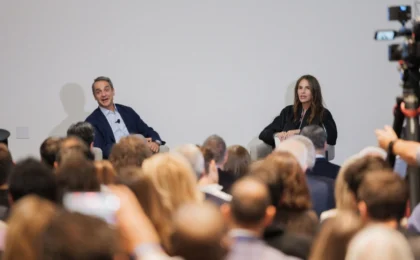
To understand the current surge, one must look beyond the balance sheets and into the changing aspirations of the Swedish workforce. Sophia Bendz, a general partner at Cherry Ventures and a veteran of the early Spotify era, recently joined the Equity podcast to provide a granular breakdown of this cultural metamorphosis.
"When I worked at Spotify years ago, the ‘cool’ path was to become a banker or go into high-end consulting," Bendz explains. "Now, I think a lot of people optimize for creating stuff, optimizing for both personal freedom and, quite frankly, wealth creation."
This shift in prestige is arguably the most significant factor in the country’s startup renaissance. Entrepreneurship is no longer viewed as a risky alternative to a corporate career; it is the aspirational standard for Sweden’s brightest minds. By prioritizing the autonomy of "building" over the rigid hierarchies of traditional finance, a new generation of Swedish talent is fostering a culture of rapid iteration and bold ambition.
The Chronology of a Tech Hub
Sweden’s ascent into the top tier of global tech hubs was not an overnight occurrence. It has been a decades-long trajectory marked by distinct phases of maturity.
The Foundation Era (2006–2015)
This period was defined by the birth of the "Stockholm School of Entrepreneurship." With the launch of Spotify (2006) and the subsequent rise of companies like Klarna, Sweden began to prove that it could produce software at a scale that competed with Silicon Valley. This era created a blueprint for success, demonstrating that Swedish startups could operate globally from day one.
The Peak and Correction (2016–2022)
The ecosystem experienced a massive inflow of capital, culminating in a record-breaking $8.5 billion in funding in 2021. This was the "hot market" era, where valuation multiples soared, and capital was seemingly boundless. However, as the global venture market cooled in 2022 and 2023, the Swedish ecosystem faced the same headwinds as the rest of the world, leading to a period of consolidation and a shift in focus from "growth at all costs" to sustainable, product-led innovation.
The Maturity and Acceleration Phase (2023–Present)
We are currently in a new cycle. Despite the macroeconomic volatility of the last two years, the market is heating back up. The current wave is not just about raw funding; it is about the "pay-it-forward" model of mentorship, where the founders of the previous generation are actively nurturing, funding, and founding the next wave of startups.
Supporting Data: By the Numbers
The metrics support the anecdotal evidence provided by market observers. According to data from Dealroom, the Swedish startup ecosystem has already secured $2.8 billion in funding for the current year. With projections suggesting the total will hit at least $5 billion, the ecosystem is showing remarkable resilience in a post-peak market.
| Year | Funding Raised (USD) | Market Context |
|---|---|---|
| 2021 | $8.5 Billion | Peak "Hot Market" Bubble |
| 2022 | $4.2 Billion | Market Correction Initiated |
| 2023 | $3.2 Billion | Stabilization |
| 2024 (Projected) | $5.0+ Billion | Renewed Growth & Maturation |
The data reveals that while the 2021 peak remains an outlier driven by low interest rates and high liquidity, the current trajectory is arguably more sustainable. The capital flowing into the region today is being deployed into high-potential, specialized verticals—such as autonomous freight (Einride) and health-tech (Neko Health)—rather than the speculative ventures that dominated the previous cycle.
The "Multiplier Effect": Mentorship and Repeat Founders
Perhaps the most critical indicator of a mature startup ecosystem is the presence of "multipliers"—entrepreneurs who, after a successful exit, return to the ecosystem to invest, mentor, and start again.
Sweden has this in abundance. Spotify founder Daniel Ek, for example, has moved beyond his initial success to spearhead Neko Health, a company leveraging advanced sensor technology and AI to revolutionize preventative healthcare. This behavior is symptomatic of a broader trend: the "Spotify Mafia" and their peers are creating a cyclical economy of knowledge.
"I think we also see a lot of people now kind of leaving [companies like] Lovable because they also see these opportunities for companies that can be built with that technology," Bendz notes. "People that have worked at Lovable and Legora seem to be very entrepreneurial-driven and keen to start their own companies."
This "employee-to-founder" pipeline is the hallmark of a healthy ecosystem. It ensures that the knowledge gained at one high-growth startup is not lost, but rather transplanted into new, nascent ventures, effectively lowering the barrier to entry for the next generation of founders.
Official Perspectives: The International Verdict
The global investment community has taken notice of this compounding success. American investors, who were once reticent to look beyond the Bay Area or New York, are increasingly booking flights to Stockholm, eager to secure their place on the cap tables of Swedish companies.
For Sophia Bendz, this international attention is the ultimate validation. "More and more American investors have been flying in to meet with founders and hand out term sheets," she says. "It’s just a testament that we have a lot of great building companies here. It’s a sign that we’re doing something right."
The influx of foreign capital is not merely a source of liquidity; it acts as a seal of approval. When top-tier global venture capital firms deploy resources into the Stockholm ecosystem, they bring with them global networks, talent acquisition strategies, and the operational rigor necessary to take Swedish startups from local success to global dominance.
Implications: What Lies Ahead for Stockholm?
The implications of Sweden’s current trajectory are significant for both the Nordic region and the global tech industry.
1. The Decentralization of Tech Power
Stockholm is proving that world-class tech hubs do not require the sprawl of Silicon Valley. By leveraging a high quality of life, a robust education system, and a culture that encourages risk-taking, Sweden is creating a model for how mid-sized nations can compete with superpowers.
2. A Shift Toward "Deep Tech"
The emergence of companies like Einride (autonomous transport) and Neko (preventative health) suggests a pivot away from purely software-as-a-service (SaaS) models toward "Deep Tech"—solutions that require deep R&D and physical infrastructure. This is a harder, more capital-intensive path, but one that creates deeper "moats" and long-term economic stability.
3. Sustainability as a Competitive Advantage
Swedish companies have long prioritized ESG (Environmental, Social, and Governance) standards. As the global market increasingly demands sustainable business models, Swedish startups are finding that their inherent focus on ethical and environmental impact is no longer just a "nice-to-have"—it is a key differentiator that attracts both talent and capital.
Conclusion
Sweden has successfully navigated the transition from a tech curiosity to a central node in the global innovation network. By fostering a culture where the "founder" is the new hero, and by building a self-sustaining cycle of mentorship and reinvestment, the country has solidified its position as one of the most vibrant startup hubs on the planet.
As the ecosystem moves toward a projected $5 billion funding year, the story of Swedish tech is no longer just about the giants of the past like Spotify. It is about the new wave—the vibe-coders, the legal-tech pioneers, and the health-tech visionaries—who are proving that in the world of innovation, the happiest countries are often the ones building the fastest.