In the global race to transition toward a decarbonized economy, green hydrogen has emerged as a linchpin. By utilizing renewable electricity to split water into hydrogen and oxygen via electrolysis, the process offers a clean, versatile fuel source. However, the path to a "hydrogen economy" has been obstructed by a formidable barrier: the prohibitive cost of infrastructure. Now, a breakthrough from the University of Hong Kong (HKU) promises to shatter this bottleneck.
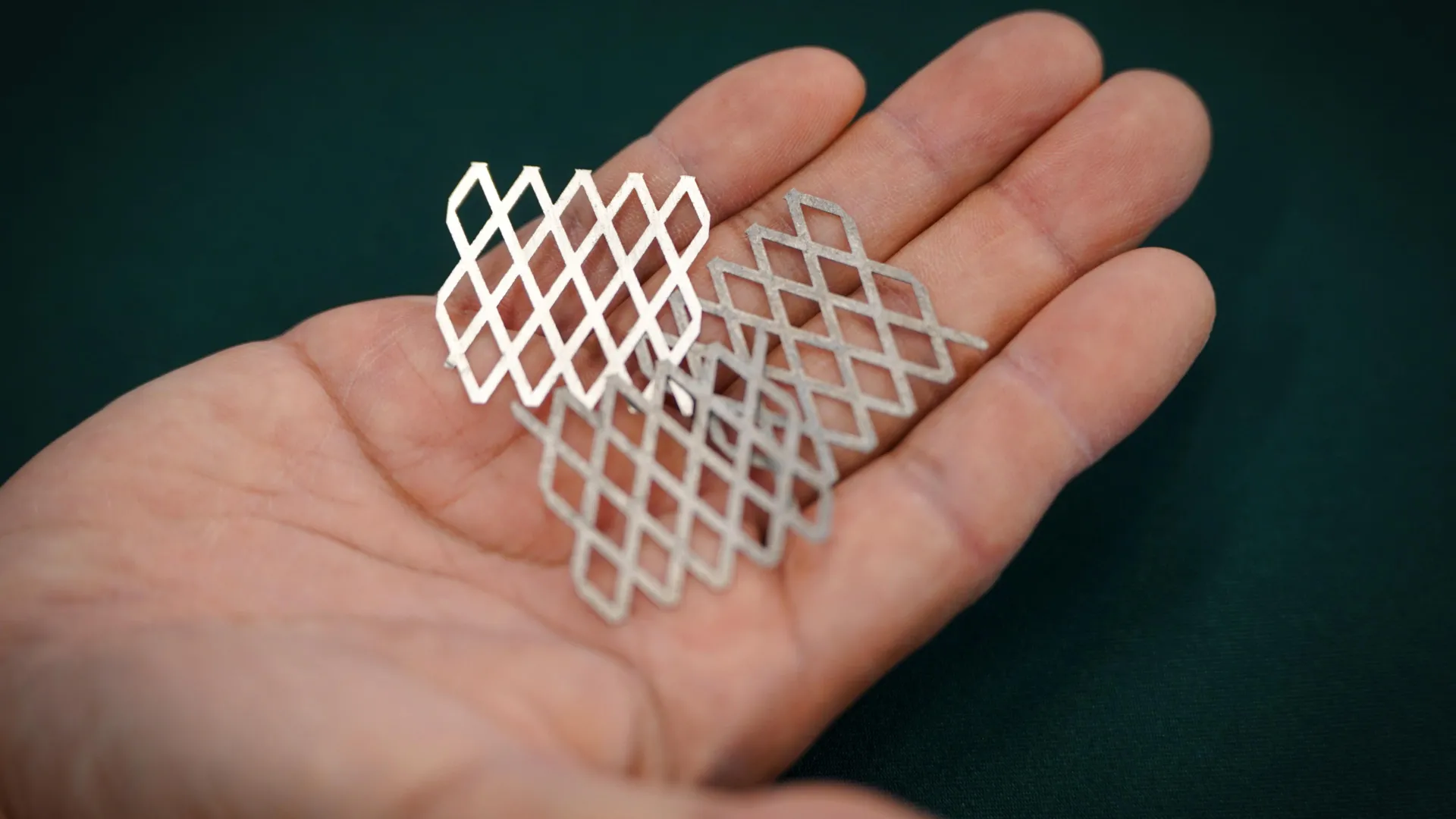
A research team led by Professor Mingxin Huang of the Department of Mechanical Engineering has developed a revolutionary stainless steel variant, dubbed "SS-H2." This material, specifically engineered to withstand the punishing electrochemical environments of seawater electrolysis, offers performance levels comparable to precious-metal-coated titanium while potentially slashing structural material costs by a factor of 40.
The Chronology of an Atomic Discovery
The development of SS-H2 is the latest milestone in Professor Huang’s "Super Steel" Project, a long-running initiative dedicated to pushing the boundaries of metallurgical science. The project’s history reflects a consistent pattern of challenging conventional wisdom.
In 2017 and 2020, Huang’s team made international headlines by developing forms of super steel that exhibited unprecedented combinations of strength and ductility. By 2021, the team demonstrated their versatility by engineering a version of stainless steel with inherent anti-COVID properties.
The journey toward SS-H2 began nearly six years ago. Unlike standard metallurgical research, which often focuses on maintaining integrity under "natural" atmospheric potentials, Huang’s team pivoted toward the study of high-potential electrochemical environments. Over the course of nearly half a decade, the researchers grappled with an anomaly: a material that defied the established rules of corrosion science. What started as a laboratory observation evolved into an atomic-level investigation to understand why this specific alloy remained stable where all others failed.
The study, titled "A sequential dual-passivation strategy for designing stainless steel used above water oxidation," was recently published in the journal Materials Today. Having already secured two authorized patents, the team is now moving from theoretical discovery to industrial-scale manufacturing.
Breaking the 100-Year Barrier: Why Conventional Steel Fails
To understand the magnitude of this discovery, one must look at the fundamental chemistry of stainless steel. For roughly a century, stainless steel has relied on a thin, passive film of chromium oxide (Cr₂O₃) to protect the underlying metal from rust and degradation.
However, this protection has a critical threshold. When exposed to high electrical potentials—such as those required for industrial water electrolysis—this chromium-based film undergoes a chemical transition. It oxidizes further into soluble Cr(VI) species, leading to a phenomenon known as "transpassive corrosion."
In conventional stainless steel, this degradation typically sets in at approximately 1000 mV (millivolts). The problem, however, is that the electrochemical process of water oxidation requires a potential of roughly 1600 mV. Consequently, even high-end, corrosion-resistant alloys like 254SMO—the current benchmark for seawater resistance—succumb to failure long before the electrolysis process can be completed. This fundamental mismatch has, until now, forced engineers to rely on expensive, titanium-based components coated in noble metals like gold or platinum to survive the harsh, saline conditions of water electrolyzers.
The "Sequential Dual-Passivation" Paradigm
The HKU team’s breakthrough lies in a phenomenon they have termed "sequential dual-passivation." By precisely manipulating the alloy’s composition, the researchers created a material that develops a secondary protective barrier on top of the traditional chromium oxide layer.
This second layer, primarily composed of manganese, begins to form at approximately 720 mV. Together, the chromium and manganese layers provide a robust, multi-tiered defense system. This architecture allows the steel to resist corrosion in chloride-rich environments—the primary enemy of marine-grade metals—at electrical potentials reaching 1700 mV. By surpassing the 1600 mV threshold required for water oxidation, SS-H2 effectively opens the door to using seawater as a feedstock for hydrogen production without the need for the costly, energy-intensive desalination processes currently required.
Perhaps most significantly, this discovery challenges a long-standing dogma in metallurgy. "Initially, we did not believe it because the prevailing view is that Mn [manganese] impairs the corrosion resistance of stainless steel," notes Dr. Kaiping Yu, the study’s first author. "Mn-based passivation is a counter-intuitive discovery, which cannot be explained by current knowledge in corrosion science. However, when numerous atomic-level results were presented, we were convinced."
Economic Implications: A 40-Fold Cost Reduction
The financial implications of this innovation are profound. Proton Exchange Membrane (PEM) electrolysis, the current gold standard for high-efficiency hydrogen production, is currently hampered by extreme capital expenditure.
In a typical 10-megawatt PEM electrolyzer system, the cost can reach approximately HK$17.8 million. Structural components alone can account for up to 53% of that total. Currently, these systems rely on titanium components that are prohibitively expensive to produce and maintain.
Professor Huang’s team estimates that by substituting these titanium-based components with their newly developed SS-H2, the cost of structural materials could be reduced by roughly 40 times. This reduction could serve as the "tipping point" needed to make green hydrogen commercially competitive with fossil-fuel-derived hydrogen, which currently dominates the market due to its lower production costs.
From Laboratory to Industrial Scaling
While the laboratory results are groundbreaking, the transition to industry is the final, most rigorous test. Industrial electrolysis requires more than just high-performance alloys; it requires the material to be shaped into complex forms, such as high-surface-area meshes and porous foams, to maximize the rate of hydrogen evolution.
The HKU team has already moved to bridge this gap. They have partnered with a manufacturing facility in Mainland China to produce tons of SS-H2-based wire, a critical first step in proving that the alloy can be mass-produced without losing its unique electrochemical properties.
"Different from the current corrosion community, which mainly focuses on the resistance at natural potentials, we specialize in developing high-potential-resistant alloys," Professor Huang explains. "Our strategy overcame the fundamental limitation of conventional stainless steel and established a paradigm for alloy development applicable at high potentials. This breakthrough is exciting and brings new applications."
Future Outlook: Seawater as the Future of Fuel
The potential for SS-H2 extends far beyond the laboratory. As nations scramble to reach "Net Zero" targets, the ability to utilize seawater—an abundant, inexhaustible resource—for hydrogen production is a strategic imperative. If SS-H2 can maintain its structural integrity over the thousands of hours required for industrial electrolyzer operation, it could fundamentally alter the cost-benefit analysis of green hydrogen energy projects.
The research team is now focused on the practical engineering challenges of scaling production. This includes ensuring that the material retains its dual-passivation properties when fabricated into the specific architectures required for large-scale electrolyzer stacks.
If the technology successfully clears these remaining hurdles, the SS-H2 project will stand as a testament to the power of fundamental material science. By turning a perceived "weakness" of manganese into a cornerstone of a new protective technology, the HKU team has not only rewritten the textbooks on corrosion science but has potentially provided the world with the key to unlocking affordable, sustainable, and truly green hydrogen.
As the world looks for scalable solutions to the climate crisis, the marriage of seawater, renewable energy, and this innovative, cost-effective steel may prove to be the most promising path forward yet.