By Editorial Staff
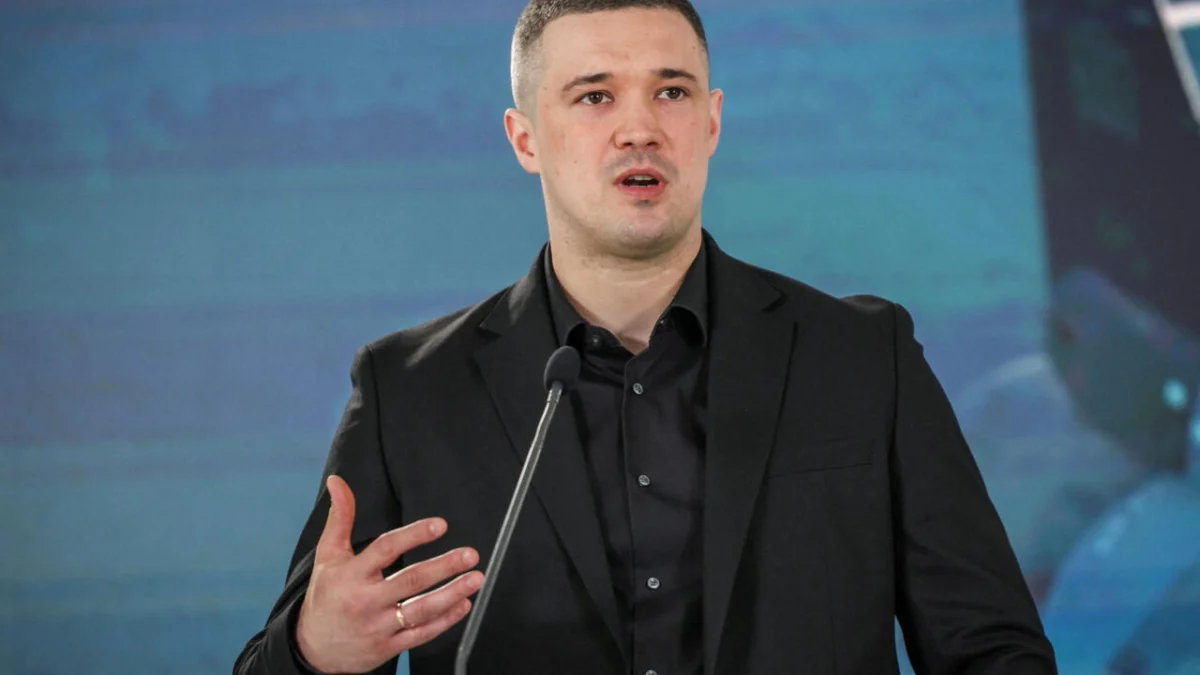
In a significant political development that signals a new chapter for Kyiv’s wartime leadership, Ukrainian Defence Minister Mykhailo Fedorov announced his resignation on Wednesday. His departure is part of a sweeping cabinet reshuffle initiated by President Volodymyr Zelensky, which also saw Prime Minister Yulia Svyrydenko step down from her post just one day earlier. As Ukraine navigates a complex and attritional phase of the ongoing conflict with Russia, this leadership pivot reflects an urgent desire within the presidential administration to revitalize the nation’s defense apparatus and government efficiency.
The Resignation and Immediate Context
The announcement, delivered via a detailed post on Telegram, marked the end of a high-impact, if brief, tenure for Fedorov. Having assumed the role in January of this year, the 35-year-old minister was tasked with modernizing the Ukrainian military-industrial complex and accelerating the integration of new technologies into the battlefield.
"It was a great honour to serve the Ukrainian people as defence minister," Fedorov wrote in his farewell address. His statement did not focus on the circumstances of his departure, but rather on a retrospective of his ministry’s achievements. By cataloging his successes—ranging from the industrial scaling of drone manufacturing to the implementation of systematic army reforms—Fedorov sought to frame his exit not as a failure, but as the conclusion of a specific phase of strategic development.
The timing of his resignation is inextricably linked to the broader restructuring of the Cabinet of Ministers. On Tuesday, the Verkhovna Rada, Ukraine’s parliament, officially approved the resignation of Prime Minister Yulia Svyrydenko. Her exit, following a year in office, has triggered a domino effect across the government, prompting speculation that President Zelensky is seeking a more agile and tech-focused cabinet to confront the evolving challenges of the war.
Chronology: A Rapid Rise and a Strategic Exit
To understand the weight of Fedorov’s departure, one must look at his rapid ascent and the specific milestones that defined his brief but influential term.
- January 2026: Mykhailo Fedorov is appointed Defence Minister, becoming the youngest person to hold the office in Ukrainian history. His mandate is clear: modernize the military’s logistics and embrace asymmetric warfare.
- Early 2026: Fedorov prioritizes the expansion of domestic drone production. Under his tenure, the ministry streamlined procurement processes, allowing for a surge in FPV (First Person View) and reconnaissance drone deployment.
- Spring 2026: Reports emerge of successful initiatives to optimize Starlink connectivity, ensuring frontline units maintain communication while working to mitigate Russian exploitation of satellite assets.
- July 14, 2026: Prime Minister Yulia Svyrydenko resigns, signaling the start of a major government reshuffle.
- July 15, 2026: Mykhailo Fedorov announces his resignation on Telegram, marking the second high-profile departure in 48 hours.
Technological Legacy: Drones and Starlink
Fedorov’s tenure will be remembered primarily for his role in the "technologization" of the Ukrainian army. Long before becoming Defence Minister, he was a staunch advocate for the digital transformation of government services. When he stepped into the Ministry of Defence, he brought that same philosophy to the front lines.
The Drone Revolution
Under Fedorov’s guidance, Ukraine moved away from purely Western-reliant procurement to a decentralized, high-volume domestic drone production model. By fostering partnerships between the military and private tech incubators, he enabled the rapid scaling of unmanned aerial vehicles (UAVs). These assets have become the "eyes and ears" of the Ukrainian infantry and, increasingly, their most potent offensive weapon against Russian armor and logistics hubs.
The Starlink Connection
Fedorov’s diplomatic work with the private sector, specifically with Elon Musk’s SpaceX, proved critical to the continuity of Ukrainian command and control. Navigating the delicate balance between commercial interests and military necessity, Fedorov worked to ensure that Ukrainian troops had uninterrupted access to the Starlink satellite constellation. His efforts to secure this connectivity, and his simultaneous work to identify and disable unauthorized Russian usage of Starlink terminals in occupied territories, remain some of the most significant logistical victories of the year.

Official Responses and Political Implications
The presidential office has maintained a measured tone regarding the reshuffle. President Zelensky’s administration has characterized the moves as a necessary step to "refresh the energy" of the state machinery. Analysts suggest that while Fedorov’s resignation was voluntary, it is part of a larger plan to align the cabinet with the long-term demands of a protracted conflict.
Parliamentary leaders have expressed a willingness to move quickly on the transition. While the official successor has not been named by the President, rumors in Kyiv are swirling around the current Interior Minister, Igor Klymenko. Klymenko, a seasoned official with deep experience in law enforcement and domestic security, is viewed as a "safe pair of hands" to manage the defense ministry during this transition period.
The opposition and international observers are watching the reshuffle closely. For Ukraine’s allies, particularly in the West, stability in the Ministry of Defence is vital for the continued flow of military aid and the oversight of complex procurement programs. The international community will be looking for a seamless transition to ensure that the momentum in defense reform is not lost.
Supporting Data: The State of the Ministry
As of July 2026, the Ministry of Defence has undergone significant structural shifts:
- Procurement Transparency: The ministry successfully implemented a digital platform for tracking defense contracts, a response to previous corruption scandals that plagued the agency in earlier years of the war.
- Mobilization Reform: While controversial, the ongoing efforts to digitize the military registry—a project Fedorov heavily supported—have begun to yield more accurate data on the reserve force, which is essential for long-term strategic planning.
- Asymmetric Defense: The shift toward decentralized drone warfare has reportedly reduced the reliance on heavy artillery in certain sectors, allowing for more flexible tactical engagements.
The Road Ahead: What This Means for Ukraine
The departure of a figure as central as Fedorov raises questions about the future of his initiatives. Will the focus on drone innovation remain a primary pillar of the ministry’s strategy? Or will a new minister prioritize different aspects of the military apparatus, such as air defense or long-range strike capabilities?
The reshuffle suggests that President Zelensky is prioritizing a more integrated approach to national security, perhaps blurring the lines between domestic security—the purview of the Interior Ministry—and traditional defense. By potentially tapping Klymenko, the administration may be aiming to synchronize domestic stability and frontline logistics more effectively.
Moreover, the resignation of a Prime Minister and a Defence Minister in such quick succession serves as a powerful signal to the Ukrainian public and the international community: the war has entered a new phase, and the government must evolve to match it. The "new energy" that the administration speaks of is not merely a change in personnel; it is a recalibration of the state’s war footing.
As Ukraine prepares for the coming months, the focus will remain on the front lines. However, the political theater in Kyiv is currently the main event. Whether this restructuring leads to greater battlefield success or simply creates a period of administrative turbulence remains to be seen. For now, the departure of Mykhailo Fedorov marks the end of a pivotal chapter, leaving behind a military that is significantly more tech-oriented than the one he inherited in January.
The coming days will be critical. The confirmation of new cabinet members and the subsequent policy directives from the President will define the trajectory of Ukraine’s defense policy for the remainder of 2026. As the conflict continues to test the limits of national endurance, the reshuffle stands as a testament to the fact that, in wartime, the only constant is change.