For decades, the scientific community operated under a fundamental assumption: that the degradation of natural, microbially-produced plastics was a niche process restricted exclusively to the realm of bacteria and archaea. We viewed these microorganisms as the solitary custodians of the planet’s carbon cycle, responsible for breaking down polyhydroxyalkanoates (PHAs)—the energy-dense, plastic-like compounds that microbes synthesize as storage reserves.
However, a groundbreaking study published in the journal Nature Ecology & Evolution has shattered this long-held paradigm. Researchers from the Max Planck Institute for Marine Microbiology in Bremen, Germany, have revealed that a vast array of animals—from deep-sea marine worms to common earthworms—possess the specialized enzymatic toolkit required to dismantle these bioplastics. This discovery suggests that animals have been tapping into these microbial "batteries" for hundreds of millions of years, fundamentally altering our understanding of how carbon flows through the Earth’s food webs.
The Chronology of a Biological Breakthrough
The path to this discovery was neither linear nor expected; it began with the study of a biological outlier.
The Gutless Worm as a Catalyst
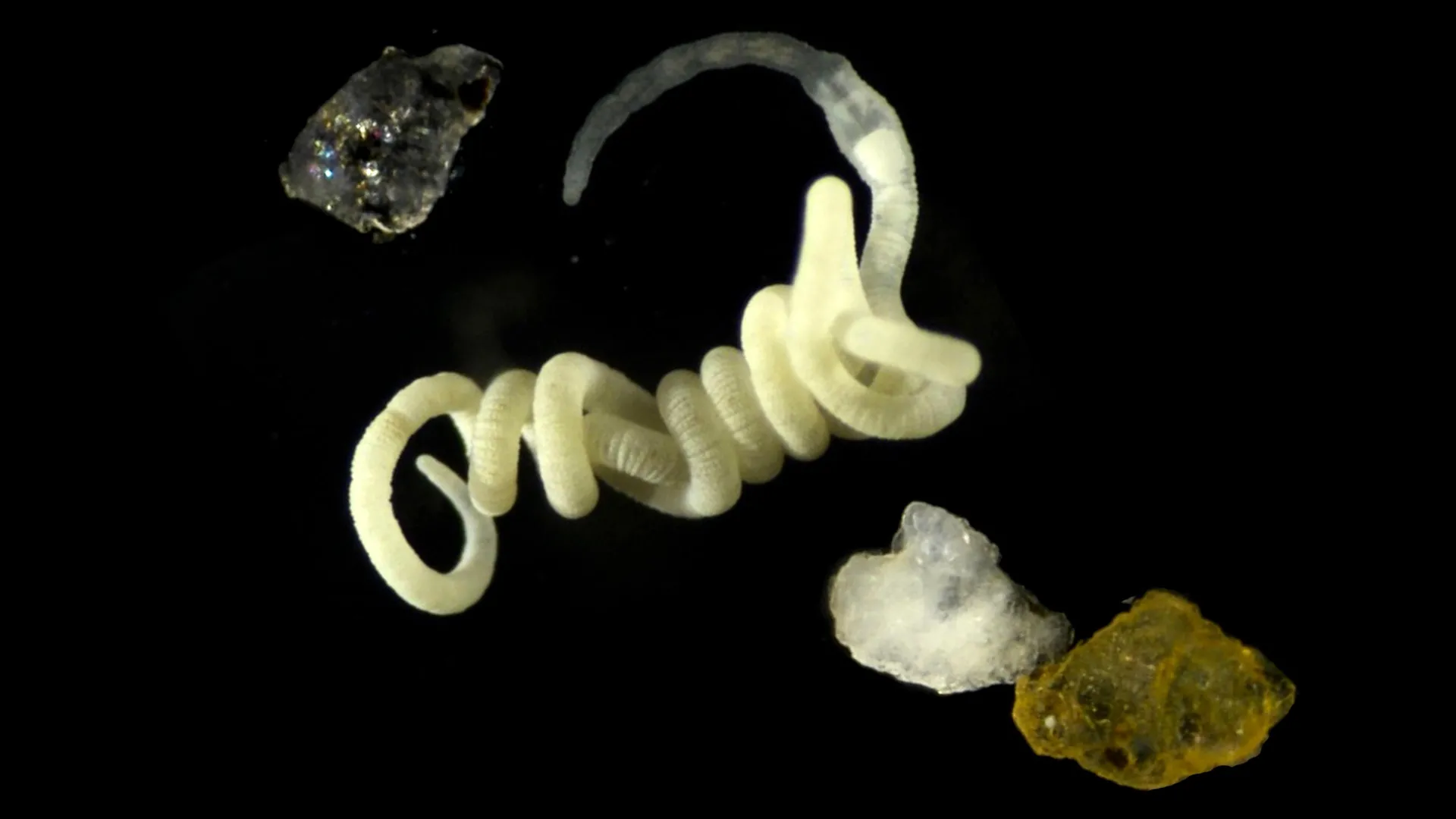
The investigation centered on Olavius algarvensis, a marine worm characterized by its lack of a mouth, gut, or anus. To survive, this organism relies entirely on a symbiotic relationship with bacteria living beneath its skin. The worm provides a home for these microbes, and in exchange, it digests them to derive nutrition.
Dr. Nicole Dubilier, Director at the Max Planck Institute and the study’s corresponding author, noticed that the worm’s symbiotic bacteria were packed with PHA granules. These granules serve as a carbon and energy cache for the bacteria, much like fat reserves in mammals. The team began to hypothesize: if the worm feeds on these bacteria, could it have evolved a way to access the high-energy "plastic" stored within them?
From Single Species to Universal Capability
Upon further examination, the team identified a specific enzyme within Olavius algarvensis capable of breaking down PHAs into metabolically usable molecules. High-resolution imaging confirmed that this enzyme was produced exactly where the worm digests its bacterial partners, proving the worm was indeed "eating" the plastic.
The researchers then widened their scope, performing a genomic analysis of animal life across the tree of life. What they found was staggering. The ability to degrade PHAs was not a quirk of a single, highly specialized marine worm; it was a widespread biological capability. The team identified related enzymes in more than 66 species spanning nine different animal phyla. From sponges and earthworms to springtails, the evidence suggested that the capacity to digest microbial bioplastics is a deep, ancient, and pervasive trait in the animal kingdom.
Supporting Data: The Ubiquity of PHA Degradation
The significance of this study is bolstered by the breadth of the findings. Laboratory experiments conducted by the Max Planck team demonstrated that enzymes extracted from distantly related animals—species that have not shared a common ancestor for hundreds of millions of years—were all effective at breaking down microbial PHAs.
Understanding PHAs
Polyhydroxyalkanoates (PHAs) are linear polyesters produced in nature by bacterial fermentation of sugars or lipids. They are, in essence, nature’s answer to plastic. Industrially, they are harvested by growing bacteria in large fermentation tanks, where the microbes are fed carbon-rich substrates until they become engorged with PHA granules.
These natural bioplastics are highly desirable for their versatility:
- Physical Properties: They are moldable, water-resistant, and thermally stable.
- Applications: They are currently used in agriculture for controlled-release fertilizer beads, in medicine for resorbable surgical sutures and drug delivery implants, and in eco-friendly food packaging.
- Circular Economy: Because they are biologically produced and biodegradable, they are viewed as a sustainable alternative to fossil-fuel-based plastics.
However, the new research adds a vital layer to this: PHAs are not just an industrial commodity; they are a pervasive natural resource. They exist in soils, marine sediments, and aquatic environments worldwide, representing a massive, untapped carbon reserve that researchers previously believed was inaccessible to higher organisms.
Official Responses and Expert Perspective
The research team, led by Dr. Nicole Dubilier and first author Caroline Zeidler, emphasizes that this discovery bridges a gap between the microscopic world and the macroscopic food web.
"This was the real surprise," said Caroline Zeidler, describing the moment the team realized the scope of their discovery. "What started as a discovery in a single marine worm turned out to be a widespread capability shared by animals from very different branches of the tree of life."
Dr. Maggie Sogin, a co-corresponding author on the study and now an Assistant Professor at the University of California, Merced, highlights the paradigm shift in carbon cycling. "Our study changes our understanding of who can use these microbial carbon stores," Sogin stated. "Animals have probably been feeding on nature’s original bioplastic for hundreds of millions of years—we’re only discovering it now."
The consensus among the researchers is that the scientific community underestimated the evolutionary pressure on animals to exploit every possible energy source. Because bacteria are ubiquitous, their PHA reserves represent a reliable, high-energy food source that would have been a significant evolutionary advantage for any animal capable of unlocking it.
Broader Implications for Science and Sustainability
The revelation that animals possess the machinery to digest bioplastics has profound implications for several fields, ranging from environmental science to industrial biotechnology.
Re-evaluating the Global Carbon Cycle
Scientists are now faced with the task of quantifying the impact of this "hidden" pathway. How much of the carbon sequestered by microbes is actually consumed by animals through PHA digestion? If animals are significantly contributing to the breakdown of these compounds in nature, our current models of the global carbon cycle may be incomplete. This research suggests that the flow of energy from bacteria to higher organisms is more complex than a simple predator-prey relationship; it involves a sophisticated, enzymatic unlocking of chemical reserves.
Future Perspectives on Bioplastic Waste
While the study focuses on naturally occurring PHAs, the findings may also provide insights into the future of waste management. As the demand for biodegradable, bio-based materials grows, the global production of PHA-based plastics is expected to rise. Understanding how these enzymes function—and how widespread they are in nature—could help scientists engineer better ways to handle industrial plastic waste or develop more efficient bioremediation strategies.
The Power of "Unusual" Biology
Finally, the study underscores the importance of researching non-model organisms. By focusing on Olavius algarvensis—a worm that defies conventional biology—the team uncovered a mechanism that likely exists in thousands of other species. This reinforces the idea that the most profound biological discoveries often hide in the most unconventional corners of the planet.
Conclusion
The discovery that animals are active participants in the breakdown of microbial bioplastics is a reminder of how little we truly understand about the hidden biological processes sustaining our planet. For millions of years, an invisible bridge of enzymatic activity has connected the microbial world to the animal kingdom, allowing life to harness the energy of nature’s own plastic.
As we move toward a future that relies more heavily on bioplastics, the work of the Max Planck Institute provides both a scientific foundation and a cautionary lesson: nature has been managing its own plastic waste and energy cycles for eons. By learning from the silent, efficient pathways of the deep sea and the soil, humanity may finally be able to align its industrial practices with the elegant, circular systems that have governed life on Earth since the dawn of time.