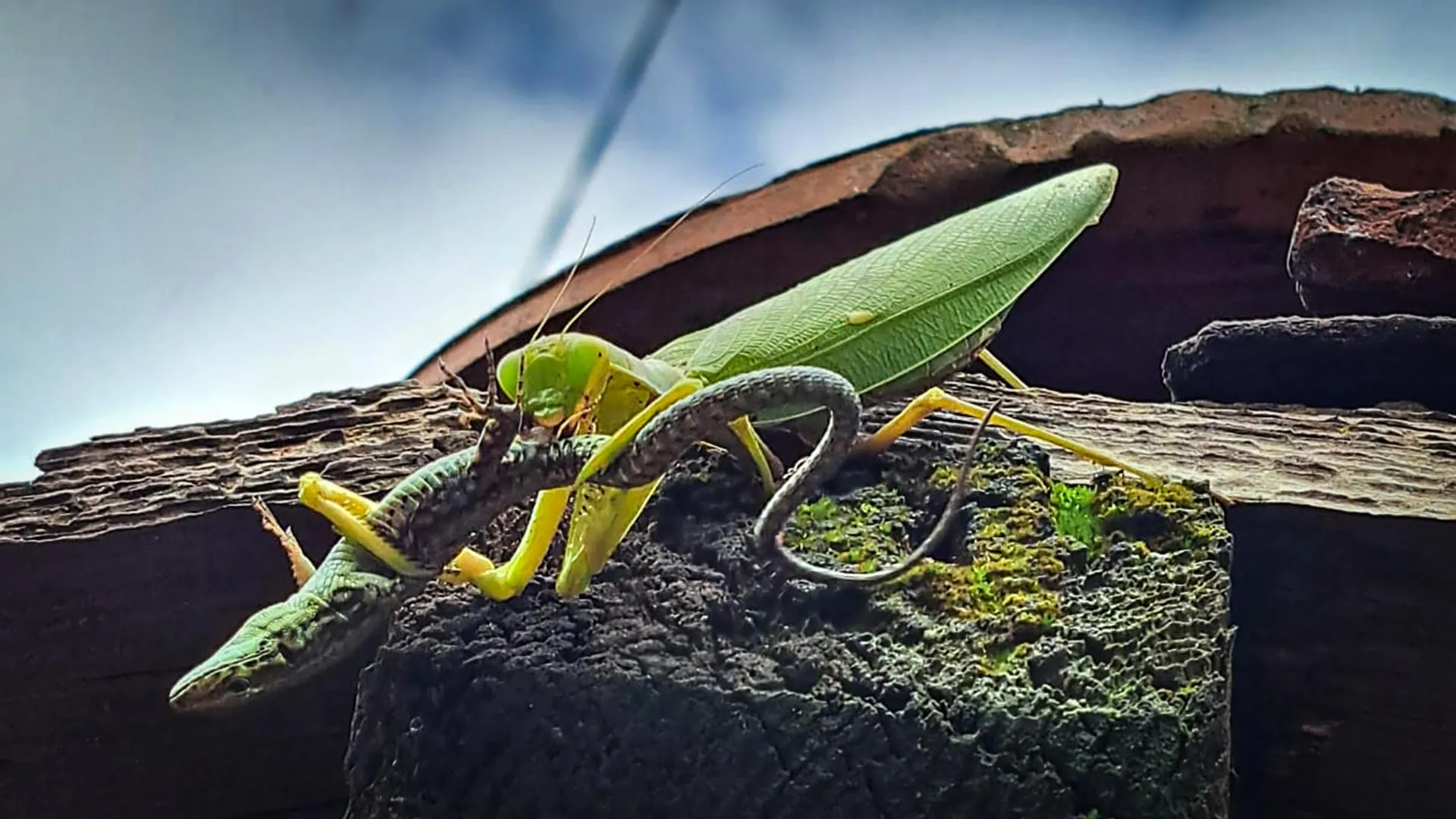
For centuries, the praying mantis has occupied a unique space in the human imagination. Across diverse cultures, these predatory insects have been cast as everything from mystical, benevolent guides capable of leading lost travelers home to ominous harbingers of misfortune. Yet, beyond the tapestry of folklore, these creatures serve a vital biological function: they are apex predators of the insect world, acting as crucial indicators of healthy, biodiverse ecosystems.
However, a dramatic shift is occurring in the European landscape. Entomologists have issued a formal warning that two species of giant Asian mantises—Hierodula tenuidentata and Hierodula patellifera—have established themselves as invasive threats, challenging the dominance of native species and potentially destabilizing local food webs.
The Formal Designation: A Wake-Up Call for Ecology
The urgency of this situation was cemented by a landmark study published in the Journal of Orthoptera Research. The research, led by Roberto Battiston of the Museum of Archaeology and Natural Sciences "G. Zannato," has officially classified these two Asian mantis species as Invasive Alien Species (IAS).
For years, the presence of these insects in Europe was treated as a botanical curiosity rather than an ecological emergency. The study marks the first comprehensive attempt to quantify how these Asian natives are altering the environmental status quo. According to Battiston, while these insects have been present on the continent for approximately a decade, their population explosion in recent years—stretching from the Mediterranean coast to inland continental regions—demands immediate scientific and public attention.
Chronology of an Invasion: From Curiosity to Crisis
The trajectory of the Hierodula invasion is inextricably linked to the broader impacts of climate change. Roughly ten years ago, sporadic sightings of these large, vibrant mantises began to occur in localized pockets of Europe. At the time, they were often dismissed as accidental introductions—perhaps hitching a ride on international cargo or ornamental plants.
However, the "accidental" phase has passed. As global temperatures rise and the "urban heat island" effect makes European cities more hospitable, these insects have begun a steady, northward migration.
- 2014–2018: Initial, isolated reports of Hierodula species surface in Southern Europe. Public response is largely positive; because of their striking size and aesthetic beauty, citizens often welcome them into their gardens, unaware of their invasive status.
- 2019–2022: Populations move from strictly Mediterranean coastal zones into suburban and continental territories. The frequency of public sightings grows exponentially.
- 2023–2024: Scientific research confirms that these species are no longer just "visiting." They are breeding, outcompeting native European mantises (Mantis religiosa), and beginning to exert measurable pressure on local biodiversity.
Supporting Data: Why These Predators Succeed
The success of Hierodula tenuidentata and Hierodula patellifera is no accident. They are evolutionary powerhouses, equipped with biological advantages that native European species struggle to match.
Reproductive Dominance
One of the most alarming findings of the study is the reproductive rate of these invaders. A single egg case (ootheca) from a Hierodula mantis can produce an average of 200 young. In comparison, the native European mantis produces significantly fewer offspring. Furthermore, the survival rate of these nymphs is bolstered by a reduced tendency for cannibalism during their early development, allowing more individuals to reach maturity.
The "Deadly" Mating Game
The invasive females pose a unique threat to the genetic integrity of native populations. They act as "super-stimuli," attracting native European males. These males, attempting to mate with the larger, more aggressive Asian females, are often consumed as prey. This "reproductive trap" effectively lowers the success rate of native mating cycles, leading to a precipitous decline in local Mantis religiosa populations.
Dietary Breadth
These mantises are not picky eaters. Their diet includes a wide range of native animals, from vital pollinators like honeybees—which are already struggling with habitat loss—to protected small vertebrates. Small lizards and tree frogs, which are cornerstones of many European Mediterranean ecosystems, are increasingly appearing on the menu of these invasive predators.
The Unexpected Role of Domestic Predators
Perhaps the most surprising aspect of the research is the discovery of the domestic cat’s role in this ecological drama. The study found that cats are the leading vertebrate predator of these invasive mantises, responsible for 45% of documented predation events.
However, this "natural" control comes with a catch. Cats are indiscriminate hunters; they do not distinguish between the invasive Asian species and the native European mantises. As cats roam peri-urban environments, they are inadvertently exacerbating the decline of the very native species that conservationists are trying to protect. This complex interaction demonstrates how human-introduced elements—both domestic pets and invasive insects—can fundamentally disrupt the natural balance.
Implications for Biodiversity and Human Development
The expansion of Hierodula is not happening in a vacuum. It is facilitated by the way humans design the modern world.
The Urbanization Factor
Suburban landscapes, with their "insect hotels" and manicured gardens, provide the perfect hunting grounds for these mantises. Furthermore, urban heat islands—areas where asphalt and concrete trap heat—allow these insects to remain active well into the colder autumn months. This extended active season allows them to feed longer, grow larger, and reproduce more effectively, pushing their range limits far beyond what would be possible in a wild, unmanaged landscape.
The Risk to Island Endemism
Perhaps the most concerning implication of the study is the risk posed to Mediterranean islands. These isolated ecosystems are home to rare invertebrate and vertebrate species found nowhere else on Earth. Should these highly adaptable Asian mantises gain a foothold on these islands, the impact on endemic, vulnerable populations could be catastrophic.
Citizen Science: A New Line of Defense
Faced with an rapidly expanding population, researchers have turned to the public for help. The GRIO (Gruppo Ricerca Invertebrati Orientamento) project, spearheaded by William di Pietro and Antonio Fasano, has successfully harnessed the power of over 2,300 citizen reports.
This, according to Battiston, is the future of conservation. "Citizen science is a fundamental tool not only for monitoring but also for raising awareness," he notes. By training the public to identify these mantises, scientists are creating a real-time map of the invasion that would be impossible to generate through traditional academic resources alone.
How the Public Can Contribute
The study provides practical advice for citizens who want to assist:
- Reporting: Use dedicated platforms to log sightings, providing photos and location data.
- Winter Identification: During winter, when trees lose their leaves, the spongy, brown oothecae (egg cases) become visible on branches.
- Cautionary Advice: While these egg cases can be removed, Battiston stresses the importance of consulting a local entomologist or specialist first. Identifying the difference between an invasive egg case and a native one is critical to ensure that conservation efforts do not accidentally harm local species.
Conclusion: A Call for Targeted Conservation
The arrival of the giant Asian mantis in Europe is a poignant reminder of how human-driven changes—from international trade and urban development to the global climate crisis—can override the natural geographic barriers that once separated global ecosystems.
As these predators continue to integrate into the European landscape, the strategy moving forward must be multifaceted. It requires a combination of high-level scientific monitoring, the continued empowerment of citizen scientists, and a more critical look at how we manage our urban green spaces. The goal is not necessarily the total eradication of these insects, which is likely impossible, but rather the containment and protection of native biodiversity that has served as the bedrock of Europe’s natural heritage for millennia.
The silent, measured movements of the praying mantis have always commanded respect. Now, as they become the subjects of an urgent ecological investigation, it is time for humanity to pay closer attention to the shifts occurring in our own backyards. Protecting the future of European wildlife will depend on our ability to distinguish between the native and the invader, and our willingness to act before the balance is tipped beyond repair.