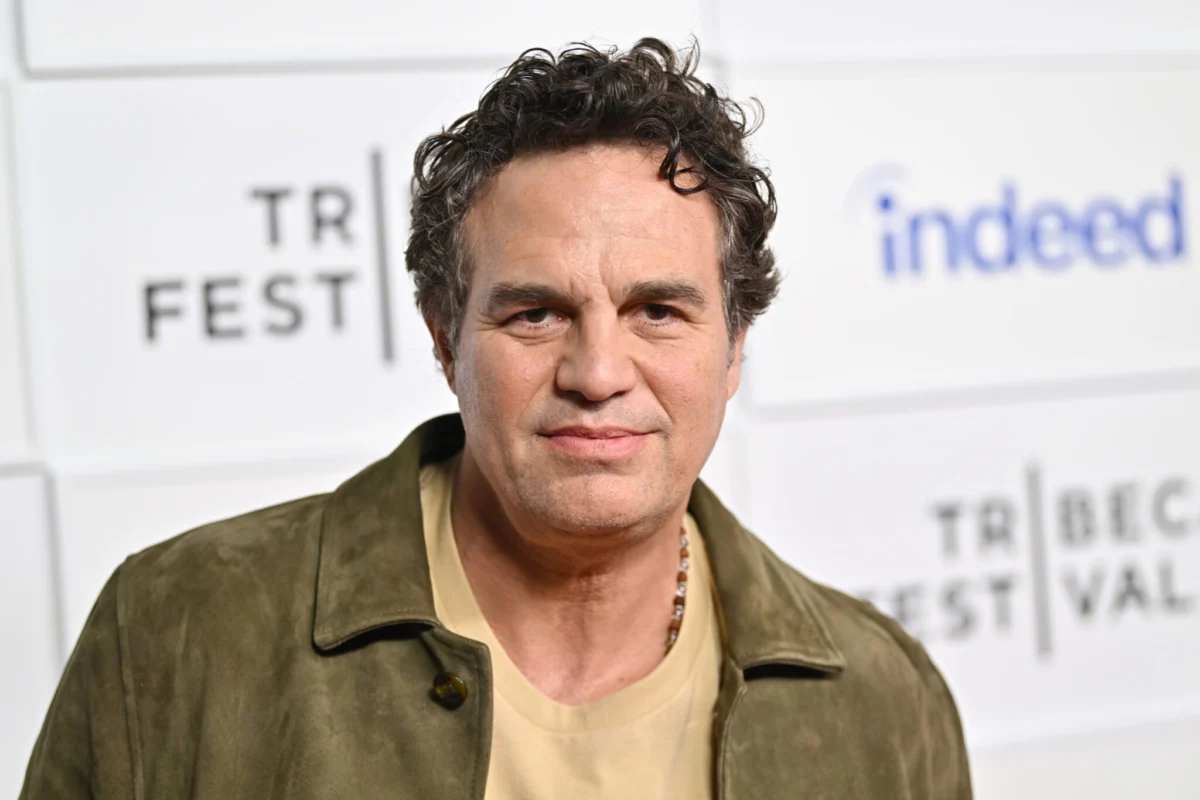
The landscape of modern Hollywood is rarely devoid of friction, but a recent ideological collision between one of the industry’s most prominent actors and a major studio conglomerate has reached a new level of vitriol. Mark Ruffalo, the Academy Award-nominated actor known for his outspoken political activism, has launched a blistering critique against the incoming leadership of Paramount Global. In a move that has sent shockwaves through the executive suites of Burbank and beyond, Ruffalo publicly condemned David and Larry Ellison, framing the potential transformation of the studio as a moral hazard.
Paramount, currently undergoing a seismic transition as it prepares for its acquisition by Skydance Media—the enterprise led by David Ellison—has responded with uncharacteristic sharpness. The conflict centers on the intersection of corporate consolidation, geopolitical tensions in the Middle East, and the limits of public discourse in an increasingly polarized climate.
The Chronology of the Confrontation
The seeds of this dispute were sown long before this week’s outburst. For months, rumors of a potential merger between Paramount Global and Warner Bros. Discovery—as well as the definitive Skydance deal—have kept the industry on edge. Mark Ruffalo has been a vocal critic of the consolidation of media power, often framing it as a threat to artistic freedom and labor equity.
However, the tone shifted dramatically this past Friday. Ruffalo utilized his significant Instagram platform to share a vintage video clip featuring Safra Catz, the CEO of Oracle and a member of the Paramount board. In the footage, Catz discusses the technological support Oracle provided to the Israeli military following the October 7, 2023, terror attacks initiated by Hamas.
Ruffalo’s accompanying commentary was uncompromising. He labeled Larry Ellison, the billionaire co-founder of Oracle and father of David Ellison, a "classic Oligarch." He further warned his followers of the dangers inherent in the Ellison family’s bid to exert control over a major American media institution. By bridging the gap between corporate ownership and the ongoing conflict in Gaza, Ruffalo accused the incoming leadership of "powering some of the most destructive and inhuman forces in the world." He explicitly characterized the situation as a "genocide" facilitated by an "apartheid system of oppression" powered by Oracle’s infrastructure.
The Corporate Rebuttal: A Defense of Integrity
The response from the Paramount camp, representing the incoming Skydance-led administration, was swift and condemnatory. Recognizing the gravity of the accusations—specifically the invocation of terms like "genocide" and "apartheid" in the context of a business transaction—the company issued a formal statement that moved beyond standard corporate PR.
"We are troubled when antisemitic tropes are invoked in purported service of a business dispute," a spokesperson for the David Ellison-run enterprise stated. "Words like ‘genocide’ and ‘apartheid,’ applied to a corporate transaction, aren’t just wrong—they’re a bridge too far, and they cheapen the very real suffering those words are meant to describe."
The statement was a calculated effort to draw a line in the sand. By labeling the rhetoric as "antisemitic tropes," the studio is positioning Ruffalo’s critique not as legitimate political speech, but as a malicious conflation that targets the Jewish heritage of the Ellison family. The company further emphasized its commitment to inclusion, stating, "We don’t tolerate prejudice of any kind, against anyone. This simply exposes the true motivation of some who have advocated opposition to this transaction."
The Weight of the Rhetoric
The controversy hinges on the dangerous intersection of celebrity influence and complex geopolitical discourse. By targeting the Ellisons’ business history with the Israeli government, Ruffalo has forced a conversation about the responsibilities of media moguls. However, his choice of language has alienated many within the industry who fear that such rhetoric distracts from the legitimate economic concerns regarding media consolidation.
Industry analysts note that while there is widespread anxiety regarding the Skydance-Paramount deal—primarily concerning potential layoffs, content homogenization, and the decline of the studio system—Ruffalo’s approach has effectively changed the subject. By bringing the Israel-Hamas conflict into the boardroom, he has invited a response from the studio that focuses on the moral character of the opposition rather than the mechanics of the merger itself.
Implications for Hollywood’s Political Future
The fallout from this clash suggests several critical implications for the entertainment industry:
1. The Weaponization of Corporate Identity
We are witnessing a new era where the personal political history of a CEO or a board member is being used as a primary lever in labor and business negotiations. This sets a precedent where any executive involved in a controversial international project could face "guilt by association" campaigns from high-profile talent.
2. The Shrinking Middle Ground
The intensity of the language used by both parties indicates that the "middle ground" in Hollywood is rapidly disappearing. When a major studio equates a critic’s words with "antisemitic tropes" and an actor labels a corporate merger as "genocidal," the ability to conduct civil business discussions is severely compromised.
3. The Power and Risk of Celebrity Platforms
Mark Ruffalo’s influence is undeniable, but this incident serves as a case study in the risks of utilizing a celebrity platform for complex geopolitical critiques. While many fans applaud his moral consistency, his actions have sparked a significant backlash among those who believe the conflation of the merger with the Middle East crisis is intellectually dishonest and inflammatory.
A Call for De-escalation?
In its concluding remarks, the Paramount spokesperson attempted to steer the conversation back toward the studio’s future vision. "This brings us to a moment to lower the temperature, not raise it. We’d rather build than further engage in such rhetoric," the statement read. "Our commitment to great content is matched by our commitment to acceptance—to every story, every storyteller, and no blacklists, no exceptions, for anyone."
This final point regarding "no blacklists" is particularly poignant, serving as a defensive measure against any accusations that the studio might retaliate against actors who dissent. However, in an industry built on relationships and reputation, the question remains: Can a major studio and one of its most prominent stars find a way to coexist after such a public rupture?
Conclusion: The Path Forward
The clash between Paramount and Mark Ruffalo is more than a celebrity spat; it is a microcosm of the current cultural moment, where the walls between global politics and domestic business are crumbling. As the Skydance-Paramount deal moves toward its final approval, the industry will be watching closely to see if this incident serves as a deterrent to future activism or as a catalyst for a more radicalized environment.
For now, the studio appears intent on weathering the storm by framing itself as a defender of tolerance and a victim of inflammatory, potentially bigoted, attacks. Ruffalo, for his part, has historically shown little inclination to walk back his deeply held convictions. As the corporate machinery continues to grind on, the divide between the creators who make the content and the moguls who control the platforms has never looked wider, nor more perilous.
The coming months will likely see further developments in the merger process, and it is almost certain that the shadow of this dispute will loom over future negotiations between labor and management. In the high-stakes world of Hollywood, words have consequences, and the dialogue between these two parties is a stark reminder that even in the business of entertainment, the personal remains intensely, and sometimes destructively, political.