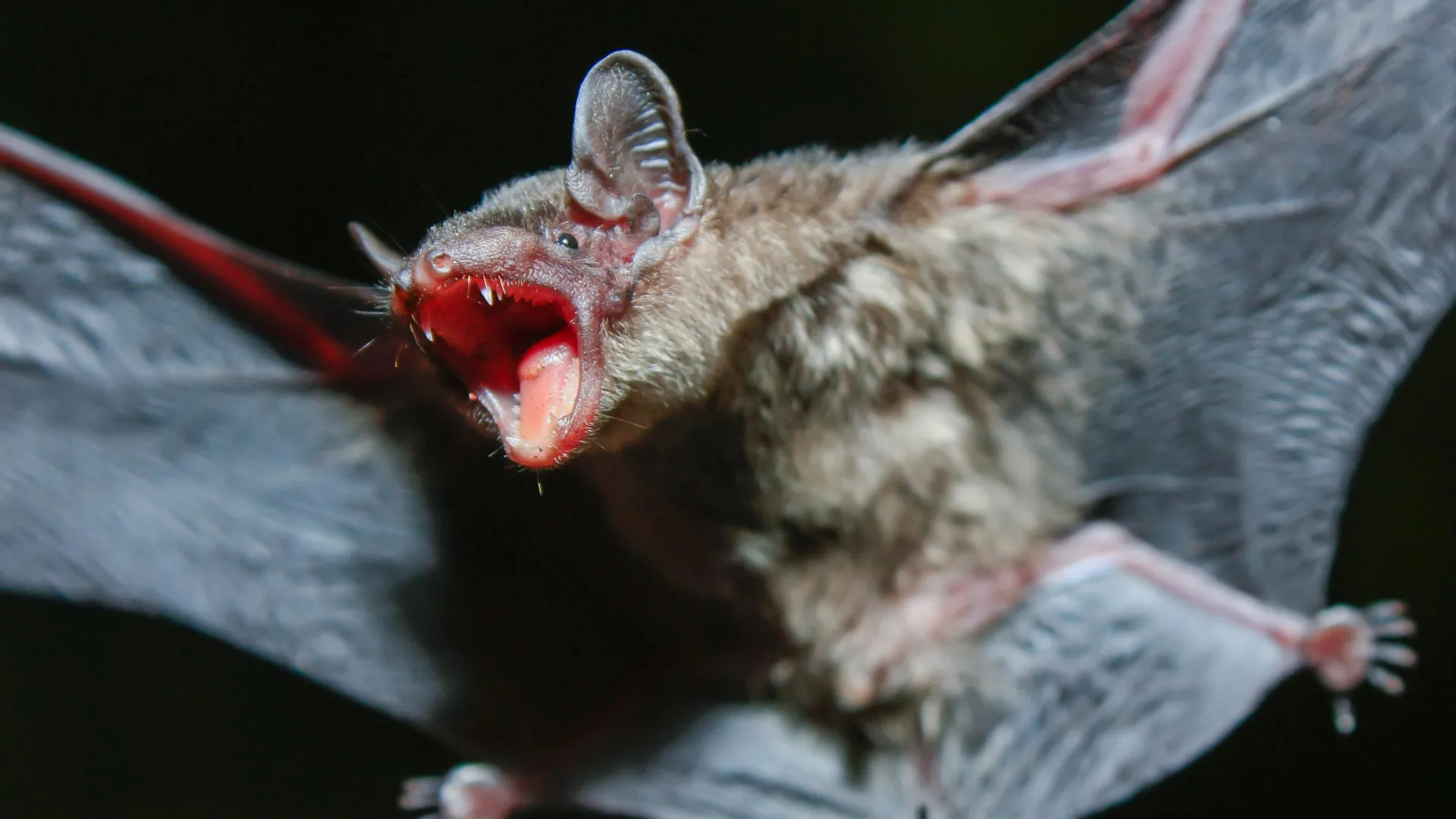
For millions of years, bats have defied the biological rules that govern most mammals. While a mouse of similar size might expect a brief, high-metabolism life spanning mere months, certain bat species navigate the night skies for decades, seemingly immune to the ravages of time and disease. This biological anomaly has long captivated evolutionary biologists, but only now, through the lens of cutting-edge genomics, are we beginning to understand the molecular machinery behind their extraordinary endurance.
A groundbreaking study published in Nature has unveiled that the secret to the bat’s longevity—and its legendary ability to host deadly viruses without succumbing to illness—lies in a sophisticated, hyper-vigilant immune system. By mapping the genomes of the Myotis genus, researchers have identified a genetic blueprint that could eventually revolutionize how we treat cancer, infectious disease, and the inevitable decline of aging in humans.
Chronology of a Genomic Quest
The seeds of this discovery were sown in the halls of the University of Chicago, where Juan Manuel Vazquez, then a graduate student, became fascinated by the longevity of bats. At the time, the genomic data required to investigate these creatures simply did not exist. The field was plagued by a lack of high-quality, comparative data that could bridge the gap between anecdotal longevity and genetic reality.
In 2020, upon securing a postdoctoral fellowship at UC Berkeley, Vazquez turned this academic curiosity into a rigorous field mission. He assembled a team of Berkeley undergraduates and ventured into the Western United States. Their methodology was as physically demanding as it was scientifically precise: under the shroud of darkness, the team deployed mist nets across streams, ponds, and rivers. They captured bats, performed minor biopsy samples to secure DNA and cell cultures, and released the animals unharmed.
The primary focus was the Myotis genus, a group of bats known for their disparate lifespans. The team’s work was anchored by the known record-holder: the Brandt’s myotis (Myotis brandtii), a creature documented to survive for half a century—an incredible feat for a mammal of its size. By 2023, the team had amassed a living library of 259 cell cultures representing 32 distinct species, setting the stage for an unprecedented comparative genomic analysis.
Supporting Data: The Architecture of Resilience
The research team’s analysis of eight Myotis genomes revealed a startling, direct correlation between lifespan and immune function. The longest-lived bats exhibited a significantly higher expression of genes tasked with tumor suppression and DNA repair.
The "Scorched Earth" Strategy
Perhaps the most surprising revelation occurred in the laboratory, where researchers exposed cultured bat cells to toxic chemicals to induce DNA damage. Conventional wisdom—modeled on human cell responses—suggests that cells should activate DNA repair proteins to fix the damage. However, the longest-lived species, the little brown bat (Myotis lucifugus), took a more radical approach.
Instead of laboring to repair damaged DNA, these cells triggered a rapid, programmed cell death. This "self-destruct" mechanism ensures that damaged, potentially cancerous cells are eliminated before they can propagate. This strategy, as noted by Vazquez, mirrors that of the elephant—another long-lived, cancer-resistant species. It is a biological admission that some ships cannot be saved, and the most efficient way to protect the organism is to jettison the damaged cargo immediately.
Viral Interaction and Evolutionary Divergence
The study also illuminated a massive, unexpected overlap between longevity genes and antiviral genes. When collaborator Elise Lauterbur of the University of Arizona compared the longevity-associated genes with those involved in viral interactions, the correlation was far higher than random chance would allow.
Bats possess an expansive suite of genes dedicated to interacting with DNA viruses, such as herpes. This contrasts sharply with primates, including humans, who have evolved to be more specialized against RNA viruses (like HIV and COVID-19). This evolutionary divergence explains why bats can harbor persistent viral loads—acting as reservoirs for zoonotic diseases—without ever developing the inflammatory diseases that would kill other mammals.
Official Responses: Insights from the Field
The implications of these findings have sent ripples through the scientific community. Dr. Peter Sudmant, an associate professor of integrative biology at UC Berkeley, emphasizes that we are moving toward a unified theory of disease.
"By looking across the diversity of life and the remarkable longevities of different species, we hope we can better understand the interplay between DNA damage and the immune system," says Sudmant. He notes that the "trade-off" is the most fascinating aspect of his current work: how a bat produces proteins that attack viral genomes without causing "friendly fire" damage to its own genetic material.
Vazquez, now leading his own lab at Pennsylvania State University, views the human-bat immune mismatch as a critical area for future medical research. "Humans and bats are badly suited to each other," he explains. "That is one of the reasons why we have to be careful working with bats—it’s a two-way street for zoonoses."
However, he remains optimistic about the translational potential. "We can look at these bats and try to understand how… you can improve your immune system so it doesn’t decline in old age. If you start looking at long-lived species like elephants, whales, and bats, you start finding ways that nature has already resolved a lot of these problems in human health."
Implications: The Future of Human Health
The study suggests that our traditional classification of diseases—separating the diseases of aging from those of infection—may be fundamentally flawed. Bats have evolved to manage both simultaneously, maintaining a high-alert immune system that handles physical stress (equivalent to an human running multiple ultramarathons daily) while suppressing tumors and viral replication.
Beyond the Laboratory
The practical applications of this research are profound. By understanding the mechanisms that allow bats to:
- Prioritize cell death over repair: We may develop better therapies to target and remove pre-cancerous cells in humans before they manifest as tumors.
- Control inflammation: We may find new ways to prevent the chronic, low-level inflammation that drives heart disease, Alzheimer’s, and other age-related declines.
- Coexist with viruses: By studying how bats manage viral loads without illness, we could potentially develop more robust, resilient vaccine strategies or antiviral therapies that focus on "tolerance" rather than just "clearance."
The Road Ahead
As Vazquez continues his work at Penn State and Sudmant deepens his research into primate cellular regulation, the partnership between genomic data and evolutionary biology grows stronger. The study does not just provide a catalog of genes; it provides a new perspective on what it means to be a mammal.
For 60 million years, bats have mastered the art of biological endurance. They occupy every corner of the globe, survive in every niche, and carry the weight of a million years of evolutionary pressure. As we begin to decode their secrets, we are not just learning about bats—we are learning about the untapped potential within our own genetic code. If nature has already solved the problems of cancer, viral susceptibility, and cellular decay in these winged mammals, the question is no longer if we can solve them, but how quickly we can decipher the instructions.
The path to a longer, healthier human lifespan may not be found in a pill or a lab-grown synthetic, but in the dark, flapping wings of the creatures that have already perfected the art of living well.