For decades, biologists have grappled with the ultimate "chicken or egg" dilemma of evolutionary science: How did life transition from a chaotic soup of prebiotic chemicals to the highly organized, self-replicating systems we recognize today? At the center of this mystery is RNA. Unlike its more famous cousin DNA, RNA is a multitasking molecule capable of both storing genetic blueprints and acting as a catalyst for chemical reactions. Yet, in the harsh, acidic, and high-temperature environment of the early Earth, RNA faced a fatal flaw: it was fragile, unstable, and prone to diffusion. Without a protective cellular membrane to keep these molecules concentrated, the chemistry required for life would have been impossible.
New research from the University at Buffalo, published in Nature Communications, suggests that life may have solved this problem long before the first cell membrane was ever formed. By utilizing the physics of phase separation, RNA may have spontaneously organized into liquid-like droplets, creating "protocells" that provided the necessary environment for early life to thrive.
The RNA World Hypothesis: A Fragile Foundation
The "RNA World" theory posits that RNA was the precursor to all life, predating both DNA and proteins. However, this theory has long been plagued by the "dilution problem." If the building blocks of life were scattered throughout a vast, primordial ocean, the probability of them colliding frequently enough to catalyze complex reactions is statistically negligible.
Furthermore, early Earth was a volatile landscape. High temperatures and fluctuating acidity levels would have shredded unprotected RNA molecules. To bridge the gap between simple chemistry and complex biology, nature needed a mechanism to concentrate these molecules and shield them from environmental stressors. Recent findings suggest that the solution was not a hard barrier like a lipid membrane, but rather the internal physics of the molecules themselves.
Chronology of a Discovery: From Theory to Laboratory
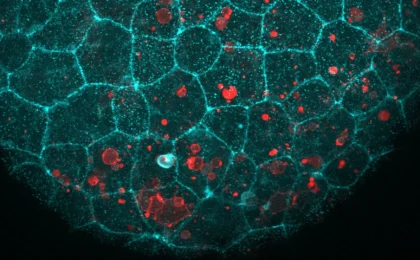
The journey to this discovery began in 2023, when lead researcher Priya R. Banerjee, PhD, a Twentieth Century Club Professor in the UB Department of Physics, demonstrated that RNA naturally transitions into liquid-like droplets—a phenomenon known as condensate formation—when exposed to high temperatures.
Building on this, the latest study—conducted in collaboration with Dr. Jerelle Joseph of Princeton University—sought to understand exactly why RNA is uniquely qualified for this task compared to its genetic counterpart, DNA. By employing temperature-controlled microscopy, small-angle X-ray scattering, and advanced molecular dynamics simulations, the researchers created a comparative timeline of how these two nucleic acids behave under prebiotic conditions.
The laboratory results were striking: RNA began forming droplets at temperatures approximately 10 degrees Celsius lower than DNA, signaling that RNA possesses a significantly higher innate tendency to condense. This suggests that in the high-heat environments of early Earth, RNA was primed to organize, while DNA remained stubbornly dispersed.
The "Oxygen Advantage": A Tiny Atomic Difference
Perhaps the most elegant aspect of this discovery is the microscopic cause behind it. RNA and DNA are structurally similar, but they differ by a single oxygen atom in their sugar backbone. Every RNA sugar unit contains a "2′-hydroxyl" (2′-OH) group—a feature entirely absent in DNA.
While this difference seems negligible on a molecular scale, the research team found that it exerts a profound influence on the behavior of the entire molecule. The 2′-OH group allows RNA to interact more effectively with magnesium ions—a common element in the primordial soup—and alters how the molecule interacts with surrounding water.
Essentially, the 2′-OH group makes RNA molecules "drier" by holding fewer water molecules around their backbone. This allows the RNA strands to pack together more tightly, overcoming the electrostatic repulsion that would otherwise keep them apart. When the team chemically modified the 2′-OH group to mimic the structure of other nucleic acid variants, the RNA’s ability to condense collapsed, confirming that this single oxygen atom is the "master switch" for RNA self-organization.
Supporting Data: From Fluidity to Gel-like Resilience
The study did not merely observe that RNA forms droplets; it analyzed the internal architecture of those droplets. As the RNA molecules aggregated, they began to form interconnected, web-like networks. This transition shifted the droplets from a simple, fluid liquid state into a more viscous, gel-like structure.
This shift is critical for biological evolution. A gel-like state is more stable and provides better protection against environmental turbulence than a low-viscosity liquid. These droplets acted as "living compartments," keeping RNA concentrations high enough for chemical reactions to occur while protecting the delicate strands from being dismantled by the harsh external environment. This provides a compelling, physics-based explanation for how complex, organized systems could emerge in an otherwise chaotic prebiotic landscape.
Official Perspectives: The Experts Speak
The implications of this research are being felt across the fields of biophysics and evolutionary biology. "These findings reveal, for the first time, how remarkably small changes in molecular chemistry can control the emergence of much larger, self-organized biomolecular structures like RNA condensates," said Dr. Priya R. Banerjee.
Banerjee’s co-author, Dr. Gable Wadsworth, a postdoc in the lab who is transitioning to an assistant professor role at the University of Texas at El Paso, emphasized the impact of the discovery: "This single oxygen-containing group on RNA’s sugar has a surprisingly powerful effect on whether these molecules come together, remain dynamic, or become arrested into a gel-like material."
The research, which was supported by the National Institutes of Health, the National Science Foundation, and the Hypothesis Fund, provides a robust framework for future inquiries. By showing that the fundamental chemical composition of RNA naturally facilitates the conditions necessary for life, the study moves the scientific community closer to proving that life was not a series of improbable accidents, but an inevitable consequence of molecular physics.
Implications: The Path to Synthetic Life
The implications of this work extend far beyond the history of our planet. By identifying the mechanism behind RNA condensation, the research team is now working to "program" these droplets. If scientists can engineer synthetic RNA droplets to perform specific biochemical tasks—essentially acting as rudimentary, non-membrane-bound cells—it would represent a monumental leap in synthetic biology.
Such "synthetic cells" could serve as a platform for understanding how basic metabolic processes first evolved. If these droplets can be made to replicate or undergo complex synthesis, it provides a working model for the emergence of the first protocells.
"These kinds of self-organizing RNA compartments were possibly a step along the way to single-cell organisms," says Banerjee. As the team continues to refine their understanding of how these condensates behave under varying pressures and chemical environments, they are slowly uncovering the blueprint of life itself.
The "chicken or egg" dilemma is far from fully resolved, but for the first time, we have a clear, physics-based roadmap of how the "egg"—a protective, concentrated environment—could have been formed by the very molecule it was meant to protect. In the dance between atoms and energy, the simple addition of an oxygen atom may have been the spark that turned a collection of chemicals into the precursor of all living things on Earth.