In an era defined by global supply chain volatility, shifting trade policies, and the constant drumbeat of tariff debates, the "Made in America" label has evolved from a simple marketing tag into a complex indicator of economic resilience. For automotive consumers, knowing where a vehicle is born—and where its constituent parts originate—is no longer just about national pride; it is a signal of how deeply a brand is integrated into the fabric of the United States economy.
The 2026 Cars.com American-Made Index (AMI) has arrived, providing a rigorous audit of the automotive industry. By evaluating 86 vehicles across a spectrum of manufacturing metrics, the index offers a definitive ranking of which models truly earn the title of "Most American."
The Metrics of Patriotism: How the Index is Built
The Cars.com American-Made Index does not rely on subjective feelings or historical brand heritage. Instead, it utilizes a strictly data-driven methodology that examines four critical pillars of production:
- Final Assembly Location: The physical site where a vehicle is fully constructed and prepared for dealership delivery.
- U.S./Canadian Parts Percentage: A calculation of the value of parts sourced from domestic suppliers, accounting for the integrated nature of the North American automotive supply chain.
- Engine and Transmission Origin: The country of origin for the vehicle’s powertrain components, which often represent the most sophisticated and high-value aspects of a car’s build.
- Workforce Location: A measure of the domestic labor hours invested in the manufacturing process.
By aggregating these data points, the AMI creates a weighted score that allows consumers to see beyond the badge on the grille and understand the global footprint of their next vehicle.
Chronology of Change: The 2026 Shakeups
The 2026 index reveals a market in flux. As automakers recalibrate their global manufacturing strategies to mitigate logistics costs and leverage regional production hubs, several vehicles have seen dramatic shifts in their rankings.
The Risers
The most notable stories in the 2026 report are the significant leaps made by several heavy hitters. The Toyota Tundra, for instance, climbed from 51st to 19th place, signaling a massive shift in localized production for the full-size pickup. Similarly, the Kia EV9 surged from 67th to 17th, reflecting the automaker’s aggressive move to establish domestic production for its flagship electric SUV.
Ford and its luxury division, Lincoln, also saw impressive gains. The Ford Explorer jumped to 15th (up from 23rd), while the Lincoln Aviator climbed to 14th (up from 28th). The Ford Expedition (up from 66th) and the Lincoln Navigator (up from 69th) also demonstrated the company’s commitment to U.S.-based assembly. Finally, the Toyota Camry, a perennial favorite, moved up to 11th from 24th, proving that high-volume sedans remain a focus for American manufacturing floors.
The Fallen
Conversely, several models that held top-tier positions in 2025 have slipped significantly. The Nissan Pathfinder fell to 51st, and the Chevrolet Colorado dropped to 31st. The Kia Sportage (57th), Jeep Wrangler (23rd), and Honda Pilot (32nd) also saw their domestic production index rankings decline, likely due to shifts in sourcing components or changes in assembly line priorities.
The Top 10: Where the Industry Stands
The upper echelon of the 2026 index remains largely dominated by a mix of American tech-focused manufacturers and Japanese automakers who have spent decades embedding themselves into the U.S. manufacturing landscape.

- Tesla Model 3: Retains the crown, continuing to lead in both assembly and localized parts sourcing.
- Tesla Model Y: Holds the second position, cementing Tesla’s dominance in the domestic manufacturing sphere.
- Jeep Gladiator: Moved up from fifth place, representing a victory for Ohio-based manufacturing.
- Jeep Grand Cherokee: Anchors the fourth spot, with its Detroit-based assembly line remaining a cornerstone of Jeep’s domestic output.
- Honda Ridgeline: The highest-ranked non-American brand vehicle, built in Alabama.
- Honda Odyssey: A staple of Alabama manufacturing, keeping the brand firmly in the top tier.
- Lexus TX: A new standout, showcasing Indiana’s role in luxury manufacturing.
- Honda Accord: The Ohio-built sedan remains a model of domestic assembly consistency.
- Acura MDX: Also produced in Ohio, securing another spot for Honda’s luxury division.
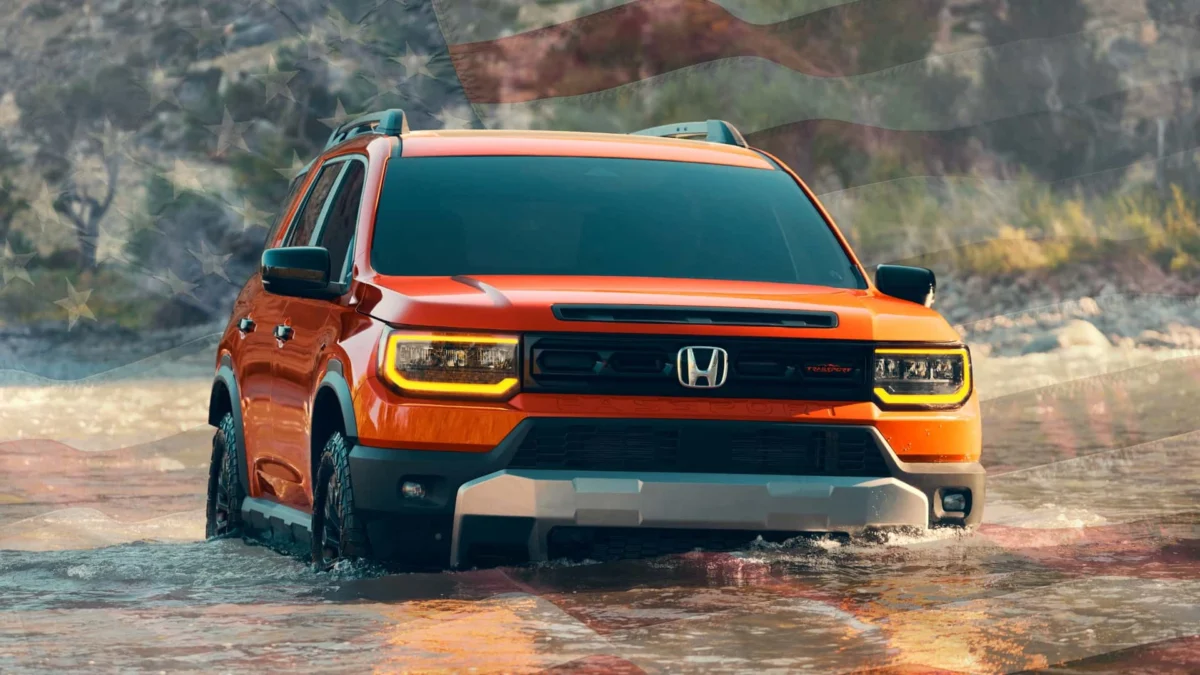
- Honda Passport: Rounds out the top 10, confirming Honda’s heavy reliance on its Alabama facilities.
Notably, the Tesla Model S and Model X have been removed from the index entirely, following their discontinuation, which cleared the path for the Jeep Gladiator to move into the top three.
Supporting Data: The "Non-American" Paradox
A striking takeaway from the 2026 index is that six of the top 10 vehicles are produced by non-American automakers. This may seem counterintuitive, but it serves as a testament to the decades-long "localization" strategy employed by Japanese manufacturers. Companies like Honda and Toyota have invested billions of dollars into U.S. infrastructure, creating robust supply chains that span from the Midwest to the South.
While "Detroit Three" automakers (Ford, General Motors, and Stellantis) continue to dominate high-volume segments like heavy-duty trucks and SUVs, the index highlights that a vehicle’s nationality is often more about where the factory is located than the heritage of the company’s headquarters.
Implications for the Automotive Market
The Cars.com American-Made Index serves as a mirror reflecting the broader economic realities of the automotive sector. For the consumer, this index provides a tool for "voting with their wallet." Whether a buyer prioritizes supporting domestic jobs or simply wants to ensure their vehicle is not subject to the unpredictability of international shipping, the AMI provides the necessary transparency.
For policymakers, the data provides a clear look at how domestic manufacturing incentives are performing. The significant jumps for models like the Kia EV9 suggest that tax credits and infrastructure investments—such as those found in the Inflation Reduction Act—are successfully incentivizing foreign automakers to shift assembly to the U.S.
Future Outlook: Sustainability and Sovereignty
As we look toward 2027 and beyond, the competition for the top spots on the American-Made Index is expected to intensify. The transition to electric vehicles (EVs) is the new frontier of this battle. As automakers build out new battery plants and regional component networks, the "American-made" status of an EV will likely become a primary marketing differentiator.
However, the industry faces headwinds. Rising labor costs, the need for a highly skilled workforce, and the challenge of onshoring critical mineral processing for batteries mean that maintaining a high AMI score will be more expensive than ever.
In conclusion, the 2026 American-Made Index illustrates a vibrant, if complex, manufacturing environment. While the top of the list is defined by American-born brands, the middle and lower tiers are increasingly crowded with global players who have adopted the United States as their manufacturing home. For the average consumer, this means that the "Made in America" label is becoming a broader, more inclusive, and highly competitive designation that reflects the global nature of modern automotive engineering.
Data Source: Cars.com 2026 American-Made Index. For the full methodology and the complete list of 86 ranked vehicles, visit the official Cars.com report.