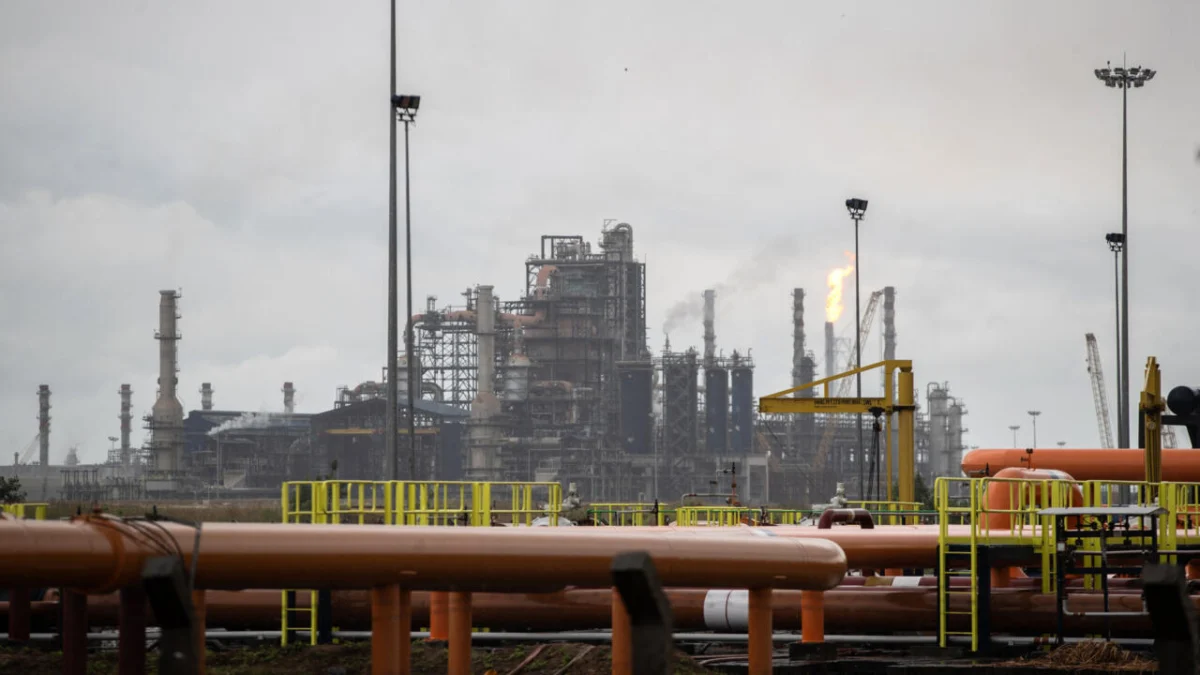
In a historic move that has sent shockwaves through the continent’s financial markets, Nigerian industrialist Aliko Dangote has officially opened his massive, Lagos-based refinery to public ownership. By launching what is being billed as the largest Initial Public Offering (IPO) in African history, Africa’s richest man is seeking to raise $1.6 billion, inviting everyday retail investors to participate in a project that sits at the very heart of the continent’s energy transformation.
The launch, which took place at the Nigerian Exchange Group (NGX) in Lagos, saw an immediate, overwhelming response. Digital investment platforms across the country struggled to cope with the surge in traffic, with at least two major portals experiencing temporary outages as millions of Nigerians scrambled to secure a stake in the industrial giant.
Main Facts: A Landmark Offering
The IPO is positioned by Dangote himself as a "people’s offering." With a minimum entry point of a 10-share bundle priced at 5,250 naira ($4), the barrier to entry has been kept deliberately low to encourage widespread participation. Despite this public offering, Dangote will retain an 87% controlling stake in the facility, maintaining his firm grip on the refinery that is already considered the largest of its kind in Africa.
The refinery, which represents a $19 billion investment, reached its full production capacity of 650,000 barrels per day (bpd) earlier this year. Its significance cannot be overstated; for decades, Nigeria—a nation of 210 million people and a major oil producer—was forced to rely on the importation of refined petroleum products due to the collapse and chronic mismanagement of its state-owned refineries. The Dangote refinery has, in a single stroke, reversed this trend, turning Nigeria into a net exporter of fuel.
A Chronology of Industrial Ambition
To understand the gravity of this IPO, one must look at the timeline of the refinery’s evolution from a visionary concept to an industrial powerhouse:
- 2013-2016 (The Planning Phase): Aliko Dangote announces his intention to build a world-class refinery in the Lekki Free Trade Zone in Lagos. Initial estimates and construction timelines are set, signaling a massive shift in Nigerian energy policy.
- 2017-2023 (Construction and Challenges): The project faces numerous hurdles, including supply chain disruptions, the complexities of building a facility of this magnitude, and the persistent issue of fuel subsidies in Nigeria.
- 2024 (The Milestone): The refinery officially begins production. The impact is immediate, easing the country’s reliance on costly imports and stabilizing a volatile energy market.
- Early 2026 (Operational Peak): The refinery hits its full design capacity of 650,000 bpd. Plans are unveiled to double down on growth, with a goal to reach 1.4 million bpd by the end of the decade.
- September 2026 (The IPO Launch): Dangote initiates the $1.6 billion public offering, seeking to democratize ownership and provide capital for further expansion into East Africa.
Supporting Data and Market Dynamics
The timing of this IPO is strategic. Global oil prices have spiked in the wake of the recent US-Iran conflict, heightening the refinery’s importance as a strategic asset. However, the valuation remains a point of intense scrutiny. The refinery has been valued at $49 billion—a figure that is more than double its construction cost.

Analysts are divided on the implications of this valuation. Supporters argue that the projected cash flow, coupled with the refinery’s near-monopoly on domestic fuel production, justifies the premium. Conversely, critics, such as Abdulkabeer Tijani, a Lagos-based researcher, warn that the price point of 525 naira per share may be "too expensive" for the average retail investor. "The share price puts a bigger duty on the refinery," Tijani notes. "To justify this valuation, the refinery needs to generate very substantial profits and consistent cash flow. Anything less could lead to investor fatigue."
Despite the skepticism, the market appetite is undeniable. The sheer scale of the refinery has made it a "must-have" for local institutional and retail portfolios. As Mohammed Saidu of TrustBanc explains, this is a "game-changing" moment for Nigerian markets, likely to bring millions of first-time investors into the fold.
Official Responses and Strategic Vision
At the launch, Aliko Dangote remained characteristically optimistic, framing the IPO as a moral imperative rather than just a financial transaction. "We are all going to fully share all our prosperity with the people," he told the crowd at the Nigerian Exchange.
However, the "people’s refinery" narrative has faced pushback from the analyst community. Joachim McEbong, a senior West Africa analyst at Control Risks, pointed out the inherent contradiction in the structure: "It is not something someone can classify as people-driven if you still own 87% of the refinery. There are many ways that narrative breaks down."
The company, for its part, has defended its valuation and its structure, stating that the capital raised will be vital for future expansion. The long-term vision is global, not just regional. Dangote has explicitly stated his intention to make the refinery the largest in the world, surpassing India’s massive Jamnagar plant. Furthermore, the company is looking beyond Nigeria’s borders, with formal proposals already in place to establish a refinery in Kenya by 2030, signaling a move toward dominating the East African energy market as well.
Economic Implications for Nigeria and Beyond
The success of this IPO will have far-reaching implications for the Nigerian economy. By moving from a state-dominated, import-reliant model to a private-public ownership structure, the Dangote refinery is effectively stress-testing the resilience of the Nigerian financial system.

1. Market Liquidity and Investor Confidence
The massive traffic surge on digital investment platforms is a testament to the pent-up demand for high-quality, local investment opportunities. If the Dangote IPO succeeds without major technical or administrative hitches, it could pave the way for other industrial giants to follow suit, potentially deepening the Nigerian capital market and reducing its reliance on foreign portfolio investment.
2. Energy Security
The refinery is the cornerstone of Nigeria’s energy security. By controlling the refining process, Nigeria is better insulated from the shocks of global fuel price volatility. However, this success is also tied to the refinery’s ability to maintain high operational efficiency—a challenge that has historically been difficult for large-scale projects in the region.
3. The Regional Expansion
Dangote’s ambition to build a facility in Kenya by 2030 underscores a broader "pan-African" strategy. If the Nigerian model proves profitable and sustainable, it will likely serve as the blueprint for future energy infrastructure across the continent. Investors in the current IPO are essentially betting on the success of this regional expansion model.
Conclusion: A High-Stakes Gamble
The "People’s IPO" is more than a stock offering; it is a barometer for Africa’s industrial maturity. Aliko Dangote has managed to capture the imagination of millions, turning a complex energy asset into a household name. While concerns regarding the high valuation and the concentration of ownership remain valid, the overwhelming public interest suggests that for many Nigerians, this is an opportunity to buy into a symbol of national progress.
As the markets await the official listing in November, the eyes of the global financial community remain fixed on Lagos. Whether this venture results in broad-based prosperity or serves as a cautionary tale of over-valuation, one thing is certain: the Dangote refinery has irrevocably changed the landscape of the African energy sector. The coming months will determine if the reality of the refinery’s performance can match the immense expectations of the people who are now, in name at least, its co-owners.