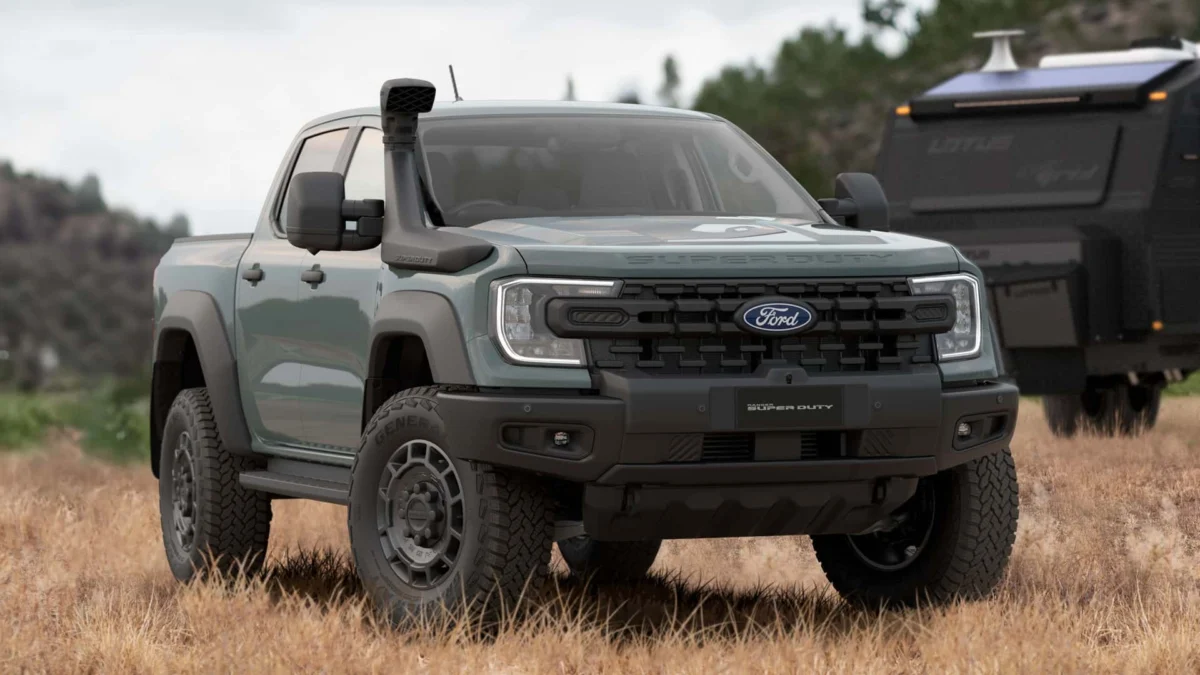
The mid-size pickup truck segment has long been defined by a balance of daily usability and recreational capability. However, Ford has fundamentally rewritten that script in the Australian market with the introduction of the Ranger Super Duty. By taking the architecture of the world’s most popular mid-size truck and infusing it with the DNA of its larger, industrial-grade siblings, Ford has created a vehicle that occupies a unique, high-demand space in the automotive landscape.
While the Blue Oval has opted to keep this specialized powerhouse exclusive to Australia and select international markets for the time being, the initial sales data is nothing short of staggering. For those watching the global automotive industry, the Ranger Super Duty represents more than just a trim level; it is a masterclass in identifying and serving an underserved commercial niche.
The Genesis of the Super Duty Ranger
The journey toward the Ranger Super Duty began with a clear directive from Ford’s global engineering team: address the "capability gap." In many markets, traditional mid-size trucks were being pushed to their limits by commercial operators—contractors, agricultural workers, and utility firms—who required the heavy-load performance of a full-size truck but the maneuverability and efficiency of a mid-size platform.
Rather than simply upgrading the aesthetics, Ford’s engineers embarked on a comprehensive overhaul. The development cycle focused on the core stressors of heavy-duty use: heat, torque, and structural fatigue. The result, unveiled to the Australian public, was a truck that looked like a Ranger but operated with the rugged, uncompromising mechanical soul of a larger commercial vehicle.
Chronology: From Concept to Commercial Success
The rollout of the Ranger Super Duty was calculated and rapid. Recognizing that the Australian market is one of the most discerning when it comes to "utes," Ford launched the vehicle with a focus on the cab-chassis segment—the primary choice for fleet and commercial operators who require bespoke body configurations.
- Early Development Phase: Ford identified that a segment of the workforce was "aging out" of smaller trucks and requiring more payload capacity than the standard Ranger could safely provide under continuous stress.
- Engineering Pivot: The team moved to reinforce the chassis and integrate cooling systems capable of managing the extreme temperatures often found in the Australian Outback.
- The Launch: The Ranger Super Duty was introduced to the Australian market with immediate fanfare, targeting high-volume commercial sectors including mining, forestry, and emergency services.
- Expanding the Footprint: Following the initial success of the cab-chassis models, Ford expanded the range to include standard pickup versions and the popular XLT grade, catering to private owners who prioritize durability for towing caravans or heavy recreational equipment.
- Global Export Strategy: With the Australian success solidified, the vehicle has begun its expansion into South Africa, signaling that Ford views this as a global-standard solution for professional-grade off-road needs.
Mechanical Mastery: Beneath the Familiar Exterior
What sets the Ranger Super Duty apart is the "hard parts" engineering. Ford did not simply add a lift kit and call it a day. The vehicle features a significantly reinforced chassis designed to withstand higher G-forces and heavier static loads.
The Drivetrain
At the heart of the machine is the proven 3.0-liter turbodiesel V6 engine. Producing 205 horsepower and an impressive 442 pound-feet of torque, the engine is tuned to deliver its power at the lower end of the rev range—perfect for towing and hauling. This is mated to a 10-speed automatic transmission, which is programmed to handle the increased load profiles of the Super Duty variant, ensuring that shifts remain crisp even when the vehicle is at its maximum Gross Vehicle Mass (GVM).
Structural Reinforcements
The list of mechanical upgrades is extensive. Ford has integrated:
- Heavy-Duty Suspension: Re-tuned springs and dampers that accommodate higher payload capacities without sacrificing ride quality.
- Upgraded Differentials and Driveshafts: Designed to handle the increased torque load of constant, heavy-duty towing.
- Braking and Cooling: Larger rotors and high-performance calipers are paired with an enlarged cooling system, ensuring that the engine and transmission remain within operating parameters during long, arduous hauls in high-ambient-temperature environments.
The result is a truck that boasts a towing capacity of up to 9,921 pounds and a payload capacity reaching approximately 4,409 pounds. These figures place it in a category that effectively bridges the gap between a standard mid-size pickup and a heavy-duty full-size truck.

Official Responses: The View from the Top
The reception of the Ranger Super Duty has been so positive that it has caught the attention of Ford’s executive leadership. In a recent interview with the Australian publication Drive, Fadi Mawal, President and CEO of Ford Australia and New Zealand, expressed immense satisfaction with the model’s performance.
"Super Duty is going really, really strong from both great demand from retail, private customers, and industry," Mawal stated. Perhaps most telling was the revelation that the truck is not just meeting expectations, but actively stealing market share from long-standing incumbents. Mawal hinted that the Ranger Super Duty is currently outselling the legendary Land Cruiser 70 Series in specific sectors, a testament to the truck’s modern efficiency and superior cabin technology compared to the older, more utilitarian designs of its rivals.
Implications for the Global Market
The success of the Ranger Super Duty in Australia raises a critical question: will it ever reach North American or European shores? Currently, the US market is served by the F-Series Super Duty, a behemoth that dwarfs the Ranger in both physical footprint and capability. Bringing the Ranger Super Duty to the US might risk cannibalizing sales of the F-250, yet there remains a clear appetite for a smaller, more maneuverable heavy-duty truck.
Defense and Government Applications
One of the most intriguing aspects of the Ranger Super Duty’s future lies in government and defense fleets. Because the platform is modular and built to such high standards of durability, it is being evaluated for roles that were previously reserved for much more expensive, specialized vehicles. By using a "commercial-off-the-shelf" (COTS) product, governments can significantly reduce acquisition and maintenance costs while benefiting from the global supply chain that supports the Ford Ranger.
A Template for Future Trucks
Ford’s strategy here acts as a blueprint for the future of mid-size trucks. As the world transitions toward more complex, electronically advanced vehicles, there is a counter-movement for "honest" engineering—trucks that prioritize raw mechanical strength and reliability. By proving that the Ranger platform is capable of these extreme upgrades, Ford has demonstrated that the mid-size segment has not reached its ceiling.
Final Analysis: Why It Works
The "ute" culture in Australia is distinct. It requires vehicles that can serve as a family car on the weekend and a dedicated piece of industrial equipment on Monday. The Ranger Super Duty succeeds because it does not compromise. It provides the interior comfort, infotainment, and driver-assistance features that modern drivers expect, while hiding a "work-horse" mechanical system underneath that can take a beating.
As the year continues, and as the truck finds its way into more fleets across South Africa and potentially other emerging markets, the Ranger Super Duty will likely be viewed as a turning point for the Ford brand. It proves that when a manufacturer listens to the specific pain points of its customers—specifically the need for "more than a standard truck but less than a full-size"—the market will respond with overwhelming support.
While those in North America may have to wait to see if the "Super Duty" badge ever graces a mid-size Ranger locally, the Australian experience serves as a clear indicator of what is possible when engineering talent meets a genuine, unmet market need. Ford has not just built a better Ranger; they have built a new class of vehicle entirely.